MCQ
Incorrect statements among the following is/are
- A$2^{nd}$ electron gain enthalpy is always endothermic
- BElectronegativity is the property of bonding atoms
- ✓$Al_2O_3$ and $BeO$ are amphoteric oxide
- DNone of these are incorrect
The electronegativities decrease from $X$ to $Y$ to $Z$.
The atomic radius increases in the order $X , Y$ and $Z$ and $X , Y$ and $Z$ could be phosphorus, aluminium and sodium respectively.
Generate a complete, print-ready paper with questions like this in minutes — across 16+ boards, with answer keys.
$(II)\,\,\,{{H}_{2}}C=CH-C{{H}_{2}}-\overset{+}{\mathop{C}}\,H-C{{H}_{3}}$
$(III)\,\,\,\begin{matrix}
\,\,\,\,\,C{{H}_{3}}\, \\
|\, \\
{{H}_{3}}C-C-\overset{+}{\mathop{C}}\,{{H}_{2}} \\
|\, \\
\,\,\,C{{H}_{3}} \\
\end{matrix}$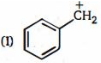
Given : $K_f (H_2O)$ = $2\ K\ kg\ mole^{-1}$, $K_{sp} (PbCl_2)$ = $4 × 10^{-6}$
(Assume molarity to be equal to molality) .....$^oC$
$(1)$ $C{H_2} = C{H_2}$
$(2)$ ${(C{H_3})_2}C = C{H_2}$
$(3)$ $C{H_3}CH = CHC{H_3}$