MCQ
Industrial melanism is an example of
  • A
    Defensive adaptation of skin against ultraviolet radiations
  • B
    Drug resistance
  • C
    Darkening of skin due to smoke from industries
  • Protective resemblance with the surrounding

Answer

Correct option: D.
Protective resemblance with the surrounding
d
(d)Industrial melanism is an adaptation where the moths living in the industrial areas develop melanin pigments to match their body to the soot covered surroundings.

Need a full question paper?

Generate a complete, print-ready paper with questions like this in minutes — across 16+ boards, with answer keys.
Start Generating Free

Similar questions

Citric acid is produced by
Which of the following is regarded as a unit of nervous tissue
Which one of the following statement regarding $BOD$ is true ?
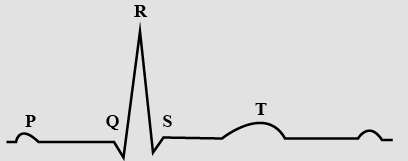
The diagram given here is the standard $ECG$ of a normal person. The P­wave represents the
$ATPase$ enzyme needed for muscle contraction is located in
$R.B.C.$ in adult are formed
Select the incorrect statements

$I.$ Natural selection is essential for evolution

$II.$ Natural selection do not include variations

$III.$ Concept of natural selection was given by Hugo de Vries

$IV.$ Mutation is the sudden inheritable change

$V.$ Synthetic theory is also called Neo-Darwinism theory of evolution The correct combination is a

Statement I: Blood circulation system was discovered by William Harvey.
Statement II: Health means absence of disease.
Human vertebral column is formed by
Given statements are characters of muscle, which of the following is correct for Visceral muscles or smooth muscles ?
(i) They do not exhibit any striation and are smooth in appearance. Hence, they are called non- striated muscle.
(ii) They have a striped appearance under the microscope and hence are called striated muscles.
(iii) As their activities are under the voluntary control of the nervous system, they are known as voluntary muscles too.
(iv) Their activities are not under the voluntary control of the nervous system and are therefore known as involuntary muscles.
(v) They are located in the inner walls of hollow visceral organs of the body like the alimentary canal, reproductive tract, etc.
(vi) They are primarily involved in locomotory actions and changes of body postures.
(vii) They assist in the transportation of food through the digestive tract and gametes through the genital tract.