MCQ
$\int {\frac{{\left( {3\sin \phi  - 2} \right)\cos \phi }}{{5 - {{\cos }^2}\phi  - 4\sin \phi }}\,} d\phi$ is equal to
  • A
    $3\log \left( {2 - \sin \phi } \right)\frac{4}{{\left( {\sin \phi  - 2} \right)}} + C$
  • B
    $3\log \left( {\sin \phi  - 2} \right) + \frac{4}{{\left( {2 - \sin \phi } \right)}} + C$
  • C
    $\log \left( {2 - \sin \phi } \right) + \frac{4}{{\left( {2 - \sin \phi } \right)}} + C$
  • $3\log \left( {2 - \sin \phi } \right) + \frac{4}{{\left( {2 - \sin \phi } \right)}} + C$

Answer

Correct option: D.
$3\log \left( {2 - \sin \phi } \right) + \frac{4}{{\left( {2 - \sin \phi } \right)}} + C$
d
Put $\sin \phi=t ;$ then $\cos \phi \,d\phi  = dt$

$I=\int \frac{(3 t-2) d t}{5-\left(1-t^{2}\right)-4 t}$

$I=\int \frac{3 t-2}{t^{2}-4 t+4} d t=\int \frac{3 t-2}{\left(t^{2}-2\right)^{2}} d t$

$\frac{3 t-2}{(t-2)^{2}}=\frac{A}{(t-2)}+\frac{B}{(t-2)^{2}}$

$(3 t-2)=A(t-2)+B$

$\therefore A=3, B=4$

$ \therefore  \mathrm{I}=\int \frac{3}{\mathrm{t}-2} \mathrm{dt}+\int \frac{4}{(\mathrm{t}-2)^{2}} \mathrm{dt}$

$=3 \log |(\sin \phi-2)|+\frac{-4}{(\mathrm{t}-2)}+\mathrm{C}$

$=3 \log (2-\sin \phi)+\frac{4}{(2-\sin \phi)}+\mathrm{C} $

Need a full question paper?

Generate a complete, print-ready paper with questions like this in minutes — across 16+ boards, with answer keys.

Start Generating Free

Similar questions

The integral $\int\limits_0^{\frac{1}{2}} {\frac{{\ln \,\left( {1 + 2x} \right)}}{{1 + 4{x^2}}}} dx$ , equals
If $\text{y}=(\sin^{-1}\text{x})^2,$ then $(1-\text{x}^2)\text{y}_2$ is equal to:
  1. xy1 + 2
  2. xy1 - 2
  3. -xy1 + 2
  4. None of these
The position vector of a point $C $ with respect to  $ B $ is $i + j$ and that of  $ B$  with respect to $A$ is $i - j.$ The position vector of  $ C $ with respect to $A$  is
Let $R_{1}$ and $R_{2}$ be two relations defined on $R$ by $a R _{1} b \Leftrightarrow a b \geq 0$ and $a R_{2} b \Leftrightarrow a \geq b$, then
If $a,b,c$ and $d $ are complex numbers, then the determinant $\Delta = \left| {\,\begin{array}{*{20}{c}}2&{a + b + c + d}&{ab + cd}\\{a + b + c + d}&{2(a + b)(c + d)}&{ab(c + d) + cd(a + b)}\\{ab + cd}&{ab(c + d) + cd(a + d)}&{2abcd}\end{array}} \right|$is
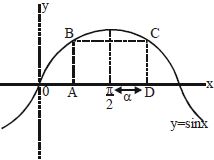
A rectangle $ABCD$ is inscribed in the region bounded by $y = \sin x, \, x-$ axis where $x \in [0,\pi ]$ (as shown in figure), then area of rectangle is maximum when $'\alpha '$ satisfies
The area of the region $\left\{(x, y): 0 \leq x \leq \frac{9}{4}, \quad 0 \leq y \leq 1, \quad x \geq 3 y, \quad x+y \geq 2\right\}$ is
If $(\text{x}+\text{y})^2\frac{\text{dy}}{\text{dx}}=\text{a}^2,\text{y}=0$ when x = 0, then y = a if $\frac{\text{x}}{\text{a}}=$
  1. $1$
  2. $\tan1$
  3. $\tan1+1$
  4. $\tan1-1$
What is the value of $ \sin-1(\sin 6)?$
  1. -2π - 6
  2. 2π + 6
  3. either -2π + 6 or 2π + 6
  4. 2π - 6
If $A = \left[ {\begin{array}{*{20}{c}}0&1 \\ 1&0\end{array}} \right],$then ${A^4}$=