MCQ
$\int_{}^{} {{e^x}\sin x(\sin x + 2\cos x)} \;dx = $
  • ${e^x}{\sin ^2}x + c$
  • B
    ${e^x}\sin x + c$
  • C
    ${e^x}\sin 2x + c$
  • D
    None of these

Answer

Correct option: A.
${e^x}{\sin ^2}x + c$
a
(a)$\int_{}^{} {{e^x}\sin x(\sin x + 2\cos x)dx} $
$ = \int_{}^{} {{e^x}{{\sin }^2}x\,dx} + \int_{}^{} {{e^x}2\sin x\,\cos xdx} $
$ = \int_{}^{} {{e^x}{{\sin }^2}x\,dx} + \int_{}^{} {{e^x}\sin 2x\,dx} $
$ = {e^x}{\sin ^2}x - \int_{}^{} {{e^x}\sin 2x\,dx} + \int_{}^{} {{e^x}\sin 2x\,dx\, + c} $
$ = {e^x}{\sin ^2}x + c.$
Aliter : $\int_{}^{} {{e^x}({{\sin }^2}x + \sin 2x)dx = {e^x}{{\sin }^2}x + c.} $

Need a full question paper?

Generate a complete, print-ready paper with questions like this in minutes — across 16+ boards, with answer keys.
Start Generating Free

Similar questions

Matrix $A = \left[ {\begin{array}{*{20}{c}}
  x&3&2 \\ 
  1&y&4 \\ 
  2&2&z 
\end{array}} \right]$, $xyz = 60$ and $8x + 4y + 3z = 20$, then $A.(Adj A)$ is equal to
If a dice is thrown $7$ times, then the probability of obtaining $5$ exactly $4$ times is
Choose the most correct of the following statements relating to primal - dual linear programming problems:
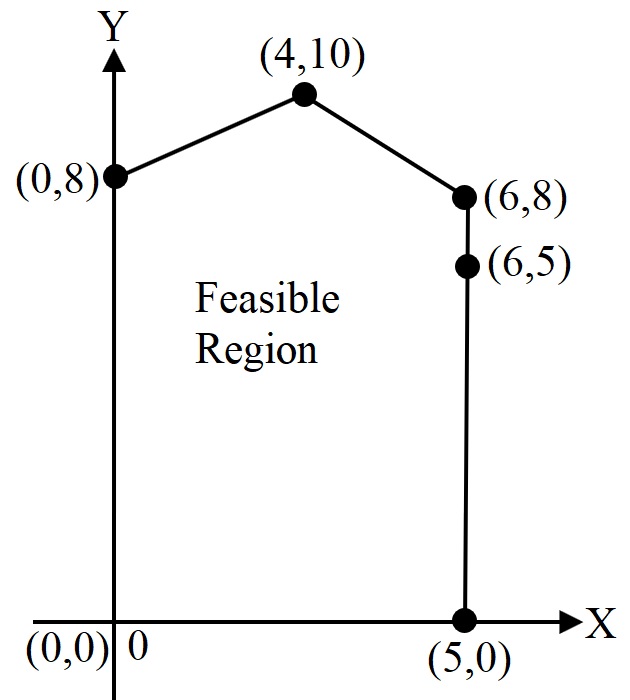
The feasible region for a LPP is shown shaded in the figure. Let Z = 3x - 4y be the objective function. Minimum of Z occurs at.

  1. (0, 0)
  2. (0, 8)
  3. (5, 0)
  4. (4, 10)
If ${y^2} = p(x)$ is a polynomial of degree three, then $2{d \over {dx}}\left\{ {{y^3}.{{{d^2}y} \over {d{x^2}}}} \right\} =$
Let $f : R \rightarrow R$ and $g : R \rightarrow R$ be functions satisfying $f(x+y)=f(x)+f(y)+f(x) f(y)$ and $f(x)=x g(x)$ for all $x, y \in R$. If $\lim _{ x \rightarrow 0} g ( x )=1$, then which of the following statements is/are $TRUE$?

$(A)$ $f$ is differentiable at every $x \in R$

$(B)$ If $g(0)=1$, then $g$ is differentiable at every $x \in R$

$(C)$ The derivative $f^{\prime}(1)$ is equal to $1$

$(D)$ The derivative $f^{\prime}(0)$ is equal to $1$

$\int_{}^{} {\frac{{x + 1}}{{\sqrt {1 + {x^2}} }}dx} = $
If $\int {\frac{{x + 1}}{{\sqrt {2x - 1} }}} dx = f\left( x \right)\,\sqrt {2x - 1}  + C$ , where $C$ is a constant of integration of integration, then $f(x)$ is equal to
Choose the correct answer from the given four options.
The probability that exactly two of the three balls were red, the first ball being red, is:
  1. $\frac{1}{3}$
  2. $\frac{4}{7}$
  3. $\frac{15}{28}$
  4. $\frac{5}{28}$
If ${\sec ^{ - 1}}x = {\rm{cose}}{{\rm{c}}^{ - 1}}y,$ then ${\cos ^{ - 1}}\frac{1}{x} + {\cos ^{ - 1}}\frac{1}{y} = $