MCQ
$\int \sin ^{-1} x dx =?$
  • A
    $x \sin -1 x-\sqrt{1+x^2}+C$
  • B
    $x \sin -1 x-\sqrt{1-x^2}+C$
  • C
    $x \sin -1 x+\sqrt{1+x^2}+C$
  • $x \sin -1 x+\sqrt{1-x^2}+C$

Answer

Correct option: D.
$x \sin -1 x+\sqrt{1-x^2}+C$
D

Need a full question paper?

Generate a complete, print-ready paper with questions like this in minutes — across 16+ boards, with answer keys.
Start Generating Free

Similar questions

Which one of the following statements is not a tautology?
In insulators, ____________.
Electrolysis of dilute aqueous solution of $NaCl$ was carried out by passing $0.01 A$ current. What is the time required to liberate $0.01$ moles of $H_{2(g)} $ at the cathode?
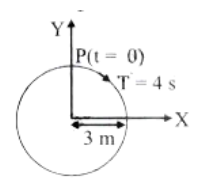
The radius of circle, the period of revolution, initial position, and sense of revolution are indicated in the figure.

Image

y-projection of the radius vector of rotating particle P is:

A small metal sphere of mass $M$ and density $d_1,$ when dropped in a jar filled with liquid moves with terminal velocity after sometime. The viscous force acting on the sphere is $(d_2 =$ density of liquid and $g =$ gravitational acceleration$)$
A wire AB is carrying steady current '$I_1$' and is kept on the table. Another wire CD carrying current '$I_2$' is held parallel and directly above AB at a distance 'r'. When wire CD is left free and it remains suspended at its position, its mass per unit length is (g =acceleration due to gravity) ____________.
A current 'I' is flowing along an infinite, straight wire, in the positive Z-direction and the same current is flowing along a similar parallel wire 5 m apart, in the negative Z-direction. A point P is at a perpendicular distance 3 m from the first wire and 4 m from the second. What will be magnitude of the magnetic field B at P?
The value of $\int_{-3}^3\left( a x^5+ b x^3+ c x+ k \right) dx$, where $a , b , c , k$ are constants, depends only on
A black sphere has radius 'R' whose rate of radiation is 'E' at temperature 'T'. If radius is made $\frac{\bar{R}}{3}$ and temperature '3T', the rate of radiation will be ______.
The quadratic equation whose roots are the numbers having arithmetic mean $34$ and geometric mean $16$ is $.......$