MCQ
$\int_{}^{} {{{\sin }^2}x\cos x\;dx} $ is equal to
  • A
    $\frac{{{{\cos }^2}x}}{2} + c$
  • B
    $\frac{{{{\sin }^2}x}}{3} + c$
  • $\frac{{{{\sin }^3}x}}{3} + c$
  • D
    $ - \frac{{{{\cos }^2}x}}{2} + c$

Answer

Correct option: C.
$\frac{{{{\sin }^3}x}}{3} + c$
c
(c) $I = \int_{}^{} {{{\sin }^2}x\,.\,\cos x\,dx} $

Put $\sin x = t \Rightarrow \cos x\,dx = dt$

$\therefore \,\,\,I = \int_{}^{} {{t^2}dt} = \frac{{{t^3}}}{3} + c = \frac{{{{\sin }^3}x}}{3} + c$.

Need a full question paper?

Generate a complete, print-ready paper with questions like this in minutes — across 16+ boards, with answer keys.
Start Generating Free

Similar questions

There are $6$ boxes labelled $B_1, B_2, \ldots, B_6$. In each trial, two fair dice $D_1, D_2$ are thrown. If $D_1$ shows $j$ and $D_2$ shows $k$, then $j$ balls are put into the box $B_k$. After $n$ trials, what is the probability that $B_1$ contains at most one ball ?
The solution of the differential equation $xy\frac{{dy}}{{dx}} = \frac{{(1 + {y^2})(1 + x + {x^2})}}{{(1 + {x^2})}}$ is
If A and B are invertible matrices, which of the following statement is not correct.
  1. adj A = |A|A-1
  2. det (A-1) = (det A)-1
  3. (A + B)-1 = A-1 + B-1
  4. (AB)-1 = B-1 A-1
The range of the function $f(x)=(\sin x)^{\sin x}$ defined on $(0, \pi)$ is
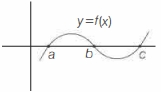
The figure shown below is the graph of the derivative of some function $y=f(x)$.Then,
If $f(x) = \left\{ \begin{array}{l}\,\,\,\,\,\,\,\,\,\,\,\,1,\,\,x < 0\\1 + \sin x,\,\,0 \le x < \frac{\pi }{2}\end{array} \right.$ then $f'(0) = $
Let $f (x) =$ $\left[ {\begin{array}{*{20}{c}}  {\tfrac{{1\,\, + \,\,\cos \,\,2\,\pi \,x}}{{1\,\, - \,\,\sin \,\,\pi \,x}}\,\,\,\,\,\,\,\,\,\,\,\,\,}&{,\,\,\,\,\,x\,\, < \,\,\tfrac{1}{2}} \\   {p\,\,\,\,\,\,\,\,\,\,\,\,\,\,\,\,\,\,\,\,\,\,\,\,\,\,\,\,\,\,\,\,\,\,\,\,\,\,\,\,}&{,\,\,\,\,\,x\,\, = \,\,\tfrac{1}{2}} \\   {\tfrac{{\sqrt {2\,x\,\, - \,\,1} }}{{\sqrt {4\,\, + \,\,\sqrt {2\,x\,\, - \,\,1} } \,\,\, - \,\,\,2}}}&{,\,\,\,\,\,x\,\, > \,\,\tfrac{1}{2}} \end{array}} \right.$ . If $f (x)$ is discontinuous at $x =\frac{1}{2}$ , then
Solve the system of the following equations  $\frac{2}{x}+\frac{3}{y}+\frac{10}{z}=4$ ; $\frac{4}{x}-\frac{6}{y}+\frac{5}{z}=1$  ; $\frac{6}{x}+\frac{9}{y}-\frac{20}{z}=2$
The probability that a bulb produced by a factory will fuse after $150$ days of use is $0.05$. What is the probability that out of $5$ such bulbs none will fuse after $150$ days of use
${d \over {dx}}\left( {{{\tan }^{ - 1}}{{\cos x} \over {1 + \sin x}}} \right) = $