Question

Interference was observed in interference chamber when air was present, now the chamber is evacuated and if the same light is used, a careful observer will see

(a) No interference

(b) Interference with bright bands

(c) Interference with dark bands

(d) Interference in which width of the fringe will be slightly increased

Answer

(d) Interference in which width of the fringe will be slightly increased

Need a full question paper?

Generate a complete, print-ready paper with questions like this in minutes — across 16+ boards, with answer keys.

Start Generating Free

Similar questions

Two non-ideal batteries are connected in parallel. Consider the following statements:
  1. The equivalent emf is smaller than either of the two emfs.
  2. The equivalent internal resistance is smaller than either of the two internal resistances.
  1. Both A and B are correct.
  2. A is correct but B is wrong.
  3. B is correct but A is wrong.
  4. Both A and B are wrong.

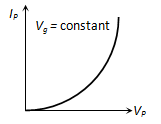
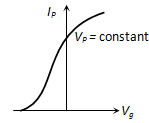
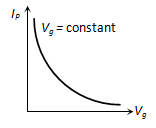
The mutual characteristic of triode is

(a)

(a)

(c)     

(d)

When ultraviolet rays incident on a metal surface, it causes no photoelectric effect but will occur due to incident of the following :
Identify the correct statement from the following.
Two charges of $+1 μ\text{C} +5 μ\text{C}$ are placed 4cm apart, the ratio of the force exerted by both charges on each other will be-

You are given four sources of light each one providing a light of a single colour – red, blue, green and yellow. Suppose the angle of refraction for a beam of yellow light corresponding to a particular angle of incidence at the interface of two media is 90º. Which of the following statements is correct if the source of yellow light is replaced with that of other lights without changing the angle of incidence?

For television broadcasting, the frequency employed is normally

(a) 30-300 MHz

(b) 30-300 GHz

(c) 30-300 KHz

(d) 30-300 Hz

Which of the following quantities related to a lens depend on the wavelength or wavelengths of the incident light?
  1. Power.
  2. Focal length.
  3. Chromatic aberration.
  4. Radii of curvature.
Ampere’s circuital law is equivalent to:

Mean life of a radioactive sample is 100 seconds. Then its half life (in minutes) is

(a) 0.693 

(b) 1

(c) 10-4

(d) 1.155