MCQ
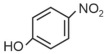
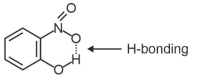
Intramolecular hydrogen bonding is present in
  • A

  • B

  • C
    $HF$

Answer

Correct option: D.

d
In o-nitrophenol intramolecular $\mathrm{H}$-bonding is present.

Need a full question paper?

Generate a complete, print-ready paper with questions like this in minutes — across 16+ boards, with answer keys.

Start Generating Free

Similar questions

The equilibrium constant of a reaction at $298\,K$ is $5 \times {10^{ - 3}}$ and at $1000\,K$ is $2 \times {10^{ - 5}}$. What is the sign of $\Delta H$ for the reaction
“The relative lowering of the vapour pressure is equal to the mole fraction of the solute.” This law is called
Below are two statements. One is labeled as Assertion $(A)$ and the other as Reason $(R):$

Assertion $(A):$ $​\mathrm{H}_2 \mathrm{Te}$ is more acidic than $\mathrm{H}_2 \mathrm{~S}$.

Reason $(R):$  The bond dissociation enthalpy of $\mathrm{H}_2 \mathrm{Te}$ is less than that of $\mathrm{H}_2 \mathrm{~S}$.

In the context of the above statements, choose the correct answer from the following options:

Which of the following expression is true regarding formation of $PCl_{5(g)}.$

$PC{l_{3(g)}}\, + \,C{l_2}(g)\, \rightleftharpoons \,PC{l_{5(g)}}$
Solubility product $(K_{sp})$ of the salts $MX\,,\, MX_2\,,\, M_3X$ at temperature $'T'$ are $4 \times 10^{-8}\,,\, 3.2 \times 10^{-14}$ and $2.7 \times 10^{-15}$ respectively. Solubilities of the salt at temperature $'T'$ are in the order
Which of the following does not show negative deviation from Raoult’s law
The electronic spectrum of $\left[ Ti \left( H _{2} O \right)_{6}\right]^{3+}$ shows a single broad peak with a maximum at $20,300\, cm ^{-1} .$ The crystal field stabilization energy $(CFSE)$ of the complex ion, in $kJ\, mol ^{-1}$, is :
The oxidation number of $As$ is
A flask contains a mixture of compounds $A$ and $B.$ Both compounds decompose by first-order kinetics. The half-lives for $A$ and $B$ are $300$ $s$ and $180\, s ,$ respectively. If the concentrations of $A$ and $B$ are equal initially, the time required for the concentration of $A$ to be four times that of $B ($ in $s ):$ (Use $\ln 2=0.693)$


The major product of the following reaction is