Question
Investigating Solar System: The table shows the average distance from each planet in our solar system to the sun.
Planet
Distance from sun $(km)$
Distance from sun $(km)$ Standard Notation
Earth
$149,600,000$
$1.496 \times 10^8$
Jupiter
$778,300,000$
 
Mars
$227,900,000$
 
Mercury
$57,900,000$
 
Neptune
$4,497,000,000$
 
Pluto
$5,900,000,000$
 
Saturn
$1,427,000,000$
 
Uranus
$2,870,000,000$
 
Venus
$108,200,000$
 
$a.$ Complete the table by expressing the distance from each planet to the Sun in scientific notation.
$b.$ Order the planets from closest to the sun to farthest from the sun.
Answer

$a.$ Sceintific notation from Sun to:
$ \text { Earth }=149600000=1496 \times 10^5=1.496 \times 10^8 $
$ \text { Jupiter }=778300000=7783 \times 10^5=7.783 \times 10^8 $
$ \text { Mars }=227900000=2279 \times 10^5=2.297 \times 10^8 $
$ \text { Mercury }=57900000=579 \times 10^5=5.97 \times 10^7 $
$ \text { Neptune }=4497000000=4497 \times 10^6=4.497 \times 10^9 $
$ \text { Pluto }=5900000000=59 \times 10^8=5.9 \times 10^9 $
$ \text { Saturn }=1427000000=1427 \times 10^6=1.427 \times 10^9 $
$ \text { Uranus }=28700000000=287 \times 10^7=2.87 \times 10^9 $
$ \text { Venus }=108200000=1082 \times 10^5=1.082 \times 10^8 $
$b.$ Order of planet from closest to the Sun to farthest from the sun is given by:
Mercury $ < $ Venus $ < $ Earth $ < $ Mars $ < $ Jupiter $ < $ Saturn $ < $ Uranus $ < $ Naptune $ < $ Pluto

Need a full question paper?

Generate a complete, print-ready paper with questions like this in minutes — across 16+ boards, with answer keys.

Start Generating Free

Similar questions

Construct a rhombus with side $6\ cm$ and one diagonal $8\ cm$. Measure the other diagonal.
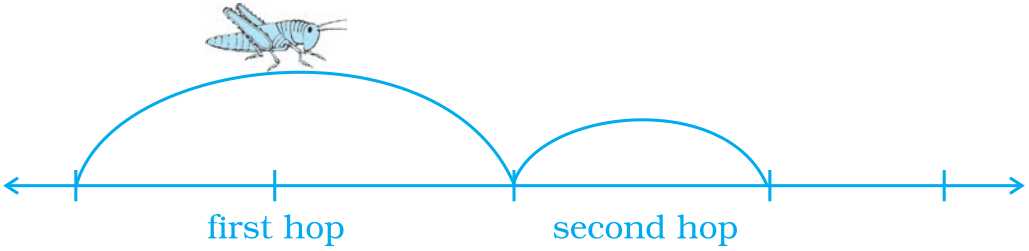
An insect is on the $0$ point of a number line, hopping towards $1$. She covers half the distance from her current location to $1$ with each hop. So, she will be at $\frac{1}{2}$ after one hop, $\frac{3}{4}$ after two hops, and so on.
$a.$ Make a table showing the insect’s location for the first $10$ hops.
$b.$ Where will the insect be after $n$ hops?
$c.$ Will the insect ever get to $1$? Explain.
Find the least number which must be subtracted from $3250$ so as to get a perfect square. Also find the square root of the perfect square so obtained.
The monthly wages of $30$ workers in a factory are given below:
$830, 835, 890, 810, 835, 836, 869, 845, 898, 890, 820, 860, 832, 833, 855, 845, 804, 808, 812, 840, 885, 835, 836, 878, 840, 868, 890, 806, 840, 890.$
Represent the data in the form of a frequency distribution with class size $10$.
Which of the following numbers are perfect squares? $11, 12, 16, 32, 36, 50, 64, 79, 81, 111, 121.$
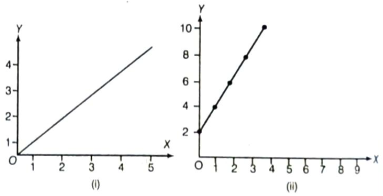
Study the given graphs (i) and (ii) and complete the corresponding tables below.
Image
(i)
$x$0123
$y$
(ii)
$x$01234
$y$
Divide $184$ into two parts such that one-third of one part may exceed one-seventh of another part by $8$.
Solve the following equation and also check your result in case: $\frac{6\text{x}+1}{2}+1=\frac{7\text{x}-3}{3}$
The percentages of various categories of workers in a state are given in the following table.
Catrgoies
Culti-vators
Agricultural Labourers
Industrial Workers
Commercial Workers
Others
% of workers
$40$
$25$
$12.5$
$10$
$12.5$
Present the information in the form a pie-chart.
Resolve each of the following quadratic trinomial into factor:
$ 3 x^2+22 x+35$