Question
Is viscosity a vector?

Answer

It is the property of liquid which is equal to the magnitude of dragging force per unit area between the two layers of liquid whose velocity gradient is unity. So it has no direction (only magnitude of force) so it is not vector.

Need a full question paper?

Generate a complete, print-ready paper with questions like this in minutes — across 16+ boards, with answer keys.
Start Generating Free

Similar questions

A simple pendulum of a length l and having a bob of mass M is suspended in a car. The car is moving on a circular track of radius R with a uniform speed v. If the pendulum makes small oscillations in a radial direction about its equilibrium position, what will be its time period?
Jf the kinetic energy of a satellite revolving around the earth in any orbit is doubled, then what will happen to it?
2 cm from a horizontal pipe of unequal bore. At a point of pressure equal to Hg column, water is flowing out at a velocity of $40 cm / sec$. Calculate the pressure at the point where the velocity of water flow is $60 cm / sec$.
Two protons are brought towards each other. Will the potential energy of the system decrease or increase? Explain.
Two forces whose magnitudes are in the ratio 3 : 5 give a resultant of 28N. If the angle of their inclination is $60^o$. Find the magnitude of each force.
A man, the surface area of whose skin is $2m^2$, is sitting in a room where area temperature is 20°C. If his skin temperature is 28°C and emissivity of his skin equals 0.97, find the rate at which his body loses heat $($Given $\sigma=5.67\times10^{-8}\text{w}/\ \text{m}^2/\ \text{T}^4).$
If each of the units of force and length is doubled, how much will the value of unit of energy become?
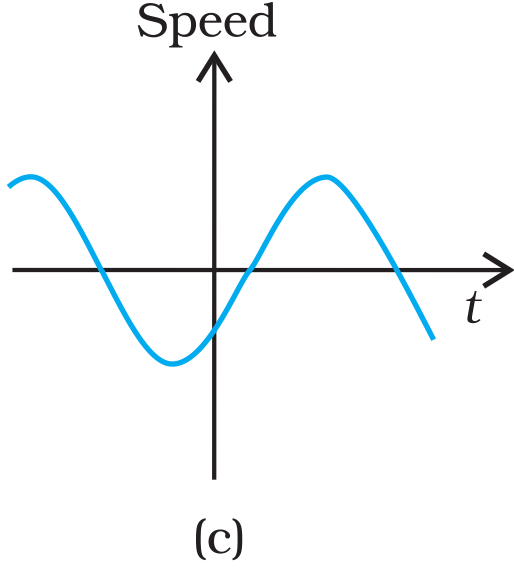
Look at the graphs carefully and state, with reasons, which of these cannot possibly represent one-dimensional motion of a particle.
Two transparent slabs having equal thickness but different refractive indices $\mu_1$ and $\mu_2$ are pasted side by side to form a composite slab. This slab is placed just after the double slit in a Young's experiment so that the light from one slit goes through one material and the light from the other slit goes through the other material. What should be the minimum thickness of the slab so that there is a minimum at the point $P_0$ which is equidistant from the slits?
In adiabatic compression of a gas, no heat is supplied to the gas from outside, yet the temperature of gas increases it. Explain the reason.