MCQ
Lemon plants are _________
  • A
    herbs
  • shrubs
  • C
    trees
  • D
    none of these

Answer

Correct option: B.
shrubs
B

Need a full question paper?

Generate a complete, print-ready paper with questions like this in minutes — across 16+ boards, with answer keys.
Start Generating Free

Similar questions

Example of periodic motion is:
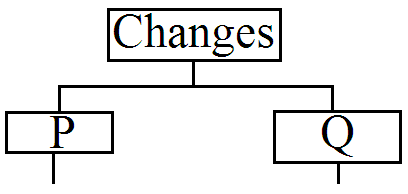
Study the flowchart carefully.
$(i)$
Melting of ice
$(i)$
Cutting of paper
$(ii)$
Blowing of balloon
$(ii)$
Flowering of bud
Which of the following is correct$?$
DIRECTIONS: The questions in this segment consists of two statements, one labelled as "Assertion $A$" and the other labelled as "Reason $R$". You are to examine these two statements carefully and decide if the Assertion $A$ and Reason $R$ are individually true and if so, whether the reason is a correct explanation of the assertion. Select your answers to these items using codes given below.
Assertion $A:$ An electric bulb glows, only when an electric current passes through it.
Reason $(R):$ In an electric circuit the direction of current is taken from negative to positive terminal of the electric cell.
Which of the following plants do not have stomata? $(i)$ Hydrilla $(ii)$ Water lily $(iii)$ All of these:
Which of the following is $NOT$ a bad conductor of heat?
Direction: Read the passages given below and answer the questions that follow. Passage. Lemonade is prepared by mixing lemon juice an sugar in water. You extracted lemon juice from lemon and used some method to remove solid particles of pulp from it before mixing it with water. Now you add sugar and ice to the above solution before serving it. Which process have you used to remove pulp from lemon juice?
Why do we eat roots of turnip?
Which joint is present at the knee and arm?
There is a mistake in the given classification table:
Non-conductor of electricity
Conductor of electricity
Wool
Copper
Cotton
Brass
Plastic
Iron
Cork
Steel
Graphite
Silver
Which of the following is placed incorrectly in the groups?
What does the substance called which does not conduct electricity?