MCQ
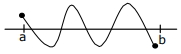
Let  $f:(a, b) \rightarrow R$ be twice differentiable function such that $f(x)=\int_{a}^{x} g(t) d t$ for a differentiable function $g(x) .$ If $f(x)=0$ has exactly five distinct roots in $(a, b)$, then $g(x) g^{\prime}(x)=0$ has at least:
  • seven roots in $(a, b)$
  • B
    five roots in $(a, b)$
  • C
    three roots in $(a, b)$
  • D
    twelve roots in $(a, b)$

Answer

Correct option: A.
seven roots in $(a, b)$
a
$\mathrm{f}(\mathrm{x})=\int_{\mathrm{a}}^{\mathrm{x}} \mathrm{g}(\mathrm{t}) \,\mathrm{d} \mathrm{t}$

$\mathrm{f}(\mathrm{x}) \rightarrow 5$

$\mathrm{f}^{\prime}(\mathrm{x}) \rightarrow 4$

$\mathrm{~g}(\mathrm{x}) \rightarrow 4$

$\mathrm{~g}^{\prime}(\mathrm{x}) \rightarrow 3$

Need a full question paper?

Generate a complete, print-ready paper with questions like this in minutes — across 16+ boards, with answer keys.

Start Generating Free

Similar questions

Find the value of $x,\,y$ and $z$ from the following equation : $\left[\begin{array}{ll}x+y & 2 \\ 5+z & x y\end{array}\right]=\left[\begin{array}{ll}6 & 2 \\ 5 & 8\end{array}\right]$
Let $A \equiv  (\lambda  + 2, 1 - 2\lambda , \lambda  + 2)$ and $B \equiv  (2k + 1, k, k +1)$ and $ \lambda , k  \in  R.$ Then minimum distance between $A$ and $B$ is -
Let the position vectors of three vertices of a triangle be $4 \overrightarrow{\mathrm{p}}+\overrightarrow{\mathrm{q}}-3 \overrightarrow{\mathrm{r}},-5 \overrightarrow{\mathrm{p}}+\overrightarrow{\mathrm{q}}+2 \overrightarrow{\mathrm{r}}$ and $2 \vec{p}-\vec{q}+2 \vec{r}$. If the position vectors of the orthocenter and the circumcenter of the triangle are $\frac{\overrightarrow{\mathrm{p}}+\overrightarrow{\mathrm{q}}+\overrightarrow{\mathrm{r}}}{4}$ and $\alpha \overrightarrow{\mathrm{p}}+\beta \overrightarrow{\mathrm{q}}+\gamma \overrightarrow{\mathrm{r}}$ respectively, then $\alpha+2 \beta+5 \gamma$ is equal to:
The coefficient of ${x^5}$ in the expansion of ${{{x^2} + 1} \over {({x^2} + 4)(x - 2)}}$ is
The solution of the equation $|z| - z = 1 + 2i$ is
The integral $\int \frac{\left(x^8-x^2\right) d x}{\left(x^{12}+3 x^6+1\right) \tan ^{-1}\left(x^3+\frac{1}{x^3}\right)}$ is equal to :
The differential equation whose solution is $y = A\sin x + B\cos x,$ is
If a circle passes through the point $(1, 2)$ and cuts the circle ${x^2} + {y^2} = 4$ orthogonally, then the equation of the locus of its centre is
The area of the region $\left\{ {\left( {x,y} \right):{x^2} + {y^2} \leqslant 1 \leqslant x + y} \right\}$ is
If $\int_{}^{} {f(x)\sin x\cos x\;dx = \frac{1}{{2({b^2} - {a^2})}}\log (f(x))} + c$, then $f(x) = $