MCQ
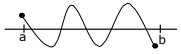
Let  $f:(a, b) \rightarrow R$ be twice differentiable function such that $f(x)=\int_{a}^{x} g(t) d t$ for a differentiable function $g(x) .$ If $f(x)=0$ has exactly five distinct roots in $(a, b)$, then $g(x) g^{\prime}(x)=0$ has at least:
  • seven roots in $(a, b)$
  • B
    five roots in $(a, b)$
  • C
    three roots in $(a, b)$
  • D
    twelve roots in $(a, b)$

Answer

Correct option: A.
seven roots in $(a, b)$
a
$\mathrm{f}(\mathrm{x})=\int_{\mathrm{a}}^{\mathrm{x}} \mathrm{g}(\mathrm{t}) \,\mathrm{d} \mathrm{t}$

$\mathrm{f}(\mathrm{x}) \rightarrow 5$

$\mathrm{f}^{\prime}(\mathrm{x}) \rightarrow 4$

$\mathrm{~g}(\mathrm{x}) \rightarrow 4$

$\mathrm{~g}^{\prime}(\mathrm{x}) \rightarrow 3$

Need a full question paper?

Generate a complete, print-ready paper with questions like this in minutes — across 16+ boards, with answer keys.

Start Generating Free

Similar questions

$\int {{e^{3\log x}}{{({x^4} + 1)}^{ - 1}}\,\,dx} $=
Let a function $f: R \rightarrow R$ be defined as

$f(x)=\sin x-e^{x} \,\,\,\, \text { if } x \leq 0$

$\quad\quad\quad a+[-x] \,\,\,\, \text { if } 0\,<\,x\,<\,1$

$\quad\quad\quad 2 x-b \,\,\,\,\,\,\,\, \text { if } \geq 1$

where $[\mathrm{x}]$ is the greatest integer less than or equal to $\mathrm{x}$. If $\mathrm{f}$ is continuous on $\mathrm{R}$, then $(\mathrm{a}+\mathrm{b})$ is equal to:

Evaluate: $\int_2^4 \frac{\left(x^2+x\right)}{\sqrt{2 x+1}} d x$
Let the system of linear equations

$x+y+\alpha z=2$

$3 x+y+z=4$

$x+2 z=1$

have a unique solution $\left(x^{*}, y^{*}, z^{*}\right)$. If $\left(\alpha, x^{*}\right),\left(y^{*}, \alpha\right)$ and $\left(x^{*},-y^{*}\right)$ are collinear points, then the sum of absolute values of all possible values of $\alpha$ is

A rectangular parallelopiped is formed by planes drawn through the point (5, 7, 9) and (2, 3, 7) parallel to the coordinate planes. The length of an edge of this rectangular parallelopiped is:
Let $f(x) = \frac{{1 - \tan x}}{{4x - \pi }},\;x \ne \frac{\pi }{4},\;\;x \in \left[ {0,\frac{\pi }{2}} \right]$, If $f(x)$ is continuous in $\left[ {0,\frac{\pi }{2}} \right]$, then $f\left( {\frac{\pi }{4}} \right)$ is
$\int\text{e}^{\text{x}}(1-\cot\text{x}+\cot^2\text{x})\text{dx}=$
  1. $\text{e}^{\text{x}}\cot\text{x}+\text{C}$
  2. $-\text{e}^{\text{x}}\cot\text{x}+\text{C}$
  3. $\text{e}^{\text{x}}\text{cosec x}+\text{C}$
  4. $-\text{e}^{\text{x}}\text{cosec x}+\text{C}$
Let the function, $f:[-7,0] \rightarrow R$ be continuous on $[-7,0]$ and differentiable on $(-7,0)$ If $f(-7)=-3$ and $f(x) \leq 2,$ for all $x \in(-7,0),$ then for all such functions $f, f(-1)+f(0)$ lies in the interval
The system of equations:
x + y + z = 5
x + 2y + 3z = 9
x + 3y + λz = µ
has a unique solution, if
  1. λ = 5, µ = 13
  2. λ ≠ 5
  3. λ = 5, µ ≠ 13
  4. µ ≠ 13
Let $f(x) = sin\ x, g(x) = cos\ x$ , then which of the following statement is false