MCQ
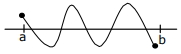
Let  $f:(a, b) \rightarrow R$ be twice differentiable function such that $f(x)=\int_{a}^{x} g(t) d t$ for a differentiable function $g(x) .$ If $f(x)=0$ has exactly five distinct roots in $(a, b)$, then $g(x) g^{\prime}(x)=0$ has at least:
  • seven roots in $(a, b)$
  • B
    five roots in $(a, b)$
  • C
    three roots in $(a, b)$
  • D
    twelve roots in $(a, b)$

Answer

Correct option: A.
seven roots in $(a, b)$
a
$\mathrm{f}(\mathrm{x})=\int_{\mathrm{a}}^{\mathrm{x}} \mathrm{g}(\mathrm{t}) \,\mathrm{d} \mathrm{t}$

$\mathrm{f}(\mathrm{x}) \rightarrow 5$

$\mathrm{f}^{\prime}(\mathrm{x}) \rightarrow 4$

$\mathrm{~g}(\mathrm{x}) \rightarrow 4$

$\mathrm{~g}^{\prime}(\mathrm{x}) \rightarrow 3$

Need a full question paper?

Generate a complete, print-ready paper with questions like this in minutes — across 16+ boards, with answer keys.

Start Generating Free

Similar questions

If the function $f(x) = 2{x^3} - 9a{x^2}$ $ + 12{a^2}x + 1,$ where $a > 0$ attains its maximum and minimum at $ p$  and $ q$ respectively such that ${p^2} = q$, then $a$ equals
Choose the correct answer from the given four options : The area of the region bounded by the ellipse $\frac{\text{x}^2}{25}+\frac{\text{y}^2}{16}=1$ is :
Let a conic $\mathrm{C}$ pass through the point $(4,-2)$ and $\mathrm{P}(\mathrm{x}, \mathrm{y}), \mathrm{x} \geq 3$, be any point on $\mathrm{C}$. Let the slope of the line touching the conic $\mathrm{C}$ only at a single point $\mathrm{P}$ be half the slope of the line joining the points $P$ and $(3,-5)$. If the focal distance of the point $(7,1)$ on $C$ is $d$, then $12 \mathrm{~d}$ equals ...........
If $A$ is a square matrix of $3 \times 3$ order, and $|A| = 2$ then $|(A-A^T)^6| + |(A^T-A)^7|$ is equal to (where $A^T$ donotes the transpose of matrix $A$).
The distance of the plane through the intersection of the planes $ax + by + cz +d = 0$ and $lx + my + nz + P = 0$ and parallel to the line $y = 0, z = 0$
If $\text{A}=\begin{bmatrix} 1 & 0 & 1 \\ 0 & 0 & 1 \\ \text{a} & \text{b} & 2 \end{bmatrix},$ then $aI + bA + 2 A^2$ equals:
The given table shows the number of cars manufactured in four different colours on a particular day. Study it carefully and answer the question.
 
Number of cars manufactured
Colour
Vento
Creta
WagonR
Red
65
88
93
White
54
42
80
Black
66
52
88
Sliver
37
49
74
What was the total number of black cars manufactured?
$\int_{}^{} {\frac{x}{{{x^4} - 1}}dx = } $
$\int\frac{-1}{\text{y}^2}\text{dy}$ is :
The corner points of the feasible region determined by the system of linear inequalities are (0, 0), (4, 0), (2, 4) and (0, 5). If the maximum value of z = ax + by, where a, b > 0 occurs at both (2, 4) and (4, 0), then: