MCQ
Let $n$ be a positive integer. For a real number $x$, let $[x]$ denote the largest integer not exceeding $x$ and $\{x\}=x-[x]$. Then, $\int \limits_1^{n+1} \frac{(\{x\})^{[x]}}{[x]} d x$ is equal to
  • A
    $\log _e(n)$
  • B
    $\frac{1}{n+1}$
  • $\frac{n}{n+1}$
  • D
    $1+\frac{1}{2}+\ldots . .+\frac{1}{n}$

Answer

Correct option: C.
$\frac{n}{n+1}$
c
(c)

Let

$I=\int \limits_1^{n+1} \frac{(\{x\})^{[x]}}{[x]} d x$

$I=\int \limits_1^2 \frac{\{x\}}{1} d x+\int \limits_2^3 \frac{\{x\}^2}{2} d x+\int \limits_3^4 \frac{\{x\}^2}{3} d x+$ $\cdots \int \limits_n^{n+1} \frac{\{x\}^n}{n} d x$

$\Rightarrow \quad I=\int \limits_0^1\left(\frac{x}{1}+\frac{x^2}{2}+\frac{x^3}{3}+\ldots+\frac{x^n}{n}\right) d x$

$\Rightarrow I=\left[\frac{x^2}{1 \times 2}+\frac{x^3}{2 \times 3}+\frac{x^4}{3 \times 4}+\ldots+\frac{x^{n+1}}{n(n+1)}\right]_0^1$

$\Rightarrow I=\frac{1}{1 \times 2}+\frac{1}{2 \times 3}+\frac{1}{3 \times 4}+\ldots+\frac{1}{n(n+1)}$

$\Rightarrow I=\left(1-\frac{1}{2}\right)+\left(\frac{1}{2}-\frac{1}{3}\right)+\left(\frac{1}{3}-\frac{1}{4}\right)+\ldots$

$\Rightarrow I=1-\frac{1}{n+1}=\frac{n+1-1}{n+1}=\frac{n}{n+1}$
Need a full question paper?

Generate a complete, print-ready paper with questions like this in minutes — across 16+ boards, with answer keys.

Start Generating Free

Similar questions

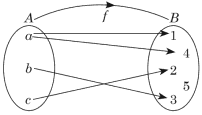
The diagram given below shows that
Image
Let $P=\left[a_{\|}\right]$be $a \times 3$ matrix and let $Q=\left[b_1\right]$, where $b_1=2^{1+j} a_{\|}$for $1 \leq i, j \leq 3$. If the determinant of $P$ is $2$ , then the determinant of the matrix $Q$ is
Let $f: R \rightarrow R$ be defined as

$f(x)=\left\{\begin{array}{ccc}x^{5} \sin \left(\frac{1}{x}\right)+5 x^{2}& , & x<0 \\ 0 & , & x=0 \\ x^{5} \cos \left(\frac{1}{x}\right)+\lambda x^{2} & , & x>0\end{array} .\right.$

The value of $\lambda$ for which $f^{\prime \prime}(0)$ exists, is

If $y = {1 \over 4}{u^4},u = {2 \over 3}{x^3} + 5$, then ${{dy} \over {dx}} = $
If $x = \frac{{1 + t}}{{{t^3}}},y = \frac{3}{{2{t^2}}} + \frac{2}{t},$ then $x{\left( {\frac{{dy}}{{dx}}} \right)^3} - \frac{{dy}}{{dx}}$ is equal to (where $t$ is a real parameter)
Let $N$ denote the number that turns up when a fair die is rolled. If the probability that the system of equations

$x+y+z=1$  ;  $2 x+N y+2 z=2$  ;  $3 x+3 y+N z=3$

has unique solution is $\frac{k}{6}$, then the sum of value of $k$ and all possible values of $N$ is

$\int\limits^{\infty}_0\log\Big(\text{x}+\frac{1}{\text{x}}\Big)\frac{1}{1+\text{x}^2}\text{ dx}=$
  1. $\pi\ln 2$
  2. $-\pi\ln2$
  3. $0$
  4. $-\frac{\pi}{2}\ln2$
$\mathop \smallint \limits_3^6 \frac{{\sqrt x }}{{\sqrt {9 - x} + \sqrt x }}\;dx = $
Choose the correct answer from the given four options.

Let f : A → B and g : B → C be the bijective functions. Then (gof)-1 is:

  1. f-1og-1
  2. fog
  3. g-1of-1
  4. gof
Let $A=\left[a_{i j}\right]$ be a $3 \times 3$ matrix, where

$a_{i j}= 1 , \quad\quad\text { if } i=j$

$\quad\quad-x ,\quad \text { if }|i-j|=1$

$\quad\quad2 x+1, \text { otherwise }$

Let a function f: $\mathrm{R} \rightarrow \mathrm{R}$ be defined as $\mathrm{f}(\mathrm{x})=\operatorname{det}(\mathrm{A})$. Then the sum of maximum and minimum values of $f$ on $R$ is equal to: