MCQ
light waves can be polarised as they are
  • Transverse
  • B
    Of high frequency
  • C
    Longitudinal
  • D
    Reflected

Answer

Correct option: A.
Transverse
Only transverse waves can be polarised.

Need a full question paper?

Generate a complete, print-ready paper with questions like this in minutes — across 16+ boards, with answer keys.
Start Generating Free

Similar questions

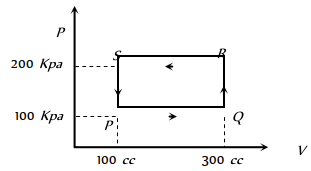
A thermodynamic system is taken through the cycle $\text{PQRSP}$ process. The net work done by the system isImage
When a copper ball is heated, the largest percentage increase will occur in its
A body takes 4 minutes to cool from $100^{\circ} \mathrm{C}$ to $70^{\circ} \mathrm{C}$. To cool from $70^{\circ} \mathrm{C}$ to $40^{\circ} \mathrm{C}$ it will take (room temperature is $15^{\circ} \mathrm{C}$ )
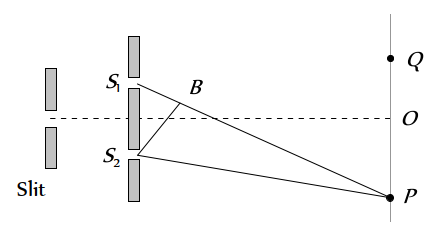
In the figure is shown Young's double slit experiment. $Q$ is the position of the first bright fringe on the right side of $O . P$ is the $11^*$fringe on the other side, as measured from $Q$. If the wavelength of the light used is $6000 \times 10^{-10} m$, then $S _1 B$ will be equal to

Image

The horizontal component of the earth's magnetic field is $0.22$ Gauss and total magnetic field is $0.4$ Gauss. The angle of dip. is
If fundamental frequency of closed pipe is $50 \mathrm{~Hz}$ then frequency of 2 overtone is
An opera glass (Gallilean telescope) measures $9 \mathrm{~cm}$ from the objective to the eyepiece. The focal length of the objective is $15 \mathrm{~cm}$. Its magnifying power is
Light of wavelength is $7200 \mathring A$ in air. It has a wavelength in glass ( $\mu=1.5$ ) equal to
A dip needle lies initially in the magnetic meridian when it shows an angle of $\operatorname{dip} \theta$ at a place. The dip circle is rotated through an angle $x$ in the horizontal plane and then it shows an angle of $\operatorname{dip} \theta^{\prime}$. Then $\frac{\tan \theta^{\prime}}{\tan \theta}$ is
A man of length $h$ requires a mirror, to see his own complete image of length at least equal to