Question
Linear programming is a method for finding the optimal values (maximum or minimum) of quantities subject to the constraints when relationship is expressed as linear equations or inequations. Based on the above information, answer the following questions.
  1. The optimal value of the objective function is attained at the points:
  1. On X-axis.
  2. On Y-axis.
  3. Which are comer points of the feasible region.
  4. None of these.
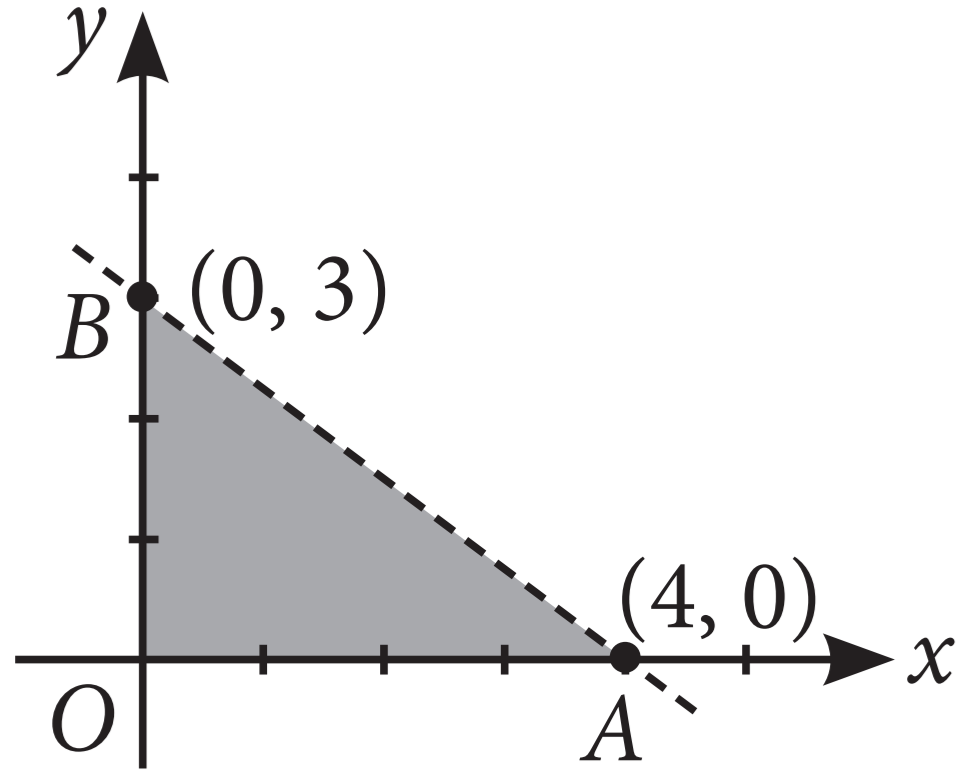
  1. The graph of the inequality 3x + 4y < 12 is:
  1. Half plane that contains the origin.
  2. Half plane that neither contains the origin nor the points of the line 3x + 4y = 12.
  3. Whole XOY-plane excluding the points on line 3x + 4y = 12.
  4. None of these.
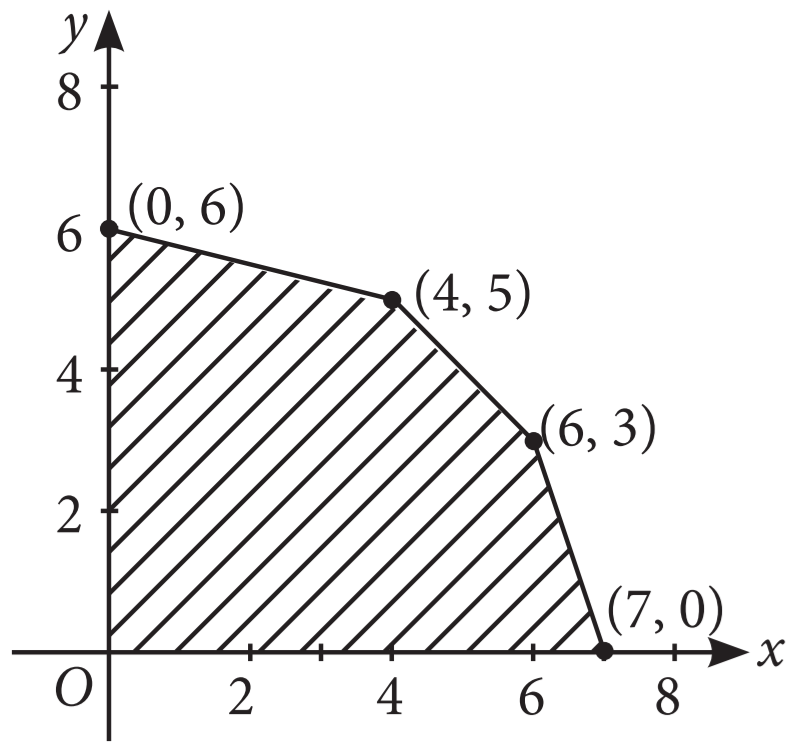
  1. The feasible region for an LPP is shown in the figure. Let Z = 2x + 5y be the objective function. Maximum of Z occurs at:
  1. (7, 0)
  2. (6, 3)
  3. (0, 6)
  4. (4, 5)
  1. The corner points of the feasible region determined by the system of linear constraints are (0, 10), (5, 5), (15, 15), (0, 20). Let Z = px + qy, where p, q > 0. Condition on p and q so that the maximum of Z occurs at both the points ( 15, 15) and (0, 20) is:
  1. p = q
  2. p = 2q
  3. q = 2p
  4. q = 3p
  1. The comer points of the feasible region determined by the system of linear constraints are (0, 0), (0, 40), (20, 40), (60, 20), (60, 0). The objective function is Z = 4x + 3y.
Compare the quantity in Column A and Column B
Column A
Column B
Maximum of Z
325
  1. The quantity in column A is greater.
  2. The quantity in column Bis greater.
  3. The two quantities are equal.
  4. The relationship cannot be determined on the basis of the information supplied.
Answer

  1. (c) Which are comer points of the feasible region.
Solution:
When we solve an L.P.P. graphically, the optimal (or optimum) value of the objective function is attained at comer points of the feasible region.
  1. (d) None of these.
Solution:
From the graph of 3x + 4y < 12, it is clear that it contains the origin but not the points on the line 3x + 4y = 12.
  1. (d) (4, 5)
Solution:
Maximum of objective function occurs at corner points.
Corner Points
Value of Z = 2x + 5y
(0, 0)
0
(7, 0)
14
(6, 3)
27
(4, 5)
$33\leftarrow\text{Maximum}$
(0, 6)
30
  1. (d) q = 3p
​​​​​​​​​​​​​​Solution:
Value of Z = px + qy at ( 15, 15)= 15p + 15q and that at (0, 20) = 20q. According to given condition, we have 15p + 15q = 20q ⇒ 15p = Sq ⇒ q = 3p.
  1. (b) The quantity in column Bis greater.
​​​​​​​​​​​​​​​​​​​​​​​​​​​​​​​​​​​Solution:
Construct the following table of values of the objective function:
Corner Points
Value of Z = 4x + 3y
(0, 0)
4 × 0 + 3 × 0 = 0
(0, 40)
4 × 0 + 3 × 40 = 120
(20, 40)
4 × 20 + 3 × 40 = 200
(60, 20)
$4\times60+3\times20=300\leftarrow\text{Maximum}$
(60, 0)
4 × 60 + 3 × 0 = 240

Need a full question paper?

Generate a complete, print-ready paper with questions like this in minutes — across 16+ boards, with answer keys.

Start Generating Free

Similar questions

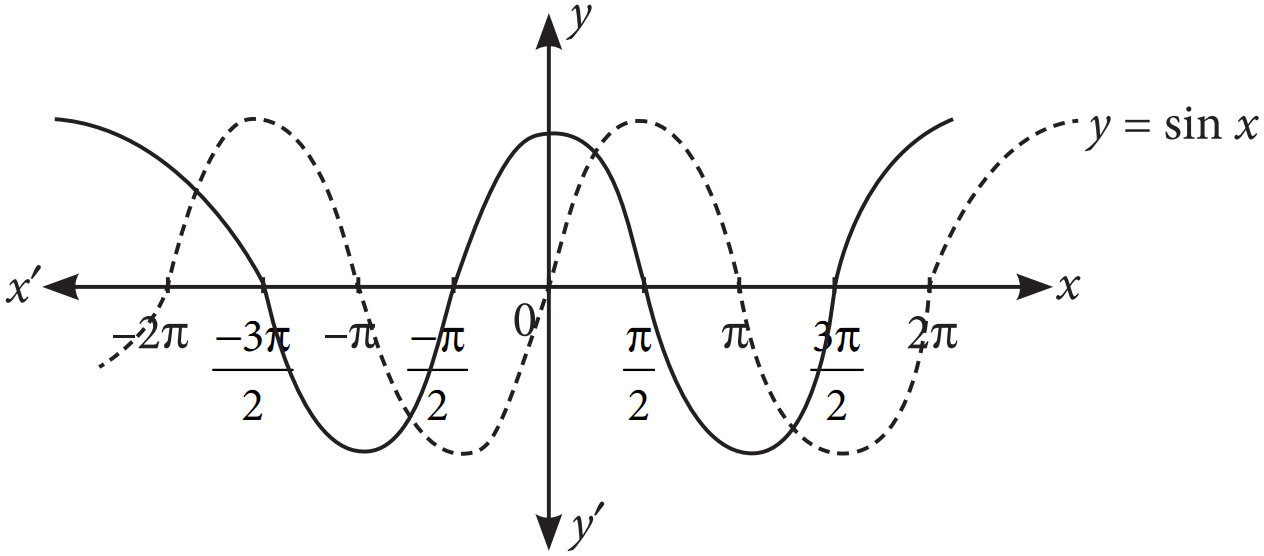
In a classroom, teacher explains the properties of a particular curve by saying that this particular curve has beautiful up and downs. It starts at 1 and heads down until $\pi$ radian, and then heads up again and closely related to sine function and both follow each other, exactly $\frac{\pi}{2}$ radians apart as shown in figure.

Based on the above information, answer the following questions.

  1. Name the curve, about which teacher explained in the classroom.
  1. Cosine
  2. Sine
  3. Tangent
  4. Cotangent
  1. Area of curve explained in the passage from 0 to $\frac{\pi}{2}$ is.
  1. $\frac{1}{3}\text{ sq.unit}$
  2. $\frac{1}{2}\text{ sq.unit}$
  3. ${1}\text{ sq.unit}$
  4. ${2}\text{ sq.units}$
  1. Area of curve discussed in classroom from $\frac{\pi}{2}$ to $\frac{3\pi}{2}$ is.
  1. -2 sq. units
  2. 2 sq. units
  3. 3 sq. units
  4. -3 sq. units
  1. Area of curve discussed in classroom from $\frac{3\pi}{2}$ to $2\pi$ is.
  1. 1 sq. unit
  2. 2 sq. units
  3. 3 sq. units
  4. 4 sq. units
  1. Area of explained curve from 0 to $2\pi$ is.
  1. 1 sq. unit
  2. 2 sq. units
  3. 3 sq. units
  4. 4 sq. units
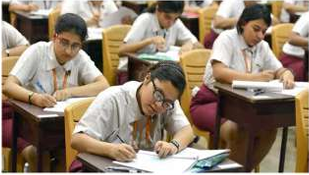
Shama is studying in class XII. She wants do graduate in chemical engineering. Her main subjects are mathematics, physics, and chemistry. In the examination, her probabilities of getting grade A in these subjects are $0.2,0.3$, and 0.5 respectively.

Image

(i) Find the probability that she gets grade A in all subjects.

(ii) Find the probability that she gets grade A in no subjects.

If an equation is of the form $\frac{\text{dy}}{\text{dx}}+\text{Py}=\text{Q},$ where P, Qare functions of x, then such equation is known as linear differential equation. Its solution is given by
 $\text{y}\times\text{(I.F.)}=\int\text{Q}\times\text{(I.F.)}\text{dx}+\text{c},$ where $\text{I.F.}=\text{e}^{\int\text{pdx}}.$
Now, suppose the given equation is $(1+\sin\text{x})\frac{\text{dy}}{\text{dx}}+\text{y}\cos\text{x}+\text{x}=0.$
Based on the above information, answer the following questions.
  1. The value of P and Q respectively are:
  1. $\frac{\sin\text{x}}{1+\cos\text{x}},\ \frac{\text{x}}{1+\sin\text{x}}$
  2. $\frac{\cos\text{x}}{1+\sin\text{x}},\ \frac{\text{-x}}{1+\sin\text{x}}$
  3. $\frac{-\cos\text{x}}{1+\sin\text{x}},\ \frac{\text{x}}{1+\sin\text{x}}$
  4. $\frac{\cos\text{x}}{1+\sin\text{x}},\ \frac{\text{x}}{1+\sin\text{x}}$
  1. The value of I.F is:
  1. $1-\sin\text{x}$
  2. $\cos\text{x}$
  3. $1+\sin\text{x}$
  4. $1-\cos\text{x}$
  1. Solution of given equation is:
  1. $\text{y}(1-\sin\text{x})=\text{x+c}$
  2. $\text{y}(1+\sin\text{x})=-\text{x}^2+\text{c}$
  3. $\text{y}(1-\sin\text{x})=\frac{\text{-x}^2}{2}\text{+c}$
  4. $\text{y}(1+\sin\text{x})=\frac{\text{-x}^2}{2}\text{+c}$
  1. If y(0) = 1, then y equals
  1. $\frac{2-\text{x}^2}{2(1+\sin\text{x})}$
  2. $\frac{2+\text{x}^2}{2(1+\sin\text{x})}$
  3. $\frac{2-\text{x}^2}{2(1-\sin\text{x})}$
  4. $\frac{2+\text{x}^2}{2(1-\sin\text{x})}$
  1. Value of is $\text{y}\Big(\frac{\pi}{2}\Big)$ is:
  1. $\frac{4-\pi^2}{2}$
  2. $\frac{8-\pi^2}{16}$
  3. $\frac{8-\pi^2}{4}$
  4. $\frac{4+\pi^2}{2}$
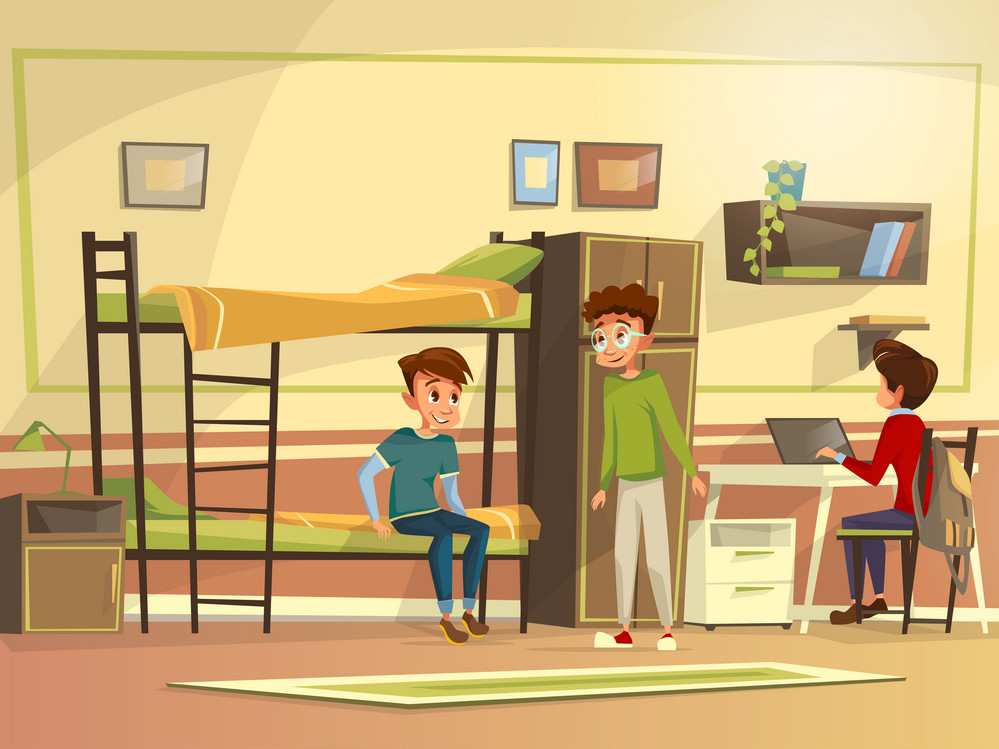
In a college hostel accommodating 1000 students, one of the hostellers came in carrying Corona virus, and the hostel was isolated. The rate at which the virus spreads is assumed to be proportional to the product of the number of infected students and remaining students. There are 50 infected students after 4 days.

Based on the above information, answer the following questions.
  1. If n(I) denote the number of students infected by Corona virus at any time I, then maximum value of n(I) is:
  1. 50
  2. 100
  3. 500
  4. 1000
  1. $\frac{\text{dn}}{\text{dt}}$ is proporuona to:
  1. n(1000 - n)
  2. n(100 + n)
  3. n(100 - n)
  4. n(100 + n)
  1. The value of n(4) is:
  1. 1
  2. 50
  3. 100
  4. 1000
  1. The most general solution of differential equation formed in given situation is:
  1. $\frac{1}{1000}\log\Big(\frac{1000-\text{n}}{\text{n}}\Big)=\lambda\text{t}+\text{c}$
  2. $\log\Big(\frac{\text{n}}{100-\text{n}}\Big)=\lambda\text{t}+\text{c}$
  3. $\frac{1}{1000}\log\Big(\frac{\text{n}}{1000-\text{n}}\Big)=\lambda\text{t}+\text{c}$
  4. None of these.
  1. The value of n at any time is given by:
  1. $\text{n(t)}=\frac{1000}{1+999\text{e}^{-0.9906\text{t}}}$
  2. $\text{n(t)}=\frac{1000}{1-999\text{e}^{-0.9906\text{t}}}$
  3. $\text{n(t)}=\frac{100}{1-999\text{e}^{-0.9906\text{t}}}$
  4. $\text{n(t)}=\frac{100}{1+999\text{e}^{-0.9906\text{t}}}$
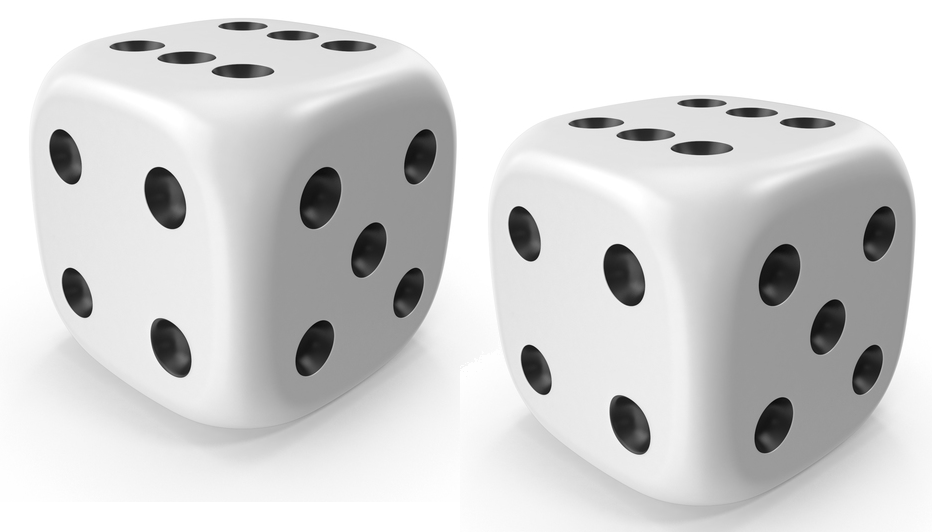
Three friends A, Band Care playing a dice game. The numbers rolled up by them in their first three chances were noted and given by A= {1, 5}, B = {2, 4, 5} and C = {1, 2, 5} as A reaches the cell 'SKIP YOUR NEXT TURN' in second throw. Based on the above information, answer the following questions.
  1. P(A | B) =
  1. $\frac{1}{6}$
  2. $\frac{1}{3}$
  3. $\frac{1}{2}$
  4. $\frac{2}{3}$
  1. P(B | C) =
  1. $\frac{2}{3}$
  2. $\frac{1}{12}$
  3. $\frac{1}{9}$
  4. $0$
  1. $\text{P}(\text{A}\cap\text{B}|\text{C})=$
  1. $\frac{1}{6}$
  2. $\frac{1}{2}$
  3. $\frac{1}{12}$
  4. $\frac{1}{3}$
  1. P(A | C) 
  1. $\frac{1}{4}$
  2. $1$
  3. $\frac{2}{3}$
  4. None of these.
  1. $\text{P}(\text{A}\cup\text{B}|\text{C})=$
  1. 0
  2. $\frac{1}{2}$
  3. $\frac{2}{3}$
  4. 1
In pre-board examination of class XII, commerce stream with Economics and Mathematics of a particular school, 50% of the students failed in Economics, 35% failed in Mathematics and 25% failed in both Economics and Mathematics. A student is selected at random from the class. Based on the above information, answer the following questions.
  1. The probability that the selected student has failed in Economics, if it is known that he has failed in Mathematics, is:
  1. $\frac{3}{10}$
  2. $\frac{12}{25}$
  3. $\frac{1}{4}$
  4. $\frac{5}{7}$
  1. The probability that the selected student has failed in Mathematics, if it is known that he has failed in Economics, is:
  1. $\frac{22}{25}$
  2. $\frac{12}{25}$
  3. $\frac{1}{2}$
  4. $\frac{3}{25}$
  1. The probability that the selected student has passed in at least one of the two subjects, is:
  1. $\frac{1}{4}$
  2. $\frac{1}{2}$
  3. $\frac{3}{4}$
  4. None of these.
  1. The probability that the selected student has failed in at least one of the two subjects, is:
  1. $\frac{3}{5}$
  2. $\frac{22}{25}$
  3. $\frac{2}{5}$
  4. $\frac{43}{100}$
  1. The probability that the selected student has passed in Mathematics, if it is known that he has failed in Economics, is:
  1. $\frac{2}{5}$
  2. $\frac{3}{4}$
  3. $\frac{1}{3}$
  4. $\frac{1}{2}$ 
Derivative of $y = f(x)\ w.r.t.\ x ($if exists$)$ is denoted by $\frac{\text{dy}}{\text{dx}}$ or $f\ '(x)$ and is called the first order derivative of $y.$ If we take derivative of $\frac{\text{dy}}{\text{dx}}$ again, then we get $\frac{\text{d}}{\text{dx}}\Big(\frac{\text{dy}}{\text{dx}}\Big)=\frac{\text{d}^2\text{y}}{\text{dx}^2}$ or $f\ ''(x)$ and is called the second order derivative of $y.$ Similarly, $\frac{\text{d}}{\text{dx}}\Big(\frac{\text{d}^2\text{y}}{\text{dx}^2}\Big)$ is denoted and defined as $\frac{\text{d}^3\text{y}}{\text{dx}^3}$ or $f\ '''(x)$ and is known as third order derivative of $y$ and so on.
Based on the above information, answer the following questions.
  1. If $\text{y}=\tan^{-1}\Big(\frac{\log(\frac{\text{e}}{\text{x}^2})}{\log(\text{ex}^2)}\Big)+\tan^{-1}\Big(\frac{3+2\log\text{x}}{1-6\log\text{x}}\Big),$ then $\frac{\text{d}^2\text{y}}{\text{dx}^2}$ is equal to:
  1. $2$
  2. $1$
  3. $0$
  4. $-1$
  1. If $u = x^2 + y^2$ and $x = s + 3t, y = 2s - t,$ then $\frac{\text{d}^2\text{u}}{\text{ds}^2}$ is equal to:
  1. $12$
  2. $32$
  3. $36$
  4. $10$
  1. If $\text{f}(\text{x})=2\log\sin\text{x},$ then $f\ ''(x)$ is equal to:
  1. $2\text{cosec}^3\text{x}$
  2. $2\cot^2\text{x}-4\text{x}^2\text{cosec}^2\text{x}^2$
  3. $2\text{x}\cot\text{x}^2$
  4. $-2\text{cosec}^2\text{x}$
  1. If $\text{f}(\text{x})=\text{e}^\text{x}\sin\text{x},$ then $f\ '''(x) =$
  1. $2\text{e}^\text{x}(\sin\text{x}+\cos\text{x})$
  2. $2\text{e}^\text{x}(\cos\text{x}-\sin\text{x})$
  3. $2\text{e}^\text{x}(\sin\text{x}-\cos\text{x})$
  4. $2\text{e}^\text{x}\cos\text{x}$
  1. If $\text{y}^2=\text{ax}^2+\text{bx}+\text{c},$ then $\frac{\text{d}}{\text{dx}}(\text{y}^3\text{y}_2)=$
  1. $1$
  2. $-1$
  3. $\frac{4\text{ac}-\text{b}^2}{\text{a}^2}$
  4. $0$
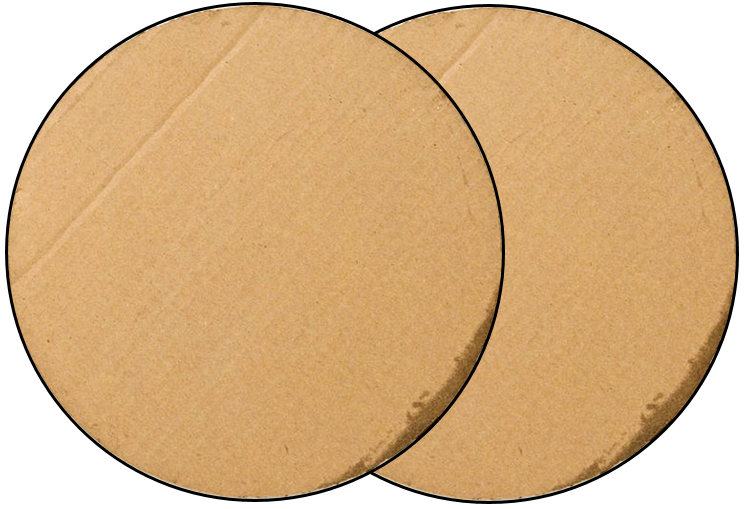
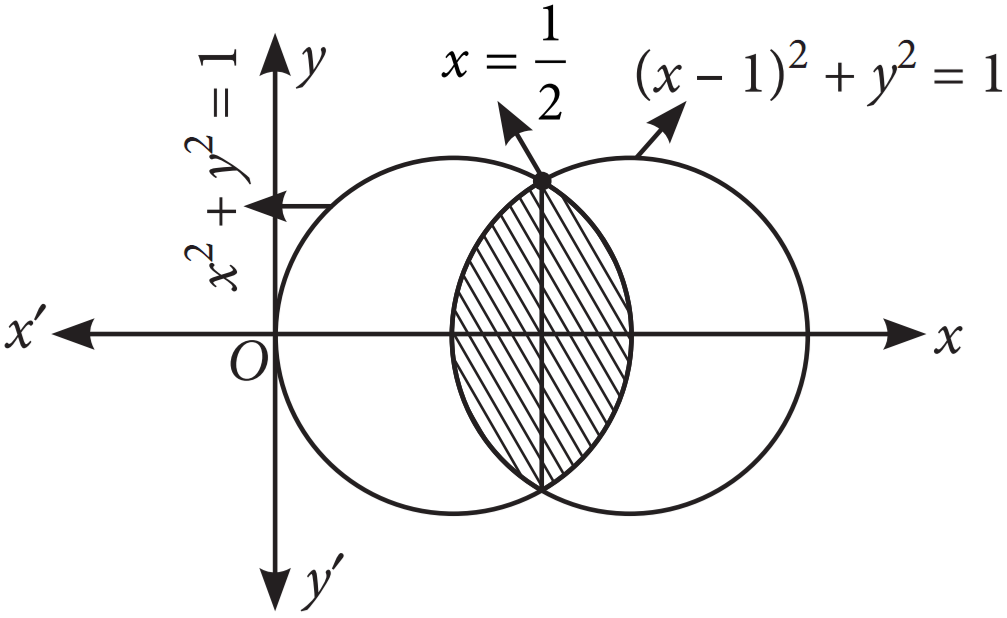
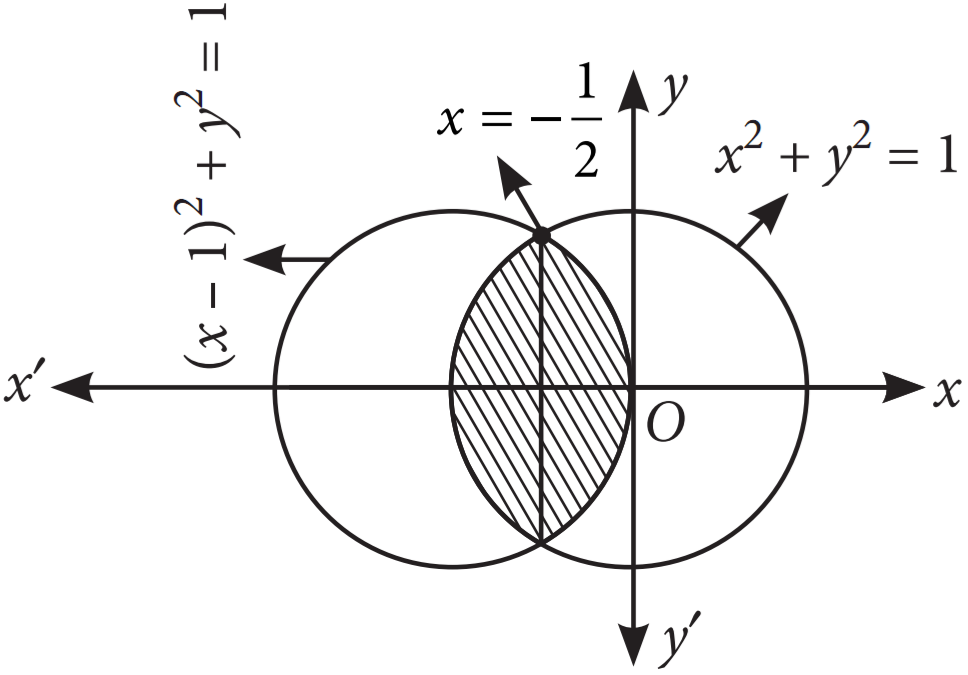
Ajay cut two circular pieces of cardboard and placed one upon other as shown in figure. One of the circle represents the equation $(x - 1)^2 + y^2 = 1,$ while other circle represents the equation $x^2 + y^2 = 1.$​​​​​​​

Based on the above information, answer the following questions.
  1. Both the circular pieces of cardboard meet each other at
  1. $\text{x}=1$
  2. $\text{x}=\frac{1}{2}$
  3. $\text{x}=\frac{1}{3}$
  4. $\text{x}=\frac{1}{4}$
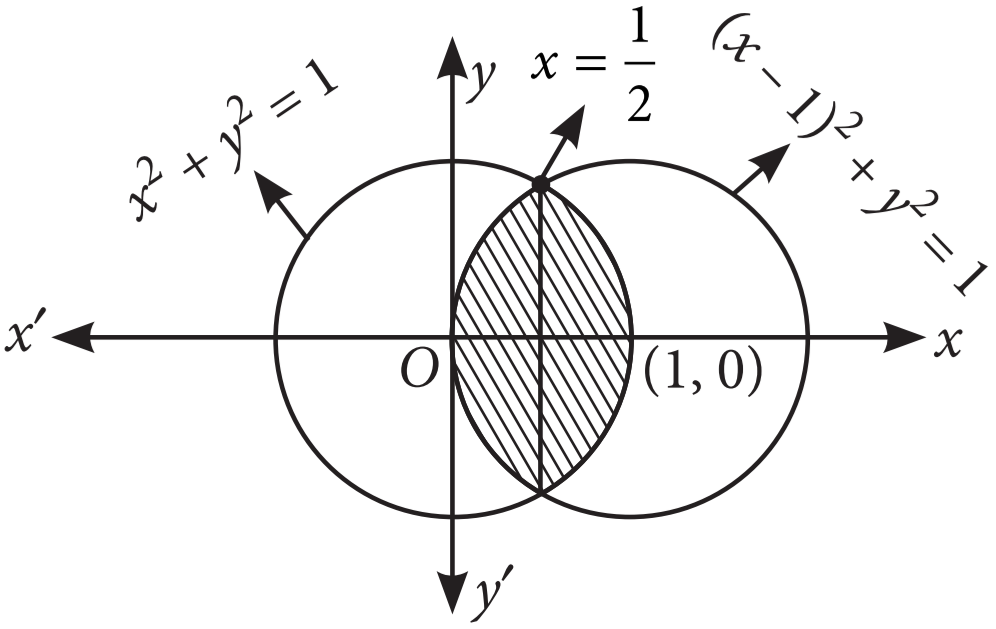
  1. Graph of given two curves can be drawn as.
  1. None of these
  1. Value of $\int\limits_{0}^{\frac{1}{2}}\sqrt{1-(\text{x}-1)^2}\text{dx}$ is.
  1. $\frac{\pi}{6}-\frac{\sqrt{3}}{8}$
  2. $\frac{\pi}{6}+\frac{\sqrt{3}}{8}$
  3. $\frac{\pi}{2}+\frac{\sqrt{3}}{4}$
  4. $\frac{\pi}{2}-\frac{\sqrt{3}}{4}$
  1. Value of $\int\limits_{\frac{1}{2}}^{1}\sqrt{1-\text{x}^2}\text{dx}$ is.
  1. $\frac{\pi}{6}+\frac{\sqrt{3}}{4}$
  2. $\frac{\pi}{6}+\frac{\sqrt{3}}{8}$
  3. $\frac{\pi}{6}-\frac{\sqrt{3}}{8}$
  4. $\frac{\pi}{2}-\frac{\sqrt{3}}{4}$
  1. Area of hidden portion of lower circle is.
  1. $\bigg(\frac{2\pi}{3}+\frac{\sqrt{3}}{2}\bigg)\text{ sq.units}$
  2. $\bigg(\frac{\pi}{3}-\frac{\sqrt{3}}{8}\bigg)\text{ sq.units}$
  3. $\bigg(\frac{\pi}{3}+\frac{\sqrt{3}}{8}\bigg)\text{ sq.units}$
  4. $\bigg(\frac{2\pi}{3}-\frac{\sqrt{3}}{2}\bigg)\text{ sq.units}$
Read the following text carefully and answer the questions that follow:
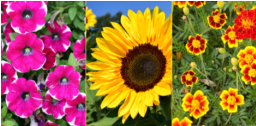
A shopkeeper sells three types of flower seeds $A_1 A_2 A_3$They are sold in the form of a mixture, where the proportions of these seeds are $4 : 4 : 2$ respectively. The germination rates of the three types of seeds are $45\%, 60\%$ and $35\%$ respectively.
Image
Based on the above information:
$i.$ Calculate the probability that a randomly chosen seed will germinate. $(1)$
$ii.$ Calculate the probability that the seed is of type $A2,$ given that a randomly chosen seed germinates. $(1)$
$iii.\ A$ die is throw and a card is selected at random from a deck of $52$ playing cards. Then find the probability of getting an even number on the die and a spade card. $(2)$
$OR$
If $A$ and $B$ are any two events such that $P(A) + P(B) - P(A$ and $B) = P(A) ,$ then find $P( A |B). 2)$
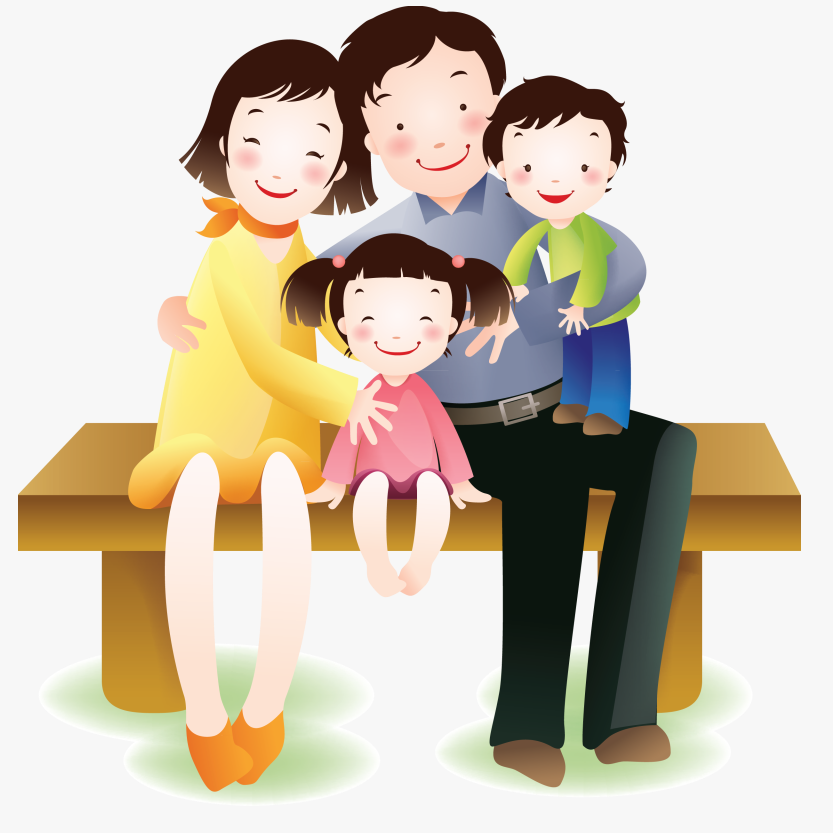
 In a wedding ceremony, consists of father, mother, daughter and son line up at random for a family photograph, as shown in figure.
Based on the above information, answer the following questions.
  1. Find the probability that daughter is at one end, given that father and mother are in the middle.
  1. $1$
  2. $\frac{1}{2}$
  3. $\frac{1}{3}$
  4. $\frac{2}{3}$
  1. Find the probability that mother is at right end, given that son and daughter are together.
  1. $\frac{1}{2}$
  2. $\frac{1}{3}$
  3. $\frac{1}{4}$
  4. $0$
  1. Find the probability that father and mother are in the middle, given that son is at right end.
  1. $\frac{1}{4}$
  2. $\frac{1}{2}$
  3. $\frac{1}{3}$
  4. $\frac{2}{3}$
  1. Find the probability that father and son are standing together, given that mother and daughter are standing together.
  1. $0$
  2. $1$
  3. $\frac{1}{2}$
  4. $\frac{2}{3}$
  1. Find the probability that father and mother are on either of the ends, given that son is at second position from the right end.
  1. $\frac{1}{3}$
  2. $\frac{2}{3}$
  3. $\frac{1}{4}$
  4. $\frac{2}{5}$