Question
List a fer'flight adaptations in birds.

Answer

Fight adaptations of the birds are the following:
  1. Forelimbs are modified into wings for flying.
  2. Body is light as they have hollow (pneumatic) bones.
  3. Body is streamlined to reduce air resistance during flight.
  4. Flights muscles are well developed.
  5. Body is covered with exoskeleton of water-proof and light-weight feathers.
  6. They have actue vision.

Need a full question paper?

Generate a complete, print-ready paper with questions like this in minutes — across 16+ boards, with answer keys.
Start Generating Free

Similar questions

Identify the phloem component which provides mechanical strength to this tissue.
Study the data given below and answer the questions which follow
ParticleElectronsProtonsNeutrons
A234
B1098
C888
D8810
i. Write the mass number and atomic number of particles A, B, C, D.
ii. Which particles represent a pair of isotopes? Explain.
Why do we hear more clearly in a room with curtains then a room withour curtains?
From the symbol $^{31}_{15}\text{P},$ state:
  1. Mass number of phosphorus.
  2. Atomic number of phosphorus.
  3. Electron configuration of phosphorus.
Two cars A and B are moving along a straight line. Car A is moving at a speed of 80 Km/h while car B is moving at a speed 50 Km/h in the same direction. Find the magnitude and direction of:
(a) the relative velocity of car A with respect to B
(b) The relative velocity of car B with respect to A
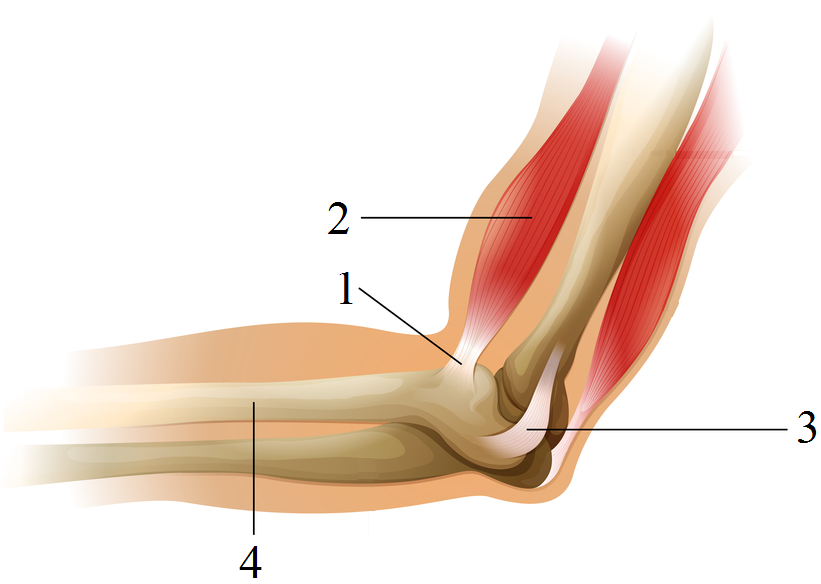
  1. Label the parts marked $1$ to $4$ in figure.
  2. Mention difference between $1$ and $3.$
The scientists now say that there are actually five states of matter $A, B, C, D$ and $E.$ The state $A$ has a fixed volume but no fixed shape. The state $B$ can be compressed very easily by applying pressure and state $C$ has a fixed shape as well as a fixed volume. The state $D$ is mixture of free electrons and ions whereas state $E$ is named after an Indian scientist and a famous physicist.
  1. Name the physical states $(i) A (ii) B (iii) C (iv) D$, and $(v) E.$
  2. Name one substance belonging to state $C$ which can directly change into vapours on heating. What is this process known as?
  3. Name one substance which normally belongs to state $B$ but whose solid form changes directly into gaseous state.
  4. Name the most common substance belonging to state $A.$
  5. Which state of matter makes the sum and other stars to glow.
In which tissue is found anyone of the following Structures: neuron, dendrite, cilia, collagen fibres, elastin fibre.
Why antibiotics effective against bacteria but not against viruses?
Define green revolution, what are the common objectives of crop improvement?