MCQ
Lorentz force is:
  • A
    Electrostatic force acting on a charged particle.
  • B
    Magnetic force acting on a moving charged particle.
  • C
    The vector sum of electrostatic and magnetic force acting on a moving charged particle.
  • D
    The vector sum of gravitational and magnetic force acting on a moving charged particle
Answer

  1. The vector sum of electrostatic and magnetic force acting on a moving charged particle.

Need a full question paper?

Generate a complete, print-ready paper with questions like this in minutes — across 16+ boards, with answer keys.

Start Generating Free

Similar questions

A 500 Hz modulating voltage fed into an FM generator produces a frequency deviation of 2.25 kHz. If amplitude of the voltage is kept constant but frequency is raised to 6 kHz then the new deviation will be

(a) 4.5 kHz

(b) 54 kHz

(c) 27 kHz

(d) 15 kHz

In determining the temperature of a distant star, one makes use of

(a) Kirchhoff's law

(b) Stefan's law

(c) Wien's displacement law

(d) None of these

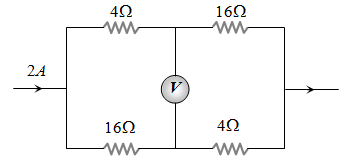
In the circuit shown below,  The reading of the voltmeter V is

(a) 12 V   

(b) 8 V

(c) 20 V

(d) 16 V

The figure below shows the north and south poles of a permanent magnet in which n turn coil of area of cross-section A is resting, such that for a current i passed through the coil, the plane of the coil makes an angle θ with respect to the direction of magnetic field B. If the plane of the magnetic field and the coil are horizontal and vertical respectively, the torque on the coil will be

(a) τ = niAB cosθ

(b) τ = niAB sinθ

(c) τ = niAB

(d) None of the above, since the magnetic field is radial

In electrolysis, if the duration of the passage of current is doubled, the mass liberated i

(a) Doubled

(b) Halved

(c) Increased four times

(d) Remains the same

The electrical conductivity of pure germanium can be increased by:
At the surface of a charged conductor electrostatic field must be _____ to the surface at every point.
The net resistance of an ammeter should be small to ensure that:
The transition from the state n = 4 to n = 3 in a hydrogen like atom results in ultraviolet radiation. Infrared radiation will be obtained in the transition from:

An electron (charge = 1.6  coulomb) is accelerated through a potential of 1,00,000 volts. The energy required by the electron is

(a) 1.6  joule

(b) 1.6  

(c) 0.53  joule

(d) 1.6   joule