MCQ
Lucas test is used to distinguish between
  • ${1^o},\,{2^o}$ and ${3^o}$ alcohols
  • B
    ${1^o},\,\,{2^o}$ and ${3^o}$ amines
  • C
    Aldehydes and ketones
  • D
    Alkenes and alkynes

Answer

Correct option: A.
${1^o},\,{2^o}$ and ${3^o}$ alcohols
a
Lucas test is used to distinguish between $1^{\circ}, 2^{\circ}$ and $3^{\circ}$ alcohols.

Lucas reagent is a solution of anhydrous zinc chloride in concentrated hydrochloric acid.

The Lucas test in alcohols is a test to differentiate between primary $\left(1^{\circ}\right)$, secondary $\left(2^{\circ}\right)$, and tertiary $\left(3^{\circ}\right)$ alcohols.

Tertiary alcohols react immediately with Lucas reagent.

Secondary alcohols react within $10-15$ minutes (depending on their solubility).

Primary alcohols do not react appreciably with Lucas reagent at room temperature.

Need a full question paper?

Generate a complete, print-ready paper with questions like this in minutes — across 16+ boards, with answer keys.
Start Generating Free

Similar questions

Which of the following statement is not correct
Which of the following gives an alcohol and salt of carboxylic acid when reacted with conc. $NaOH$
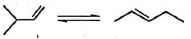
The heat of hydrogenation for $3$ -methylbutene and $2$ -pentene are $-30\, kcal/mol$ and $-28\,kcal/mol$ respectively. The heats of combustion of $2$ -methylbutane and  pentane are - $784 \,kcal / mol$ and $-782 \,kcal/mol$ respectively. All the values are  given under standard conditions. Taking into account that combustion of both alkanes  give the same products, what is $\Delta H$ (in $kcal/mol$) for the following reaction under  same conditions ?
In hydrolysis of aniline, the reagent used is
Polysubstitution is a major drawback in
The reaction

$MgO(s) + C(s) \to Mg(s) + CO(g)$, for which $\Delta _r{H^o} =  + 491.1\,kJ\,mo{l^{ - 1}}$ and $\Delta _r{S^o} =  198.0\,Jk^{-1}\,mo{l^{ - 1}}$ is not feasible at $298\, K$. Temperature above which reaction will be feasible is.....$K$

The stability of ionic crystal principally depends on
An isostere is
A litre of buffer solution contains $0.1$ mole of each of $NH _3$ and $NH _4 Cl$. On the addition of $0.02\,mole$ of $HCl$ by dissolving gaseous $HCl$, the $pH$ of the solution is found to be $......\times 10^{-3}($ Nearest integer)

$\left[\right.$ Given : $pK _{ b }\left( NH _3\right)=4.745$

$\log 2=0.301$

$\log 3=0.477$

$T =298\,K ]$

The candela is the luminous intensity, in a given direction, of a source that emits monochromatic radiation of frequency ' A ' $\times 10^{12}$ hertz and that has a radiant intensity in that direction of $\frac{1}{{ }^{\prime}} B ^{\prime}$ watt per steradian. 'A' and 'B' are respectively