MCQ
Magnitude of Seebeck emf between the junctions does not depend on:
  • A
    Thermocouple
  • B
    Temperature of cold junction
  • C
    Temperature of hot function
  • D
    Neutral temperature

Answer

  1. Neutral temperature

Explanation:

The Seeback effect is the direct conversion of heat into electricity in which potential difference is needed to calculate the current density so the potential of two junctions must be known.

It has nothing to do with neutral temperature.

Need a full question paper?

Generate a complete, print-ready paper with questions like this in minutes — across 16+ boards, with answer keys.
Start Generating Free

Similar questions

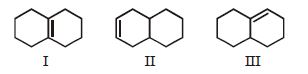
Given The enthalpy of hydrogenation of these compounds will be in the order
$5\, moles$ of $PCl_5$ are heated in a closed vessel of $5\, litre$ capacity. At equilibrium $40\%$ of $PCl_5$ is found to be dissociated. What is the value of $K_c$?
For the reaction $2NOBr (g)  \rightleftharpoons  2NO(g) + Br_2(g)$, if ${P_{B{r_2}}} = \frac{P}{9}$ at equilibrium and $P$ is total presssure, then find $\frac{{{K_P}}}{P}$ ?
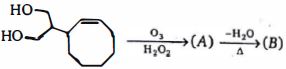
Identify $(B)$
At low temperatures, the slow addition of molecular bromine to $C{H_2} = CH - C{H_2} - C \equiv CH$ gives
Which of the following is oxidised by $KMn{O_4}$
The molecular electronic configuration of $H_2^ - $ ion is
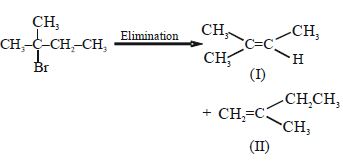
Consider the following reaction Which of the following base will give the best yield of the alkene $II$ as the major product
The value of $K_P$ for the equilibrium reaction ${N_2}{O_4}(g)\, \rightleftharpoons \,2N{O_2}(g)$ is $2.$ The percentage dissociation of $N_2O_4(g)$ at a pressure of $0.5\,atm$ is
Arrange the following alkanes in decreasing order of their heats of combustion

$(i)\,\mathop {\begin{array}{*{20}{c}}
  {\,\,\,\,\,C{H_3}} \\ 
  | \\ 
  {C{H_3} - C - C{H_3}} \\ 
  | \\ 
  {\,\,\,\,\,C{H_3}} 
\end{array}}\limits_{(Neo - pen\tan e)\,(i)} $

$(ii\mathop {)\,\begin{array}{*{20}{c}}
  {C{H_3} - CH - C{H_2} - C{H_3}} \\ 
  {|\,\,\,\,\,\,\,\,\,\,\,\,\,\,\,\,\,\,} \\ 
  {\,\,\,\,\,C{H_{3\,\,\,\,\,\,\,\,\,\,\,\,\,\,\,\,\,\,\,\,\,\,\,\,}}} 
\end{array}}\limits_{(Iso - pen\tan e)\,\,(ii)} $

$(iii)\,\mathop {C{H_3} - C{H_2} - C{H_2} - C{H_2} - C{H_3}}\limits_{(n - pen\tan e)} $