MCQ
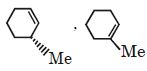
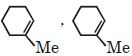
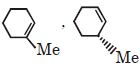
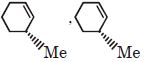
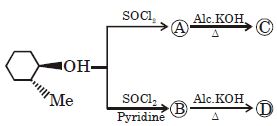
Major product $(C)$  and  $(D)$ will be respectively
  • B

  • C

  • D

Answer

Correct option: A.

a

Need a full question paper?

Generate a complete, print-ready paper with questions like this in minutes — across 16+ boards, with answer keys.

Start Generating Free

Similar questions

The dissociation equilibrium of a gas $AB_2$ can be represented as :

$2AB_{2(g)} \rightleftharpoons  2AB_{(g)} + B_{2(g)}$

The degree of dissociation is $x$ and is small compared to $1.$ The expression relating the degree of dissociation $(x)$ with equilibrium constant $K_P$ and total pressure $P$ is
Which is represented by the formula ${C_n}{H_{2n - 2}}$
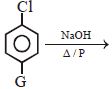
Rate of reaction is maximum if $G$ is
At $298\, K$ the $emf$ of cell is .......... $\mathrm{V}$

$\operatorname{P} t|{H_{{2_{\left( {2\,atm} \right)}}}}|H_{\left( {0.002\,M} \right)}^ \oplus ||H_{\left( {0.1\,M} \right)}^ \oplus |{H_{{2_{\left( {1\,atm} \right)}}}}|Pt$

A number of ionic compounds e.g. $AgCl,\,\,Ca{F_2},$ $BaS{O_4}$ are insoluble in water. This is because
For a concentrated solution of a weak electrolyte ( $K _{ eq }=$ equilibrium constant) $A _2 B _3$ of concentration ' $c$ ', the degree of dissociation " $\alpha$ ' is
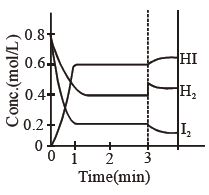
The equation for the reaction in the figure below is: $H_2(g) + I_2(g) -heat \rightleftharpoons 2HI(g)$

At the instant $3$ min, what change was imposed into the equilibrium ?
Increasing order of ionic size for the ions, $F^-, O^{2-},Na^+, Al^{3+}$ is :-
$50 \,mL$ of $0.1\, M \,CH _{3} COOH$ is being titrated against $0.1 \,M\, NaOH$. When $25\, mL$ of $NaOH$ has been added, the $pH$ of the solution will be $....\,\times 10^{-2}$. (Nearest integer)

(Given : $\left.pK _{ a }\left( CH _{3} COOH \right)=4.76\right)$

$\log 2=0.30$  $\log 3=0.48$  $\log 5=0.69$  $\log 7=0.84$  $\log 11=1.04$

Match List $I$ with List $II.$

Choose the correct answer from the options given below