MCQ
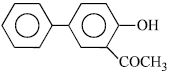
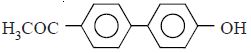
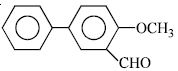
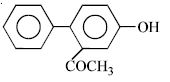
Major Product is :

  • B

  • C

  • D

Answer

Correct option: A.

a

Need a full question paper?

Generate a complete, print-ready paper with questions like this in minutes — across 16+ boards, with answer keys.

Start Generating Free

Similar questions

Mixture $X = 0.02\,mol$ of $[Co{(N{H_3})_5}S{O_4}]\,Br$ and $0.02$ $mol$ of $[Co{(N{H_3})_5}Br]S{O_4}$ was prepared in $2$ litre of solution $ 1$ litre of mixture $X$ $+ $ excess $AgN{O_3} \to Y$.

$1$  litre of mixture $X$ $+$ excess $BaC{l_2} \to Z$ Number of moles of $Y$ and $Z $ are

Which of the following is non-conducting ?
Find out ionisation constant of a weak acid $(HA)$ in terms of $\Lambda _m^o$ and $\Lambda _m^c$ ? (Given $''\alpha ''$ can not be ignored w.r.t. $1$ )
The acid formed by oxidising glucose with bromine water is :
At zero kelvin, most of the ionic crystals possess:
The suffix used in the nomenclature of alcohol is:
Which compound does not form iodoform with alkali and iodine
When alkyl halide is heated with dry $\ce{Ag_2​O},$ it produces:
The concentration of potassium ions inside a biological cell is at least twenty times higher than the outside. The resulting potential difference across the cell is important in several processes such as transmission of nerve impulses and maintaining the ion balance. A simple model for such a concentration cell involving a metal $\mathrm{M}$ is:

$\mathrm{M}(\mathrm{s}) \mid \mathrm{M}^{+}$(aq; $0.05$ molar) || $\mathrm{M}^{+}(\mathrm{aq}), 1$ molar) $\mid \mathrm{M}(\mathrm{s})$

For the above electrolytic cell the magnitude of the cell potential $\left|E_{\text {cell }}\right|=70 \mathrm{mV}$.

$1.$ For the above cell

$(A)$ $\mathrm{E}_{\text {cell }}<0 ; \Delta \mathrm{G}>0$ $(B)$ $\mathrm{E}_{\text {cell }}>0 ; \Delta \mathrm{G}<0$

$(C)$ $\mathrm{E}_{\text {cell }}<0 ; \Delta \mathrm{G}^{\circ}>0$ $(D)$ $\mathrm{E}_{\text {cell }}>0 ; \Delta \mathrm{G}^{\circ}>0$

$2.$ If the $0.05$ molar solution of $\mathrm{M}^{+}$is replaced by $0.0025$ molar $\mathrm{M}^{+}$solution, then the magnitude of the cell potential would be

$(A)$ $35 \mathrm{mV}$ $(B)$ $70 \mathrm{mV}$ $(C)$ $140 \mathrm{mV}$ $(D)$ $700 \mathrm{mV}$

Give the answer question $1,2.$ 

Which of the following options are correct?
$a.$ Micelle formation by soap in aqueous solution is possible at all temperatures.
$b.$ Micelle formation by soap in aqueous solution occurs above a particular concentration.
$c.$ On dilution of soap solution micelles may revert to individual ions.
$d.$ Soap solution behaves as a normal strong electrolyte at all concentrations.