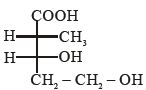
MCQ
Major product of reaction is :
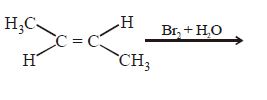
- ✓
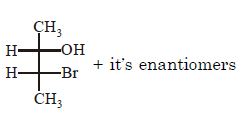
- B
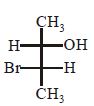
- C
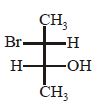
- D
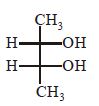
Generate a complete, print-ready paper with questions like this in minutes — across 16+ boards, with answer keys.
$2N{O_2}\left( g \right) \rightleftharpoons {N_2}{O_4}\left( g \right)$ is
$\left( {R = \frac{{25}}{3}J/K.mol,\ln 2 = 0.7,\ln 3 = 1.1} \right)$
Which of the following options has the correct combination considering $List-I$ and $List-II$?
| $List-I$ | $List-II$ |
| $(I)$ Radius of the $n^{\text {th }}$ orbit | $(P)$ $\propto n ^{-2}$ |
| $(II)$ Angular momentum of the electron in the $n^{\text {th }}$ orbit | $(Q)$ $\propto n ^{-1}$ |
| $(III)$ Kinetic energy of the electron in the $n^{\text {th }}$ orbit | $(R)$ $\propto n ^0$ |
| $(IV)$ Potential energy of the electron in the $n^{\text {th }}$ orbit | $(S)$ $\propto n ^1$ |
| $(T)$ $\propto n ^2$ | |
| $(U)$ $\propto n ^{1 / 2}$ |
($1$) Which of the following options has the correct combination considering $List-I$ and $List-II$?
$(1) (II), (R)$ $(2) (I), (P)$ $(3) (I), (T)$ $(4) (II), (Q)$
($2$) Which of the following options has the correct combination considering $List-I$ and $List-II$?
$(1) (III), (S)$ $(2) (IV), (Q)$ $(3) (IV),(U)$ $(4) (III), (P)$
Give the answer or quetion ($1$) and ($2$)
$\begin{array}{*{20}{c}}{ - OAc}\\{\rm{I}}\end{array}$$\begin{array}{*{20}{c}}{ - OMe}\\{{\rm{II}}}\end{array}$$\begin{array}{*{20}{c}}{ - OS{O_2}Me}\\{{\rm{III}}}\end{array}$$\begin{array}{*{20}{c}}{ - OS{O_2}C{F_3}}\\{{\rm{IV}}}\end{array}$
The order of leaving group ability is