Question
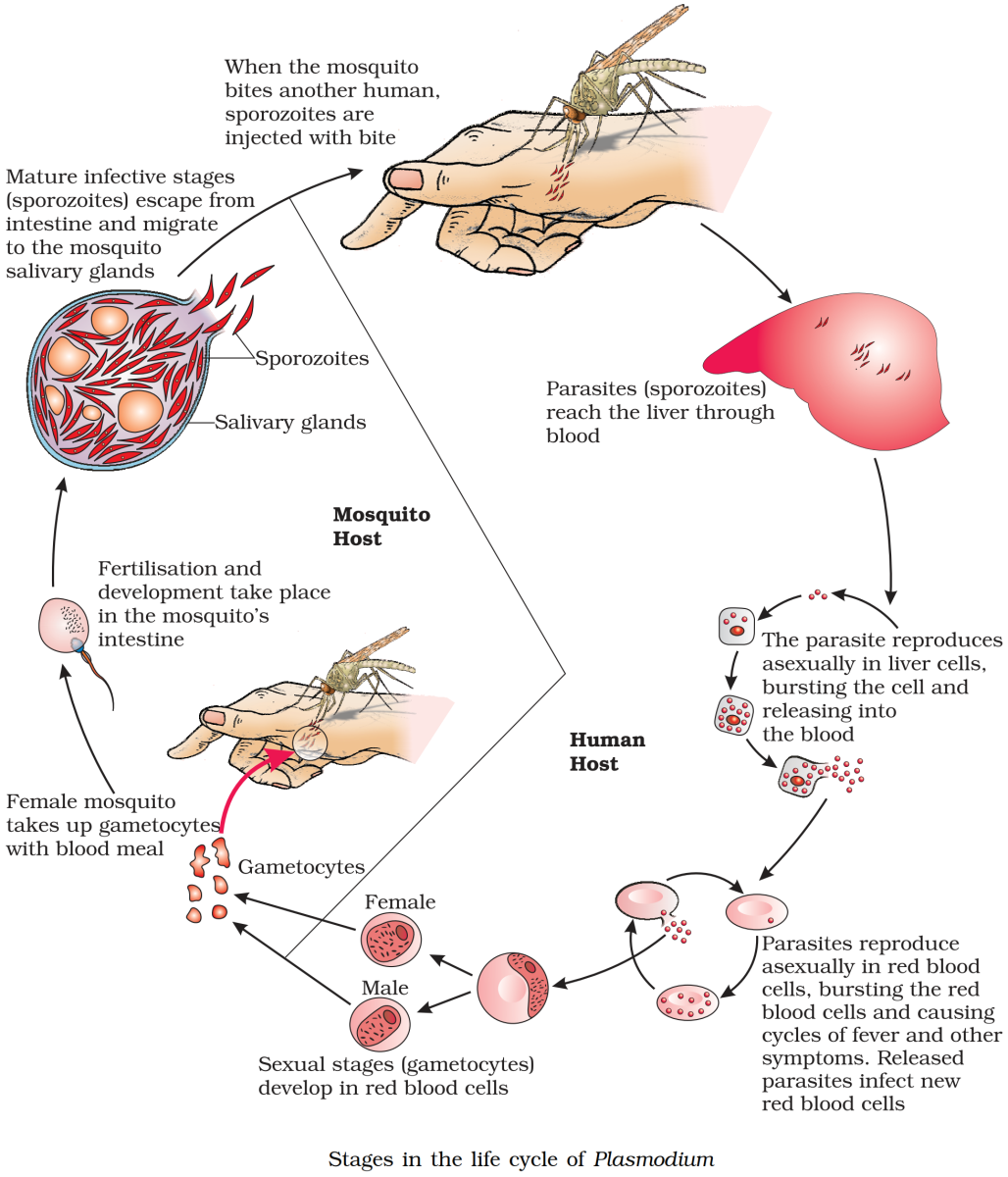
Malarial parasite ‘Plasmodium’ completes its life cycle in two hosts. Draw its complete life cycle and explain various stages it follows throughout its life.
Answer


Stages:

  1. The stage in which the parasite enters in the body of humans through saliva of mosquito-sporozoite stage.
  2. Asexual reproduction of sporozoites in liver cells, resulting into bursting of those cells and releasing outside into the blood.
  3. Sporozoites infect RBCs, cause them to get burst and represented by repeated cycles of fever. Released parasites also infect other RBCs.
  4. Parasites then follow sexual stage in RBCs which is called as ring signet stage and appears as a ring inside the RBCs under microscope. Usually presence of malarial parasite in humans is identified by pathologists by this stage.
  5. Female mosquito takes up gametocytes with the blood of host. Fertilisation and development takes place in the intestine of mosquito.
  6. From intestine, parasite comes to the salivary glands from where it reaches to human body and that is how the cycle continues.

Need a full question paper?

Generate a complete, print-ready paper with questions like this in minutes — across 16+ boards, with answer keys.
Start Generating Free

Similar questions

Briefly describe the following: Translation
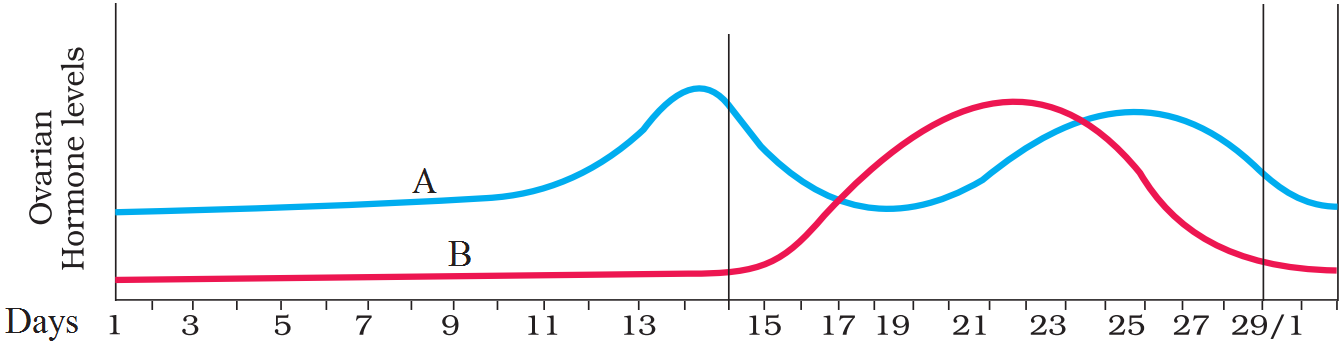
The graph given below shows the variation in the levels of ovarian hormones during various phases of menstrual cycle:

Compare the role of A and B.

Define transgenic animals. Explain in detail any four areas where they can be utilised.
What is Green House Effect? How is smog formed?
Describe the events of spermatogenesis with the help of a schematic representation.
Where does spermatogenesis occur in human testes? Describe the process of spermatogenesis upto the formation of spermatozoa.
(i) Explain the significance of each of the following features present in plants given below:, (a) In rose-bay plant the stamens ripen before the stigma., (b) In certain species of primrose, the flowers have short stamen and long style., (c) The bisexual flower of mustard exhibits rejection of self-pollen grain., (ii) Explain how autogamy is prevented in castor and papaya plant respectively.
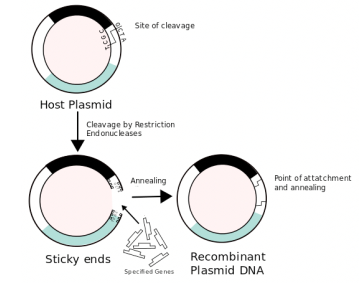
Recombinant DNA vectors are typically attenuated viruses or bacteria that are unrelated to the pathogen of interest.
These vectors can penetrate human cells and often replicate within them, but do not cause disease in the host.

Image
i. A recombinant vector with a gene of interest inserted within the gene of a-galactosidase enzyme, is introduced into a bacterium. Explain the method that would help in selection of recombinant colonies from non-recombinant ones.
ii. Why is this method of selection referred to as insertional inactivation?
(a) It is supposed that IUDs are effective contraceptive devices. Write names of any two commonly used IUDs and mention their mechanism of action.
(b) When the married couples are advised for sterilization? How it is carried out in male and female humans, respectively?
(a) Draw a sectional view of human ovary and label primary follicle, tertiary follicle, Graafian follicle and corpus luteum in it.
(b) Name the gonadotropins and explain their role in oogenesis and release of ova.