MCQ
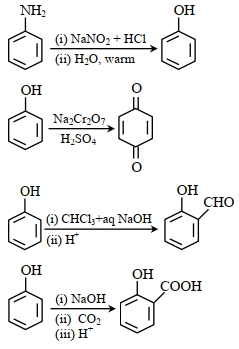
Match List-$I$ with List-$II$.

Choose the correct answer from the options given below:

  • A
    $ (A)-(III), (B)-(II), (C)-(I), (D)-(IV)$
  • B
    $(A)-(IV), (B)-(II), (C)-(III), (D)-(I)$
  • C
    $ (A)-(I), (B)-(IV), (C)-(II), (D)-(III) $
  • $ (A)-(II), (B)-(IV), (C)-(I), (D)-(III) $
Answer

Correct option: D.
$ (A)-(II), (B)-(IV), (C)-(I), (D)-(III) $
d

Need a full question paper?

Generate a complete, print-ready paper with questions like this in minutes — across 16+ boards, with answer keys.

Start Generating Free

Similar questions

Vanadium $(III) $ oxide is a strong
For making $Ag$ from $AgN{O_3}$, which of the following is used
Consider the following statements in respect of oxides of sulphur. 

$(1)$ In gas phase $SO_2$ molecule is $V-$ shape.

$(2)$ In gas Phase $SO_3$ molecule is planar

$(3)$ $\gamma - SO_3$ is cyclic trimer 

Which oi the above statement are correct ?

Which one of the following reactions of xenon compounds is not feasible ?
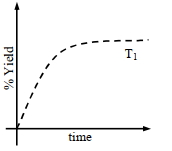
The $\%$ yield of ammonia as a function of time in the reaction

$N _2( g )+3 H _2( g ) \rightleftharpoons 2 NH _3( g ), \Delta H < 0$

at $\left( P , T _1\right)$ is given below:

$Image$

If this reaction is conducted at $\left(P, T_2\right)$, with $T_2>T_1$, the $\%$ yield of ammonia as a function of time is represented by

Mark the correct statement
The electronic configuration of three elements $A,B$ and $C$ are given below. Stable form of $C$ may be represented by the formula

$A : 1s^2\, 2s^2\, 2p^6$

$B : 1s^2\, 2s^2\, 2p^6\, 3s^2\, 3p^3$

$C : 1s^2\, 2s^2\, 2p^6\, 3s^2\, 3p^5$

$\begin{matrix}
   C{{H}_{3}}\,\,\,\,\,\,  \\
   |\,\,\,\,\,\,\,\,\,\,\,\,\,\,\,  \\
   C{{H}_{3}}-C-CH-C{{H}_{3}}  \\
   |\,\,\,\,\,\,\,\,\,|\,\,\,\,  \\
   C{{H}_{3}}\,Br\,\,  \\
\end{matrix}\xrightarrow[\Delta ]{EtOH}(A)$

Major product $(A)$ is

The limiting molar conductivity $\mathop \Lambda \limits^o $ for $NaCl, KBr$ and $KCl$ are $126, 152$ and $150 \,S\,cm^2  \,mol^{-1}$ respectively. The $\mathop \Lambda \limits^o $ for $NaBr$ is (in $S\, cm^2\, mol^{-1}$).
$KMnO_4$ oxidises oxallic acid to $CO_2$ in acidic medium then equivalent weight of $KMnO_4$ is  $(Mn = 55)$