Question
Method of formation of solution is given in Column I. Match it with the type of solution given in Column II.
  Column I   Column II
(i) Sulphur vapours passed through cold water. (a) Normal electrolyte solution.
(ii) Soap mixed with water above critical micelle concentration. (b) Molecular colloids.
(iii) White of egg whipped with water. (c) Associated colloid.
(iv) Soap mixed with water below critical micelle concentration. (d) Macro molecular colloids.

Answer

  Column I   Column II
(i) Sulphur vapours passed through cold water. (b) Molecular colloids.
(ii) Soap mixed with water above critical micelle concentration. (c) Associated colloid.
(iii) White of egg whipped with water. (d) Macro molecular colloids.
(iv) Soap mixed with water below critical micelle concentration. (a) Normal electrolyte solution.
Explanation:
  1. By passing vapours of Sulphur through cold water sulphur sol can be prepared which is a molecular colloid.
  2. When soap is mixed with water above critical micelle concentration forms associated colloid.
  3. White of egg whipped with water forms macromolecular colloid.
  4. Soap mixed with water below critical micelle concentration behave as normal electrolyte.

Need a full question paper?

Generate a complete, print-ready paper with questions like this in minutes — across 16+ boards, with answer keys.

Start Generating Free

Similar questions

  1. Account for the following:
  1. Transition metals form large number of complex compounds.
  2. The lowest oxide of transition metal is basic whereas the highest oxide is amphoteric or acidic.
  3. $E^\circ $ value for the $Mn^{3+}/Mn^{2+}$ couple is highly positive (+1.57 V) as compare to $Cr^{3+}/Cr^{2+}. 56/1/1 9.$
  1. Write one similarity and one difference between the chemistry of lanthanoid and actinoid elements.
Explain Hoffmann bromamide degradation reaction with mechanism.
(i) Define molecularity of a reaction.
(ii) Explain the effect of presence of catalyst on the rate of reaction.
(iii) In a first order reaction at 300 K , the initial concentration of the reactant was $1.0 \times 10^{-2} mol L ^{-1}$, which decreased to $0.5 \times 10^{-2} molL ^{-1}$ after 30 minutes at 300 K . Calculate the rate constant of the reactant at 300 K. $[\log 2=0.3010] \quad$
  1. Give reasons for the following:
  1. Sulphur in vapour state shows paramagnetic behaviour.
  2. N-N bond is weaker than P-P bond.
  3. Ozone is thermodynamically less stable than oxygen.
  1. Write the name of gas released when Cu is added to
  1. dilute $HNO_3$
  2. conc. $HNO_3$
  1. What is meant by:
  1. Colligative properties.
  2. Molality of a solution.
  1. What concentration of nitrogen should be present in a glass of water at room temperature? Assume a temperature of $25^\circ\ C$, a total pressure of $1$ atmosphere and mole fraction of nitrogen in air of $0.78. [K_H$ for nitrogen $= 8.42 \times 10^{–7} M/mm Hg]$.
write the classification of amino acids and give examples of each.
  1. Compare the oxidizing action of $F_2$ and $Cl_2$ by considering parameters such as bond dissociation enthalpy, electron gain enthalpy and hydration enthalpy.
  2. Write the conditions to maximize the yield of $H_2SO_4$ by contact process.
  3. Arrange the following in the increasing order of property mentioned:
  1. $H_3PO_3, H_3PO_4, H_3PO_2$ (Reducing character).
  2. $NH_3, PH_3, AsH_3, SbH3, BiH_3$​​​​​​​ (Base strength).
Describe the methods of studying various first order reactions with examples.
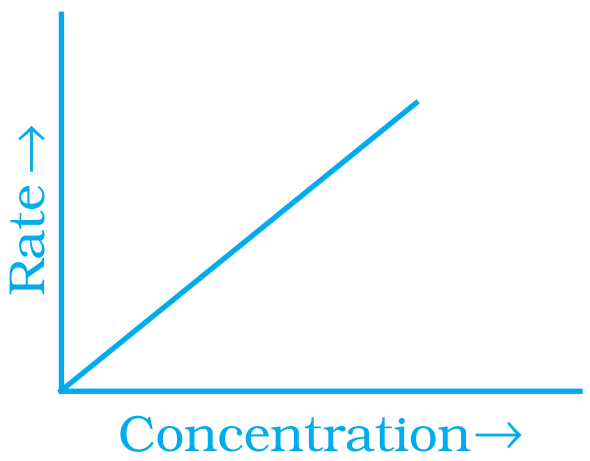
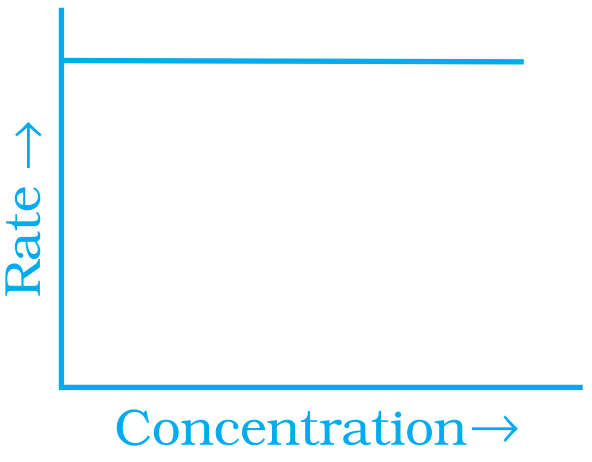
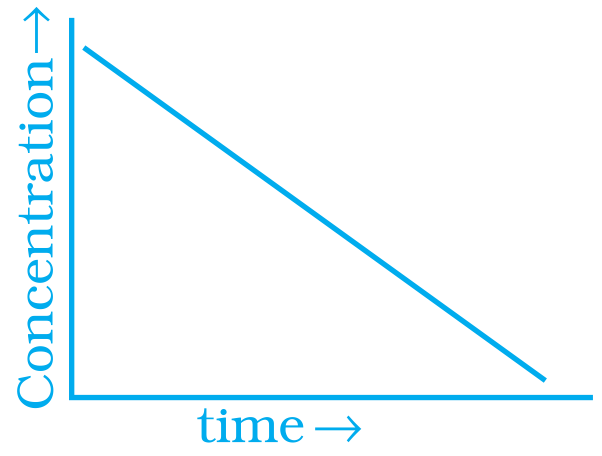
Match the graph given in Column I with the order of reaction given in Column II. More than one item in Column I may link to the same item of Column II.
 
Column I
 
Column II
(i)
 
 
(ii)
(a)
$I^{st}$ order
(iii)
(b)
Zero order
(iv)
   
Discuss in detail DNA and RNA.