Question
Name and explain the two types of immune response in humans.

Answer

The two types of immune responses are:
  1. Primary immune response:
  • The immune response that occurs as a result of the first encounter of the animal with an antigen is called primary immune response.
  • It takes longer time to establish immunity.
  • It declines rapidly.
  1. Secondary immune response
  • The immune response that occurs at the second and subsequent encounters of the animal with the antigen, is called secondary immune response.
  • It is more rapid and results in hightened immunity.

Need a full question paper?

Generate a complete, print-ready paper with questions like this in minutes — across 16+ boards, with answer keys.
Start Generating Free

Similar questions

Discuss about any co-relation with example in pollination process.
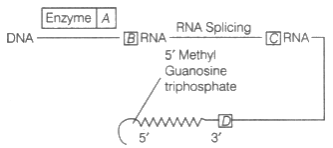
Given below is a sequence of steps of transcription in a eukaryotic cell. Answer the following questions:
Image
i. Fill up the blanks (A, B, C and D) left in the sequence.
ii. Why hnRNA is required to undergo splicing?
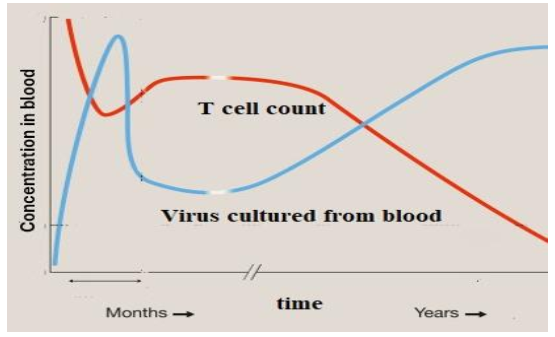
Given below is the relationship between the HIV levels in the blood and helper T cell count in a person detected with AIDS. Study the relationship and answer the questions that follow.
Image
A. What kind of relationship is observed in the virus levels and the immune response after some days of the initial infection?
B. Does it completely clear the virus from the body permanently? Give reason for your answer.
Can you think of a situation where we deliberately want to make a species extinct? How would you justify it ?
Discuss the reproduction related aspects in which counselling should be provided at the school level.
What are Adaptations? What is its importance?
Name the hormonal composition of the oral contraceptive used by human females. Explain how does it act as a contraceptive.
Give three reasons as to why prokaryotes are not given any figures for their diversity.
Explain why the term ‘homozygous’ and ‘heterozygous’ with respect to an X–linked trait are applicable to human females but not to human males?

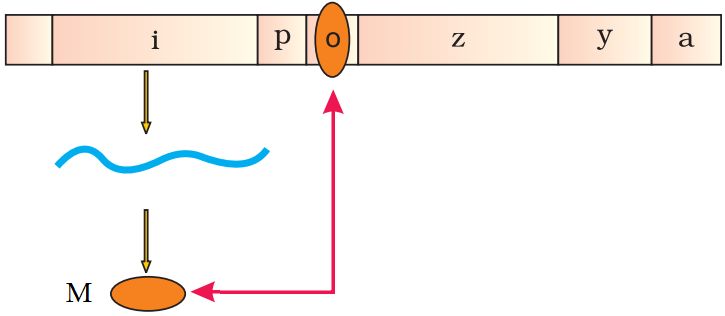
  1. Name the molecule 'M' that binds with the operator.
  2. Mention the consequences of such binding.
  3. What will prevent the binding of the molecule 'M' with the operator gene? Mention the event that follows.