Question
Name the items that are shown Long-term Borrowings.

Answer

Items shown under Long-term Borrowings are:
  1. Debentures.
  2. Bonds.
  3. Terms Loans (both from Banks and from others).
  4. Public Deposits.
  5. Other Loans and Advances.

Need a full question paper?

Generate a complete, print-ready paper with questions like this in minutes — across 16+ boards, with answer keys.

Start Generating Free

Similar questions

Calculate the amount of gross profit:
Average inventory
=
₹ 80,000
Inventory turnover ratio
=
6 times
Selling price
=
25% above cost
X Ltd. has a Current Ratio of 3.5 : 1 and Quick Ratio of 2 : 1. If the Inventories is ₹ 24,000; calculate total Current Liabilities and Current Assets.
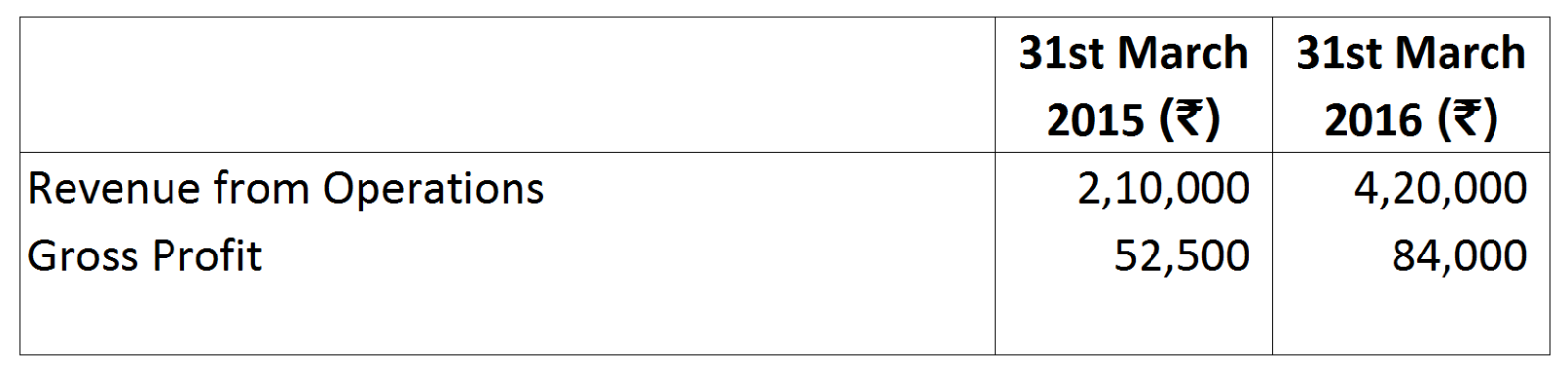
The following figures have been taken from the published accounts of G. Associates for the two successive years:
Comment upon the profitability for the two years.
From the following information provided prepare a comparative income statement for the period 2008 & 2009.
  2008 2009
Sales (₹) 6,00,000 9,00,000
Gross Profit 40% on sales 50% on sales
Administrative expenses 20% of Gross profit 15% of Gross profit
Income tax 50% 50%
Net Profit before Interest and Tax ₹ 4,00,000; 15% Long-term Debt ₹ 8,00,000; Shareholders' Funds ₹ 4,00,000. Calculate Return on Investment.
Under which sub-headings will the following items be placed in the Balance Sheet of a company as per revised Schedule VI Part I of the Companies Act, 1956:
  1. Capital Reserves.
  2. Bonds.
  3. Loans repayable on demand.
  4. Vehicles.
  5. Goodwill.
  6. Loose tools.
Calculate 'Debt Equity Ratio' from the following information:
Total Assets ₹ 3,50,000; Total Debt ₹ 2,50,000 and Current Liabilities ₹ 80,000.
Lotus Ltd. took over assets of ₹ 2,50,000 and liabilities of ₹ 30,000 of Goneby Company for the purchase consideration of ₹ 3,30,000. Lotus Ltd. paid the purchase consideration by issuing debentures of ₹ 100 each at 10% premium.
Give journal entries in the books of Lotus Ltd.
Shiva Ltd. issued 1,00,000 Equity Shares of ₹ 10 each at a premium of ₹ 5 per share. The whole amount was payable on application. The issue was fully subscribed. Pass necessary Journal entries.
Cost of Revenue from Operations (Cost of Goods Sold) ₹ 2,20,000; Revenue from Operations (Net Sales) ₹ 3,20,000; Selling Expenses ₹ 12,000; Office Expenses ₹ 8,000; Depreciation ₹ 6,000. Calculate Operating Ratio.
[Hint: Operating Expenses = Selling Expenses + Office Expenses + Depreciation.]