Question
Name two absolute units of force. How are they related?

Answer

Newton and dyne are absolute units in MKS and CGS system. 1 newton = $10^5 dynes$.

Need a full question paper?

Generate a complete, print-ready paper with questions like this in minutes — across 16+ boards, with answer keys.
Start Generating Free

Similar questions

The unit of length convenient on the atomic scale is known as an angstrom and is denoted by $\mathring{\text{A}}:1\mathring{\text{A}}=10^{-10}\text{m}.$
The size of a hydrogen atom is about $0.5\mathring{\text{A}}.$ What is the total atomic volume in m3 of a mole of hydrogen atoms?
The specific heat of argon at constant volume is $0.075 ~kcal ~kg^{-1}K^{-1}$, then what will be its atomic weight?
$[Given, R = 2 ~cal ~mol^{-1}K^{-1}]$
Answer the following: An artificial satellite orbiting the earth in very thin atmosphere loses its energy gradually due to dissipation against atmospheric resistance, however small. Why then does its speed increase progressively as it comes closer and closer to the earth?
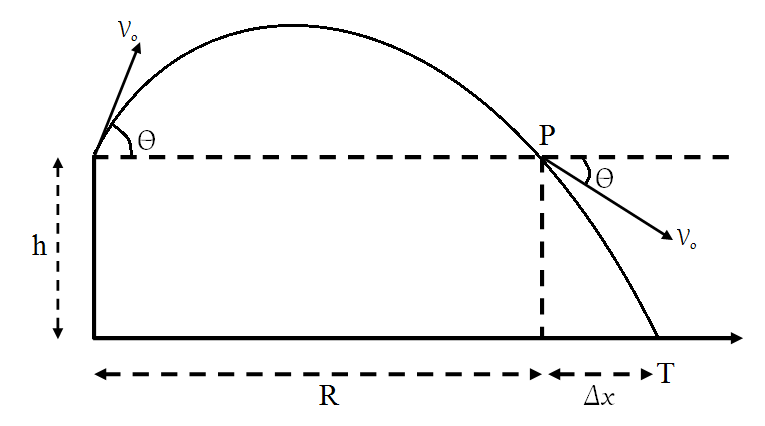
A gun can fire shells with maximum speed $v_0$ and the maximum horizontal range that can be achieved is $\text{R}=\frac{\text{v}^2_0}{\text{g}}.$

If a target farther away by distance $\Delta\text{x}$ (beyond R) has to be hit with the same gun (Fig), show that it could be achieved by raising the gun to a height at least $\text{h}=\Delta\text{x}\Big[1+\frac{\Delta\text{x}}{\text{R}}\Big]$ (Hint: This problem can be approached in two different ways:
  1. Refer to the diagram: target T is at horizontal distance $\text{x}=\text{R}+\Delta\text{x}$ and below point of projection y = – h.
  2. From point P in the diagram: Projection at speed $v_0$ at an angle $\theta$ below horizontal with height h and horizontal range $\Delta\text{x}$.)
Define moment of inertia and give its SI unit.
Why is moment of inertia also called rotationa inertia?
Answer the following: The absolute temperature (Kelvin scale) T is related to the temperature tc on the Celsius scale by tc = T – 273.15.
Two satellites of equal masses, which can be considered as particles, are orbiting the earth at different heights. Will their moments of inertia be same or different?
Two persons of equal mass are standing at some distance from each other on a flat field of ice with ice skates tied to their feet. Arope is tied around the waist of one person. If the second person pulls the rope towards himself, what will be the effect of the speed of both the people?
It is easier to catch a table tennis ball than a cricket ball even when both are moving with same velocity. Why?