Question
Nature of electromagnetic waves is:

Answer

(b)Transverse

Need a full question paper?

Generate a complete, print-ready paper with questions like this in minutes — across 16+ boards, with answer keys.
Start Generating Free

Similar questions

From a point charge, there is a fixed point A. At A, there is an electric field of 500V/ m and potential difference of 3000V. Distance between point charge and A will be:
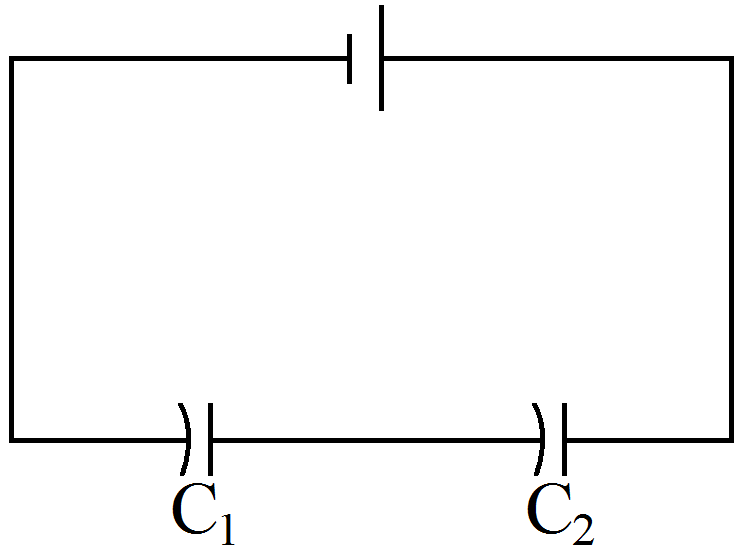
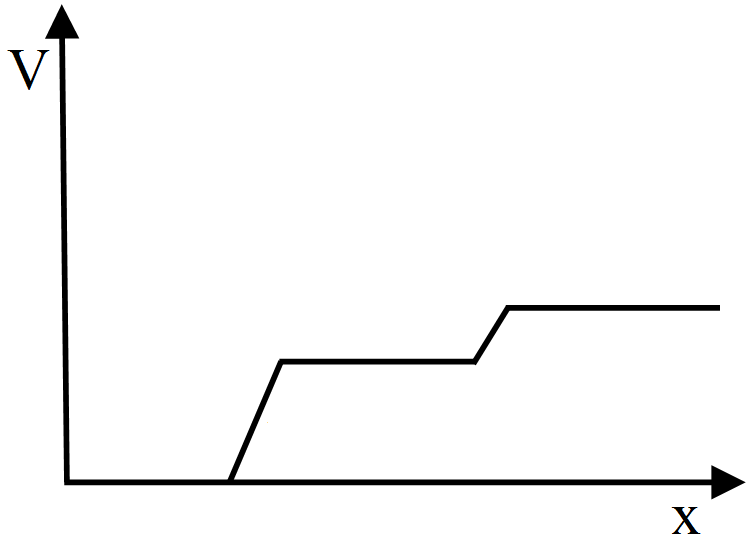
Figure shows two capacitors connected in series and joined to a battery. The graph shows the variation in potential as one moves from left to right on the branch containing the capacitors:

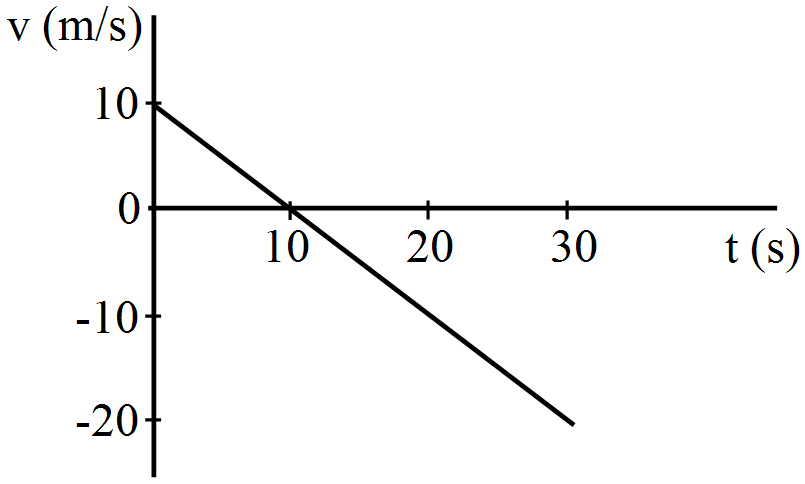
The velocity-time plot for a particle moving on a straight line is shown in the figure:
  1. The particle has a constant acceleration.
  2. The particle has never turned around.
  3. The particle has zero displacement.
  4. The average speed in the interval 0 to 10s is the same as the average speed in the interval 10s to 20s.
Rutherford’s a-particle experiment showed that the atoms have:
A milliammeter of range $10\ mA$ has a coil of resistance $1\Omega.$  To use it as voltmeter of range $10$ volt, the resistance that must be connected in series with it, will be
In the case of constants a and b of  a transistor(a) a = b(b) b < 1   a > 1(c) ab = 1(d) b > 1  a < 1
       
Larger aperture of objective lens in an astronomical telescope:
A square coil of area $10^{-2} m^2$ is kept perpendicular in a magnetic field of intensity $10^3 Wb / m ^2$. The magnitude of magnetic flux passing through the square is :
A charged particle moving in a magnetic field experiences a resultant force(a) In the direction of field(b) In the direction opposite to that field(c) In the direction perpendicular to both the field and its velocity(d) None of the above


If the length of potentiometer wire is increased, then the length of the previously obtained balance point will(a) Increase(b) Decrease(c) Remain unchanged(d) Become two times