MCQ
Nernst equation is, $E = {E^o} - \frac{{RT}}{{nF}}\,\ln Q$ . If $Q = {K_{eq}}$

then which one is not correct

  • A
    $E = 0$
  • B
    $\frac{{RT}}{{nF}}\,\ln {K_{eq}} = {E^o}$
  • $E = {E^o}$
  • D
    ${K_{eq}} = {e^{\frac{{n{E^o}F}}{{RT}}}}$

Answer

Correct option: C.
$E = {E^o}$
c
At equilibrium

$E = 0;{E^o} \ne 0$

Need a full question paper?

Generate a complete, print-ready paper with questions like this in minutes — across 16+ boards, with answer keys.

Start Generating Free

Similar questions

If the starting material is $1-$ methyl $-1,2-$ epoxy cyclopentane, of absolute configuration, decide which one compound correctly represent the product of its reaction with sodium methoxide in methanol.
The number of pairs of the solution having the same value of the osmotic pressure from the following is

(Assume $100\%$  ionization)

$A.$ $0.500\,M\,C _2 H _5 OH ( aq )$ and $0.25\, M\, KBr ( aq )$

$B.$ $0.100\,M\,K _4\left[ Fe ( CN )_6\right]$ (aq) and $0.100\, M$ $FeSO _4\left( NH _4\right)_2 SO _4$ (aq)

$C.$ $0.05 \,M\, K _4\left[ Fe ( CN )_6\right]( aq )$ and $0.25\, M\, NaCl$ (aq)

$D.$ $0.15\, M\, NaCl ( aq )$ and $0.1\, M BaCl _2$ (aq)

$E.$ $0.02\, M\, KCl\, MgCl _{2 .} 6 H _2 O ( aq )$ and $0.05\, M$ $KCl ( aq )$
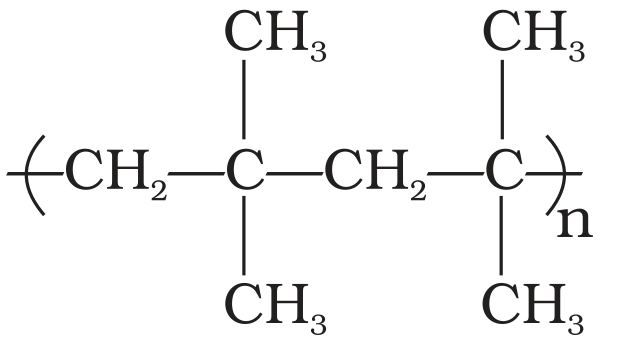


is a polymer having monomer units ____________.
When acetic acid is dissolved in benzene its molecular mass
Calculate $E_{cell}$ of the reaction ............ $\mathrm{V}$

$Mg\left( s \right) + \mathop {2A{g^ + }}\limits_{(0.0001\,M)}  \to \mathop {M{g^{ + 2}}}\limits_{\left( {0.100\,M} \right)}  + 2Ag\left( s \right)$

If $E_{cell}^o = 3.17\,V$

$150\,g$ of acetic acid was contaminated with $10.2\,g$ ascorbic acid $\left( C _{6} H _{8} O _{6}\right)$ to lower down its freezing point by $\left( x \times 10^{-1}\right)^{\circ} C$. The value of $x$ is (Nearest integer) [Given $K _{ f }=3.9\,K\,kg\,mol ^{-1}$;Molar mass of ascorbic acid $=176\,g\,mol ^{-1}$ ]
$\begin{array}{*{20}{c}}
  {O\,\,\,\,\,\,\,\,\,\,\,\,\,\,\,\,\,\,\,\,\,\,\,\,\,\,\,\,\,\,\,\,\,\,\,\,\,\,\,\,\,\,\,\,\,\,\,\,\,\,\,\,\,\,\,\,\,\,\,\,\,O} \\ 
  {||\,\,\,\,\,\,\,\,\,\,\,\,\,\,\,\,\,\,\,\,\,\,\,\,\,\,\,\,\,\,\,\,\,\,\,\,\,\,\,\,\,\,\,\,\,\,\,\,\,\,\,\,\,\,\,\,\,\,\,\,\,\,||} \\ 
  {H - C - C{H_2}C{H_2}C{H_2}C{H_2} - C - H} 
\end{array}$ $\xrightarrow{{O\mathop {H/\Delta }\limits^{\Theta \,\,\,} }}$ Product $(A)$ is
Reaction between acetone and methylmagnesium chloride followed by hydrolysis will give :
On charging the lead accumulator cell :
Which of the following compound gives a ketone with Grignard reagent