Question
Observe the figures given below carefully.
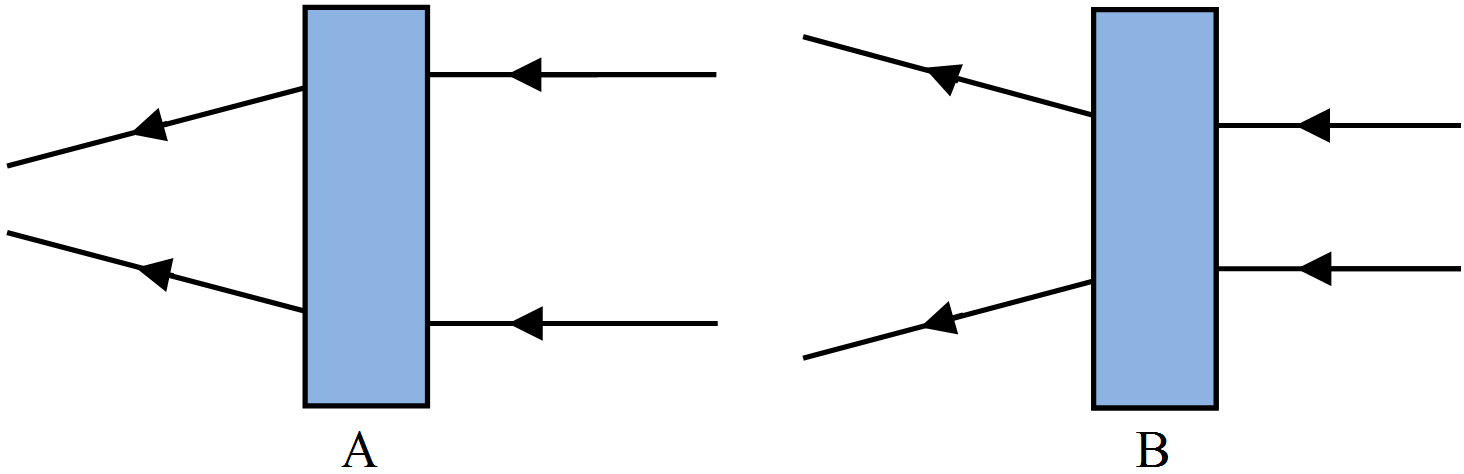
The given figures show the path of light through lenses of two different types, represented by rectangular boxes $A$ and $B.$ What is the nature of lenses $A$ and $B?$
Answer

  1. Convex lens.
  2. Concave lens.

Need a full question paper?

Generate a complete, print-ready paper with questions like this in minutes — across 16+ boards, with answer keys.

Start Generating Free

Similar questions

It is not wise to sleep under a tree during night. Why?
Name the source from which litmus solution is obtained. What is the use of this solution?
Water in a river is cleaned naturally. Do you agree? Think and explain.
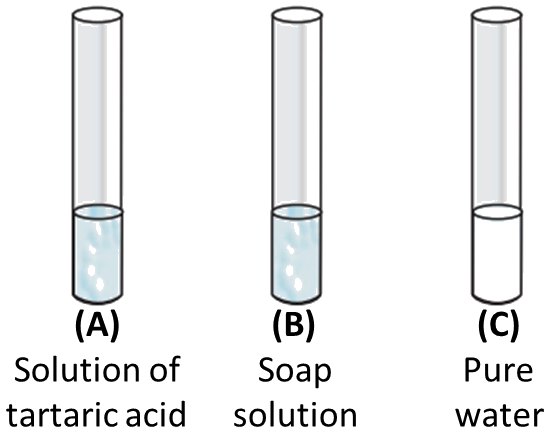
You are provided with three test tubes A, Sand Cas shown in figure with different liquids. What will you observe when you put,
  1. A piece of blue litmus paper in each test tube?
  2. A piece of red litmus paper in each test tube?
  3. A few drops of phenolphthalein solution to each test tube?
Research famous scientists (e.g., Marie Curie, Antoine Lavoisier) and their contributions to the understanding of chemical reactions and changes. Create a timeline or a presentation about the history of chemical discoveries.
Briefly explain the following:
(a) Periscope
(b) Kaleidoscope
Also, mention two applications of each.
Give Reasons: Average speed is same as actual speed in case of a body having uniform motion.
The side mirror of a scooter got broken. The mechanic replaced it with a plane mirror. Mention any inconvenience that the driver of the scooter will face while using it?
Explain, how rusting damages iron objects?
Open your mouth, look into a mirror and try to count the different types of teeth in your mouth. Compare them with Figure on page 13 of your $NCERT$ textbook. Record your observations in the table below:
Type of teeth Number of teeth
In my mouth In the figure
Incisors    
Canines    
Premolar    
Molar    
  1. Did you observe any difference in the number of teeth? If yes, could you identify which type of teeth showed the difference?
  2. Compare the number and type of teeth in an adult (say your parents or cousins who have reached the age of $25–30$ or more). Note your observation.