Question
Obtain $\omega=\omega_0+\alpha t$ from first principles.

Answer

The angular acceleration is uniform, hence
$
\frac{ d \omega}{ d t}=\alpha=\text { constant } \quad\quad\text{(i)}
$

Integrating this equation,
$
\begin{aligned}
\omega & =\int \alpha d t+c \\
& =\alpha t+c \quad \text { (as } \alpha \text { is constant) }
\end{aligned}
$

At $t=O, \omega=\omega_0$ (given)
From (i) we get at $t=O, \omega=c=\omega_0$
Thus, $\omega=\alpha t+\omega_0$ as required.
With the definition of $\omega= d \theta / d t$ we may integrate Eq. (6.36) to get Eq. (6.37). This derivation and the derivation of Eq. (6.38) is left as an exercise.

Need a full question paper?

Generate a complete, print-ready paper with questions like this in minutes — across 16+ boards, with answer keys.
Start Generating Free

Similar questions

A bullet of mass $0.04 kg$ moving with a speed of $90 m s ^{-1}$ enters a heavy wooden block and is stopped after a distance of $60 cm$. What is the average resistive force exerted by the block on the bullet?
Explain why cooking is faster in a pressure cooker.
A tightly-wound, long solenoid has n turns per unit length, a radius r and carries a current i. A particle having charge q and mass m is projected from a point on the axis in a direction perpendicular to the axis. What can be the maximum speed for which the particle does not strike the solenoid ?
Write the three laws of motion.
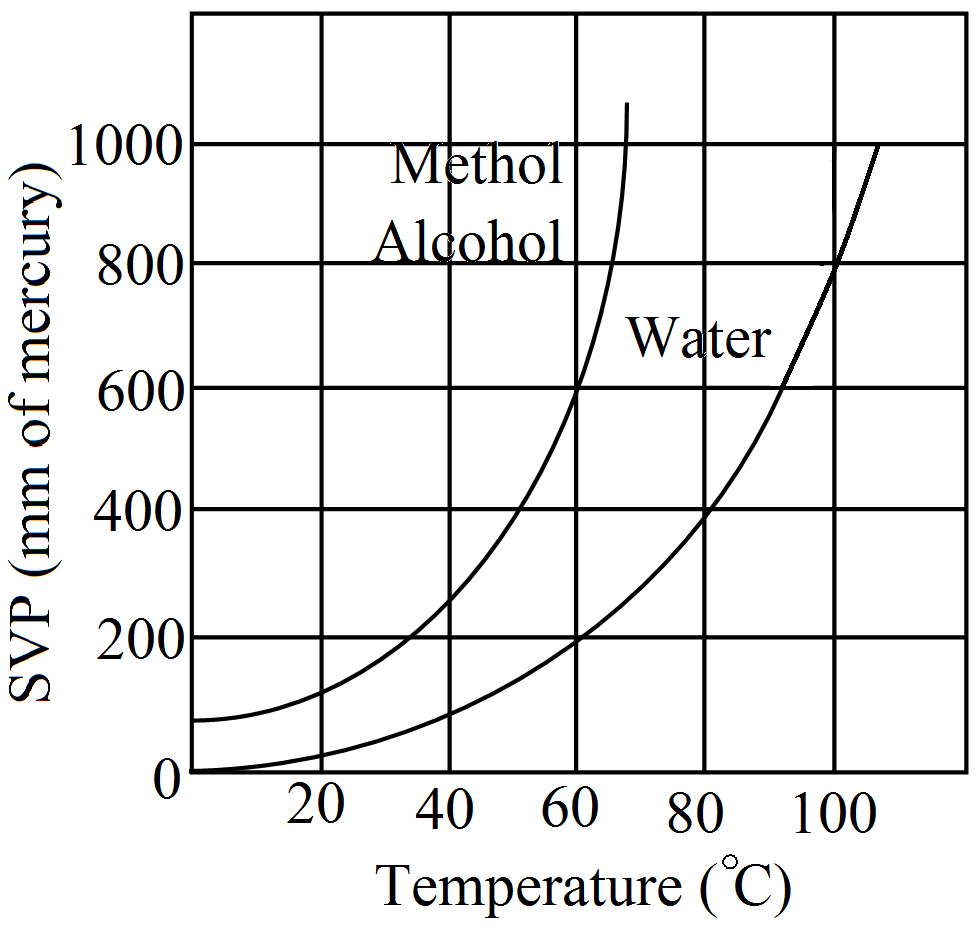
Using figure. of the text, find the boiling point of methyl alcohol at 1atm (760mm of mercury) and at 0.5atm.
Two satellites going in equatorial plane have almost same radii. As seen from the earth one moves from east to west and the other from west to east. Will they have the same time period as seen from the earth? If not, which one will have less time period?
Let $\vec{\text{a}}=4\vec{\text{i}}+3\vec{\text{j}}$ and $\vec{\text{b}}=3\vec{\text{i}}+4\vec{\text{j}}. (a)$ Find the magnitudes of:
  1. $\vec{\text{a}}$
  2. $\vec{\text{b}}$
  3. $\vec{\text{a}}+\vec{\text{b}}$
  4. $\vec{\text{a}}-\vec{\text{b}}$
What are the limitations of the first law of thermodynamics?
The free path of molecules of a gas at $27^{\circ} C$ temperature is $2.76 \times 10^{-5}$ meter. If the diameter of the molcule is $3.0 \text Å $, then find the pressure of the gas.
A small mass is released by an astronaut in a satellite in space. Will it fall on the earth?