Question
On what factors does the potential gradient of the wire depend?

Answer

The potential gradient depends upon the potential difference between the ends of the wire and the length of the wire.

Need a full question paper?

Generate a complete, print-ready paper with questions like this in minutes — across 16+ boards, with answer keys.
Start Generating Free

Similar questions

A particle in S.H.M. has a period of 2 seconds and amplitude of \(10 cm\). Calculate the acceleration when it is at \(4 cm\) from its positive extreme position.
A raindrop of diameter \(4 mm\) is about to fall on the ground. Calculate the pressure inside the raindrop.Surface tension of water \(T=0.072 N / m\), atmospheric pressure \(=1.013 \times 10^5 N / m ^2\) ]
Find the frequency of revolution of a round disco stage revolving with an angular speed of 300 degree/second.
Give two examples of thermodynamic systems not in equilibrium.
In a cyclotron, magnetic field of \(1.4 Wb / m ^2\) is used. To accelerate protons, how rapidly should the electric field between the Dees be reversed? \(\left(\pi=3.142, M_p=1.67 \times 10^{-27} kg , e=1.6 \times 10^{-19} C \right)\)
Obtain the differential equation of linear simple harmonic motion.
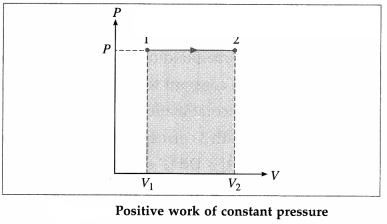
Draw P-V diagram for positive work at constant pressure.

Image

Find the value of energy of electron in $eV$ in the third Bohr orbit of hydrogen atom $\left[\right.$ Rydberg's constant $(R)=1.097 \times 10^7 m ^{-1}$, Planck's constant $( h )=6.63 \times 10^{-34} J$-s, Velocity of light in air (c) $=3 \times 10^8 m / s$.]
Can pressure in a fluid be increased by pushing directly on the fluid? Give an example.
Two identical metal beads, each of mass $M$ but negligible width, can slide along a thin smooth uniform horizontal rod of mass $M$ and length $L$. The rod is capable of rotating about a vertical axis passing through its centre. Initially, the beads are almost touching the axis of rotation and the rod is rotating at speed of $14 \mathrm{rad} / \mathrm{s}$. Find the angular speed of the system when the beads have moved up to the ends of the rod. (Assume that no external torque acts on the system.)