Question
One of the forms of a naturally occurring solid compound $P$ is usually used for making the floors of houses. On adding a few drops of dilute hydrochloric acid to $P,$ brisk effervescence are produced. When $50g$ of reactant $P$ was heated strongly, than $22g$ of a gas $Q$ and $28g$ of a solid $R$ were produced as products. Gas $Q$ is the same which produced brisk effervescence on adding dilute $HCl$ to $P.$ Gas $Q$ is said to cause global warming whereas solid $R$ is used for white-washing.
  1. What is $(i)$ solid $P (ii) $ gas $Q, $ and $(iii)$ solid $R.$
  2. What is the total mass of $Q$ and $R$ obtained from $50g$ of $P?$
  3. How does the total mass of $Q$ and $R$ formed compare with the mass of $P$ taken$?$
  4. What conclusion do you get from the comparison of masses of products and reactant$?$
  5. Which law of chemical combination is illustrated by the example given in this problem$?$
Answer

$\text{P(solid)}\xrightarrow{ \ \ \ \ \ \ \ \ \ \ \ \ }\text{Q(gas)}+\text{R(solid)}\\ \ \ ^{50\text{gm}}\ \ \ \ \ \ \ \ \ \ \ \ \ \ \ \ \ \ \ \ ^{22\text{gm}}\ \ \ \ \ \ \ \ \ \ ^{28\text{gm}}$
  1. Solid P: Calcium Carbonate $(CaCO_3)$
Gas Q: Carbon dioxide $(CO_2)$
Solid R: Calcium oxide $(CaO)$
  1. Total mass of $Q$ and $R = 22gm + 28gm = 50gm$
  2. Total mass of $Q$ and $R (50gm)$ is equal to mass of reactant $(50gm).$
  3. The law of conservation of mass is followed, i.e. total mass of product is equal to mass of reactant.
  4. Law of conservation of mass is illustrated by the example.

Need a full question paper?

Generate a complete, print-ready paper with questions like this in minutes — across 16+ boards, with answer keys.

Start Generating Free

Similar questions

A gun of mass $3 kg$ fires a bullet of mass $30 g$ . The bullet takes $0.003$ s to move through the barrel of the gun and acquires a velocity of $100 \mathrm{~m} / \mathrm{s}$. Calculate:
     i. The velocity with which the gun recoils.
    ii. The force exerted on gunman due to recoil of the gun.
A car falls off a ledge and drops to the ground in $0.5 s .$ Let $g =10\ ms^{-2} ($for simplifying the calculations$).$
$i.$ What is its speed on striking the ground?
$ii.$ What is its average speed during the $0.5 s ?$
$iii.$ How high is the ledge from the ground?
You are provided with a mixture of naphthalene and ammonium chloride by your teacher. Suggest an activity to separate them with well labelled diagram.
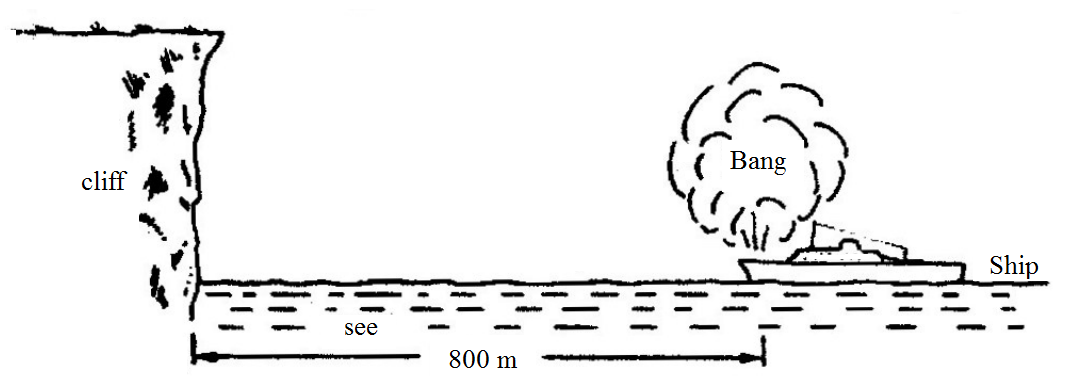
The drawing shoes a ship $800m$ from a cliff. A gun is fired on the ship. After $5$ seconds the people at the front of the ship hear the sound of the gun again.
  1. What is the name of this effect$?$
  2. What happens to the sound at the cliff$?$
  3. How far foes the sound travel in $5$ seconds$?$
  4. Calculate the speed of sound.
With the help of a labelled diagram, describe the method of separating ammonium chloride from a mixture of ammonium chloride and common salt. Mention the difference in the properties of ammonium chloride and sodium chloride which has made this separations possible.
An atom of an element $X$ may be written as $^{9}_4\text{X} $
  1. What does the figure $9$ indicate?
  2. What does the figure $4$ indicate?
  3. What is the number of protons in atom $X$?
  4. What is the number of neutrons in atom $X$?
  5. What is the number of electrons in atom $X$?
  6. How many electrons are there in the outermost shell of an atom of element $X$?
  7. Write the symbol of ion formed by an element $Z$ is $2, 8, 8$.
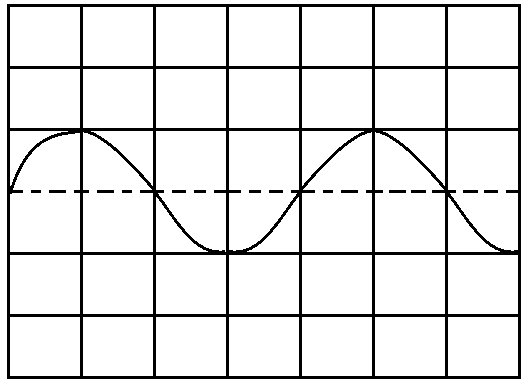
Figure $X$ showa a trace of a sound wave produced by a particular tuning fork:


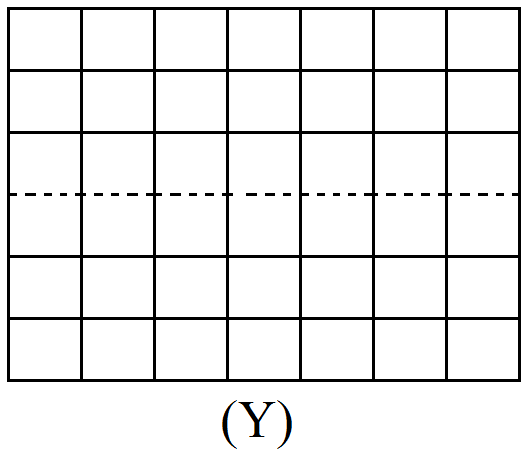
  1. On the graph paper given in Figure $Y,$ draw a trace of the sound wave which has higher frequency than that shown in Figure $X.$
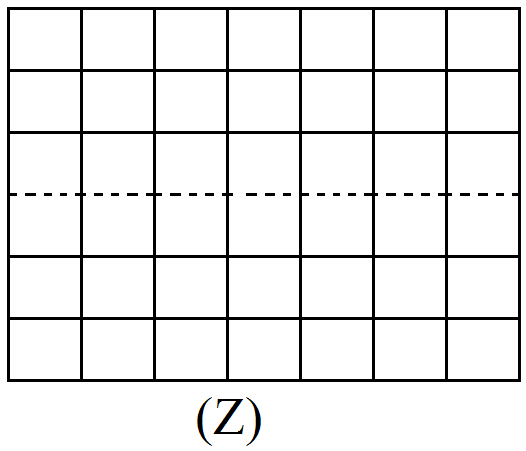
  2. On the graph paper shoen in Figure $Z,$ draw a trace of the sound wave which has a larger amplitude than that shown in Figure $X.$
State and explain Kepler’s laws of planetary motion. Draw diagrams to illustrate these laws.
What are the different means by which infectious diseases are spread?
Explain the various preventive measures against insect pests.