Question
Operating Cycle and the period when payment is received is given below. How will you classify the asset?
Particulars
(i)
(ii)
(iii)
(iv)
(v)
(vi)
Operating Cycle (Months)
10
10
10
15
15
20
Expected Period when payment is received (Months)
9
12
14
14
18
18

Answer

  1. An asset, of which the payment is to be received within 12 months from the Balance sheet date, shall be treated as current. Period of operating cycle is irrelevant in such cases. Hence, assets in case of (i) and (ii) shall be treated as current assets.
  2. Assets, the payment of which is received in more than 12 months from the Balance Sheet date:
  1. If payment period is less than the period of operating cycle, the assets shall be treated as Current Asset. Hence, assets in case of (iv) and (vi) shall be treated as current Assets.
  2. If payment period is more than the period of operating cycle, the assets shall be treated as Non-Current assets. Hence, Assets in case of (iii) and (v) shall be treated as Non-current Assets.

Need a full question paper?

Generate a complete, print-ready paper with questions like this in minutes — across 16+ boards, with answer keys.

Start Generating Free

Similar questions

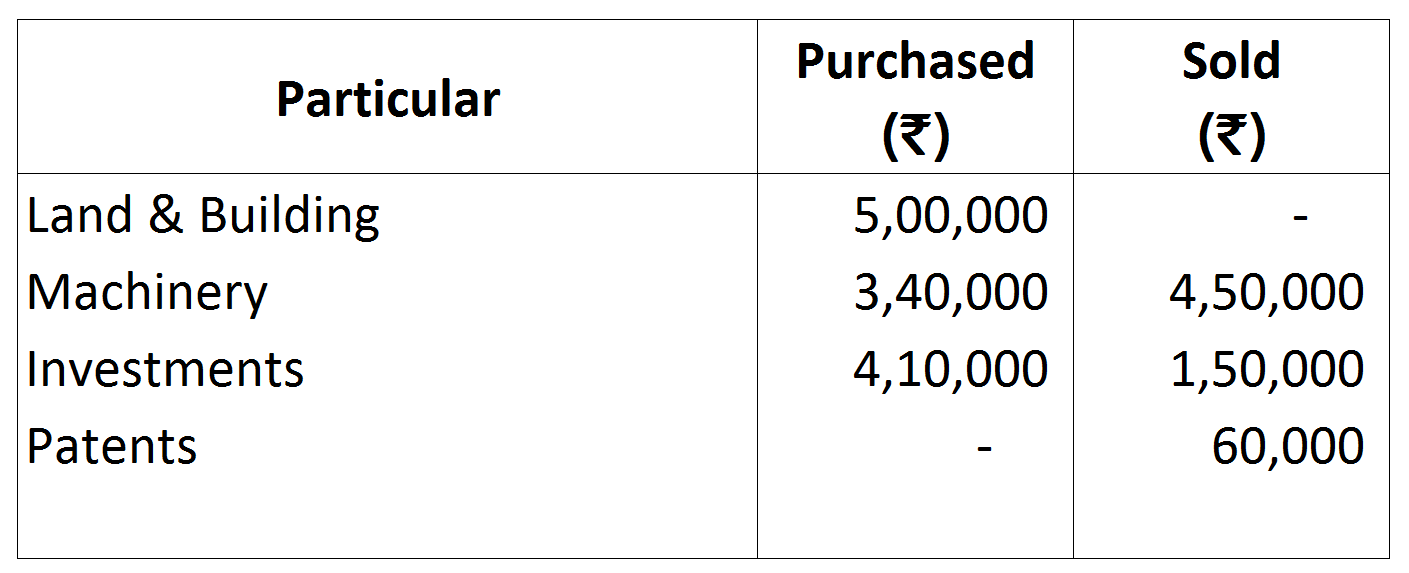
From the following particulars, calculate cash flows from investing activities:
Dividend received on shares held as Investments
₹ 10,000
Interest received on debentures held as Investments
₹ 8,000
Dividend paid on equity share capital
₹ 50,000
Pass necessary journal entries relating to the issue of Debentures for the following:
Issued ₹ 28,000; 10% Debentures of ₹ 100 each at a premium of 15% redeemable at par.
Pass journal entries for the forfeiture and re-issue in the following cases:
D Ltd. forfeited 1,000 shares of ₹ 10 each fully called-up on which the holder has paid only the application money @ ₹ 3 per share. Out of these, 600 shares were re-issued at ₹ 10.50 per share, fully paid up.
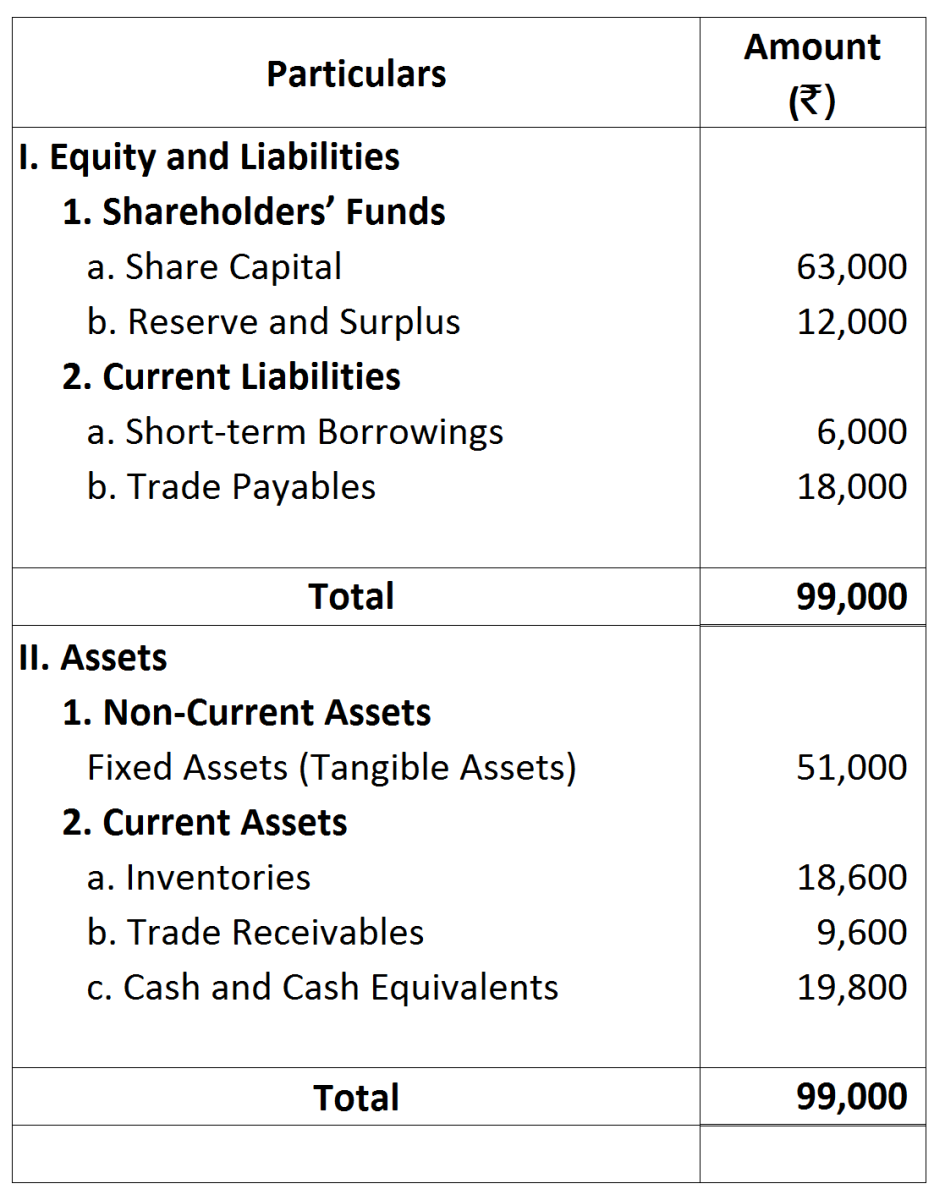
A company had Current Assets of ₹ 4,50,000 and Current Liabilities of ₹ 2,00,000. Afterwards it purchased goods for ₹ 30,000 on credit. Calculate Current Ratio after the purchase.
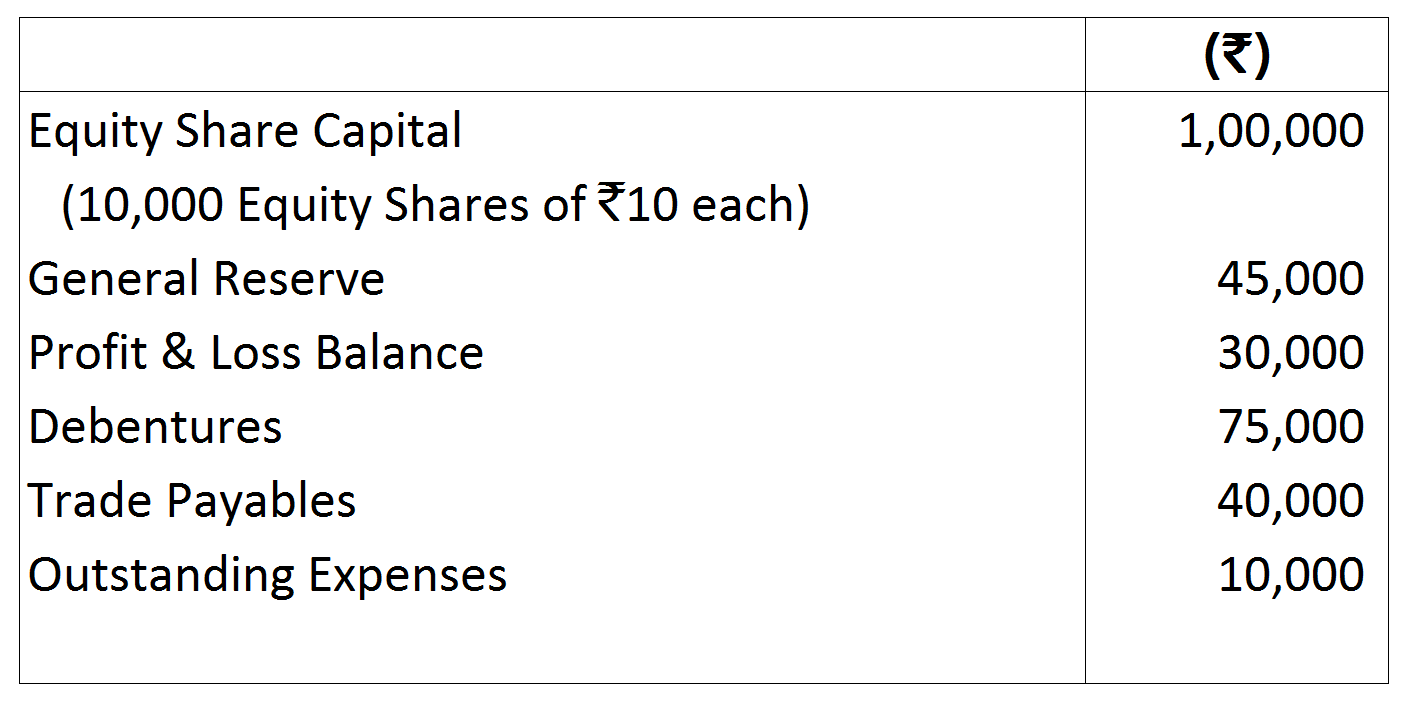
From the following Balance Sheet of X Ltd., calculate Current Ratio:BALANCE SHEET
as at 31st March, 2018
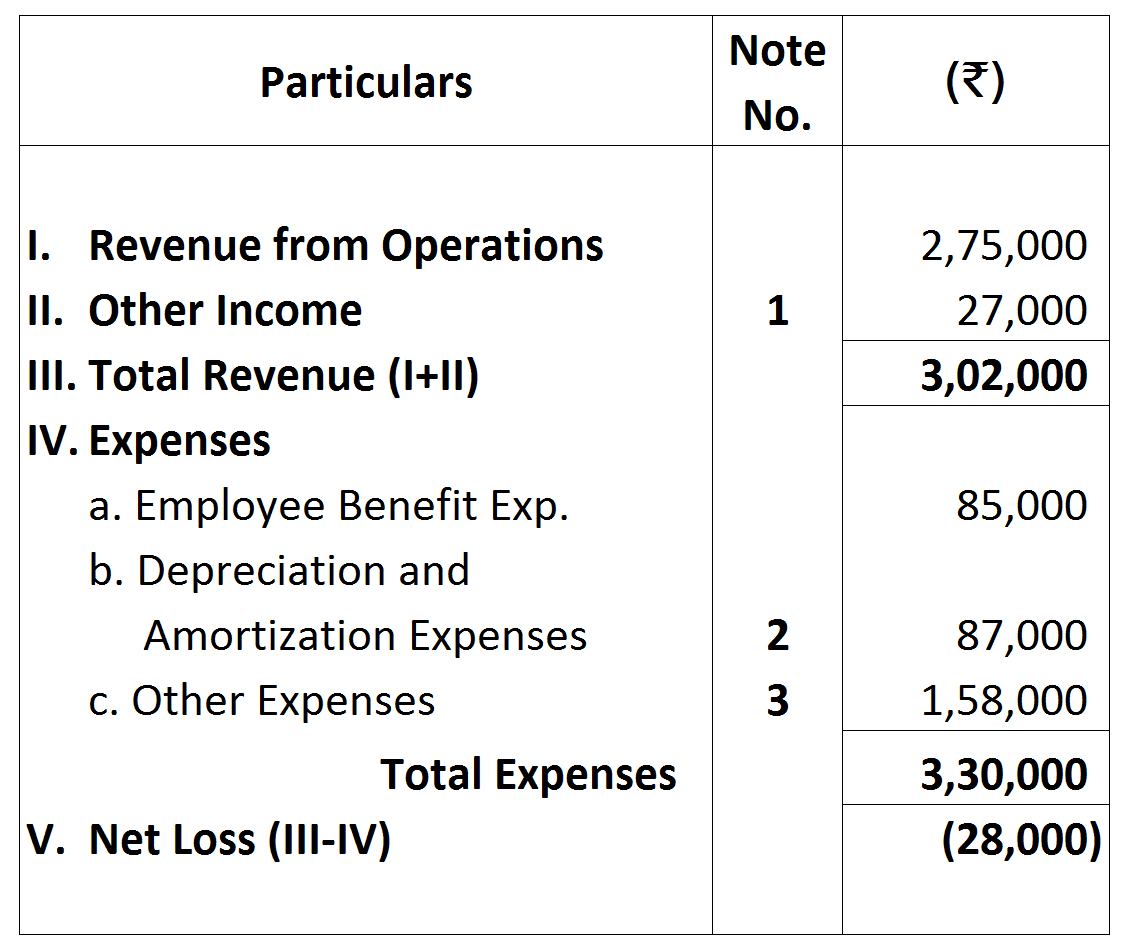
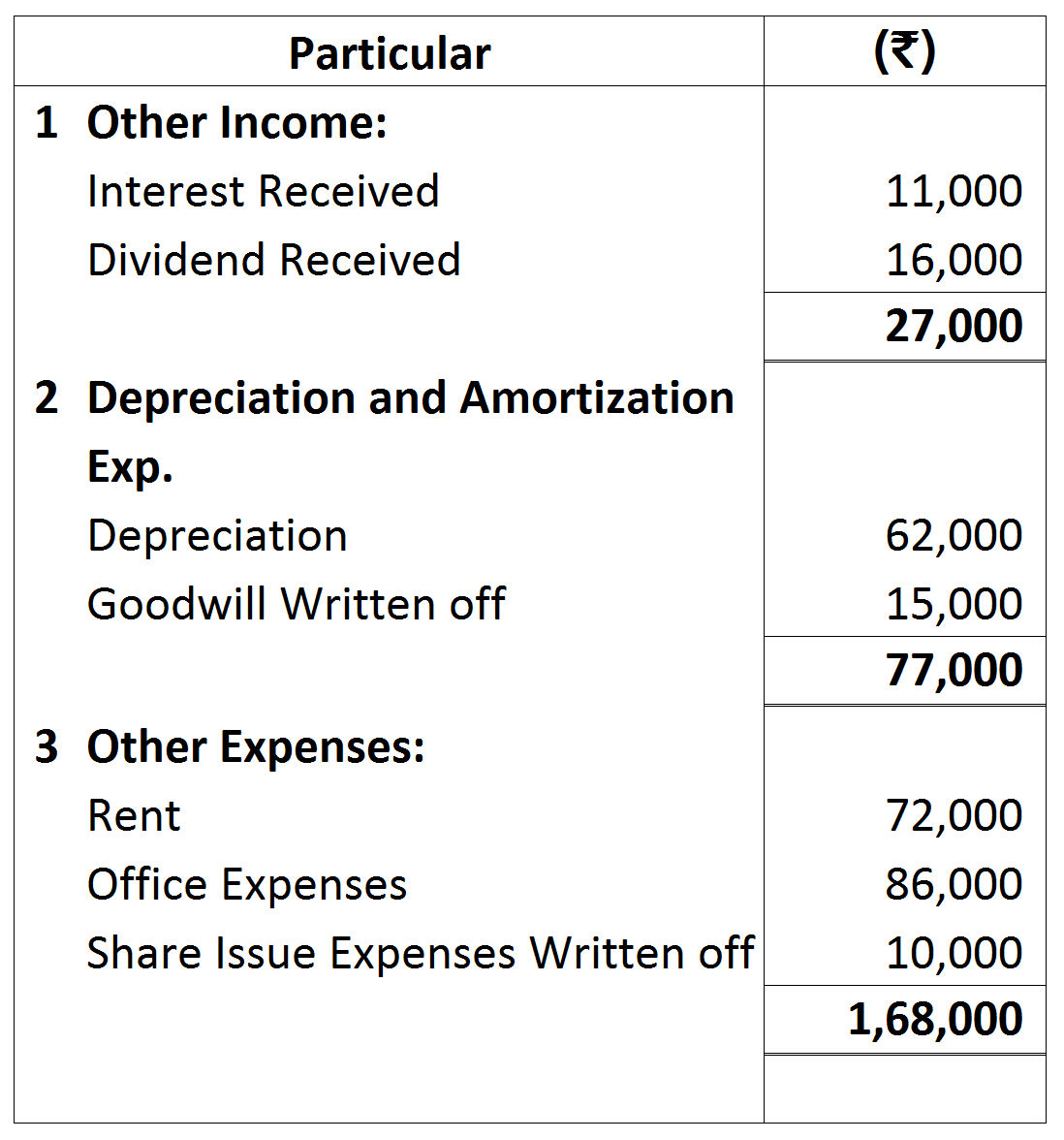
Following is the Profit & Loss Statement of Z Ltd. for the year ended 31st March, 2018:
Notes:
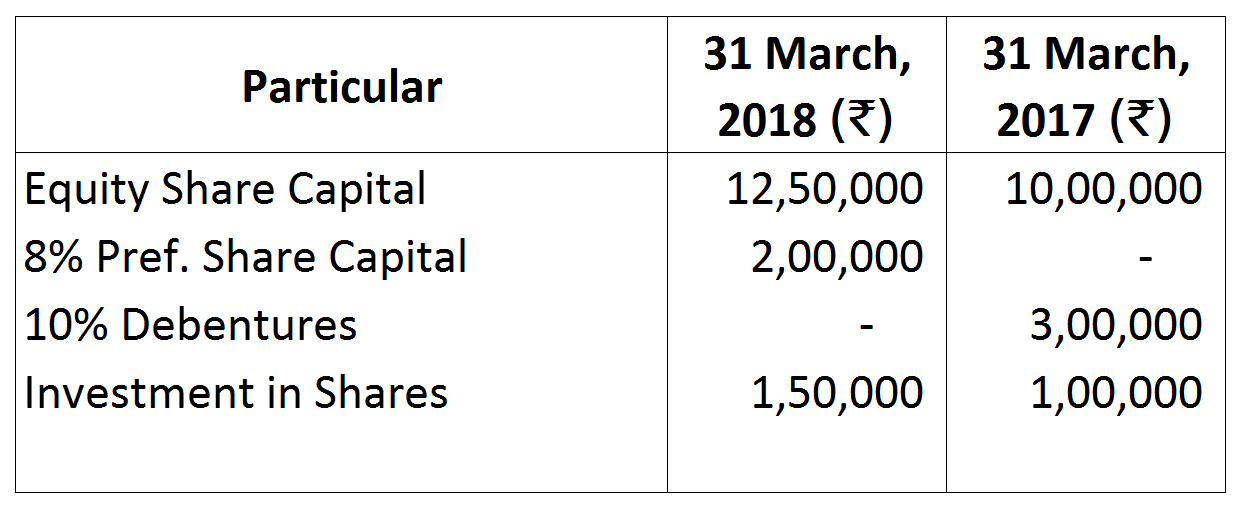
Sony Ltd. provides you the following information. Calculate Cash flows from financing activities:

Additional Information:
  1. During the year 2017-18, Sony Ltd. issued bonus shares in the ratio of 4 : 1 by capitalising reserve.
  2. 10% Debentures were redeemed on 1 Jan., 2018 at a premium of 5%.
  3. Preference Dividend paid ₹ 8,000.
  4. Dividend received on Investments ₹ 10,000.
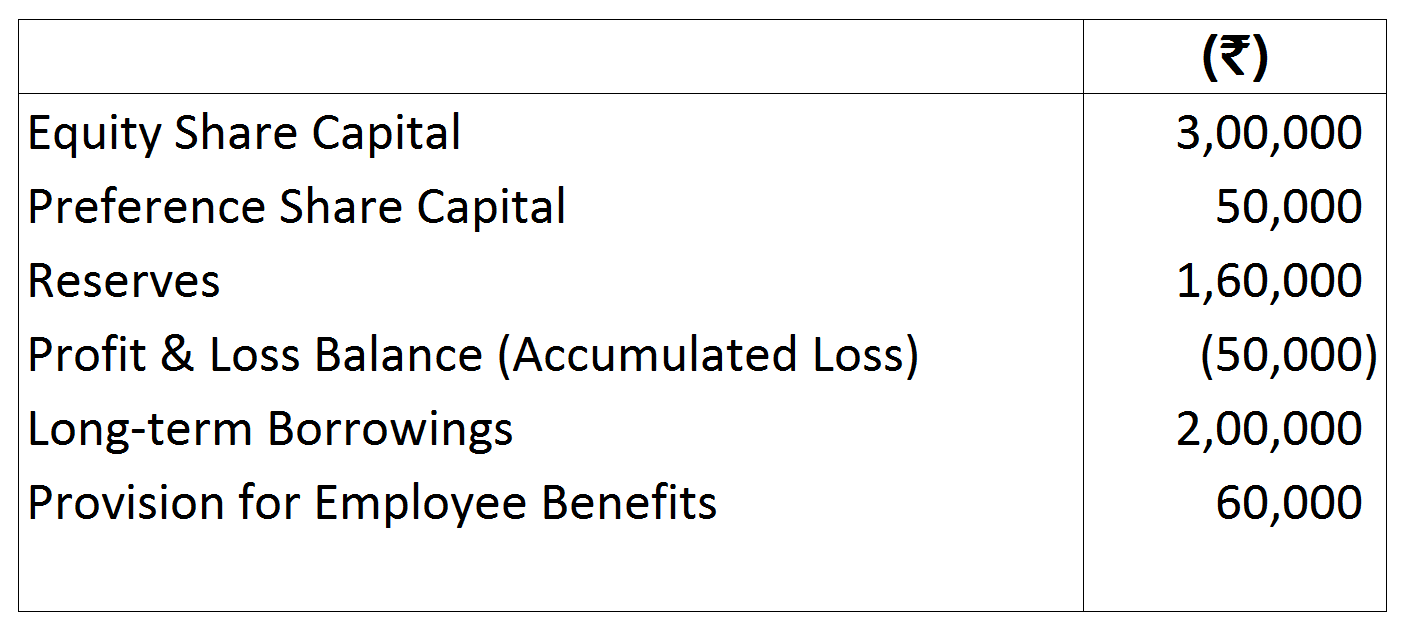
Calculate the Debt Equity Ratio from the following:-
From the following, calculate the Debt-Equity Ratio:
On march 1, 2016, the Directors of Sahara Ltd. issued 10,000 Equity Shares of ₹ 100 each at ₹ 125 per share, payable ₹ 50 on application (including premium), ₹ 45 on allotment and the balance on 1st June, 2016.
The lists closed on March 10, 2016 by which date applications for 16,000 shares were received. Of the cash received, ₹ 50,000 was returned and ₹ 2,50,000 was applied to the amount due on allotment, the balance of which was paid on march 16, 2016
call money was recieved on 1st june 2016 with the exception of one allottee of 200 shares. These shares were forfeited on October 15, 2016 and reissued as fully paid at ₹ 110 per share on December 3, 2016.
Record necessary journal entries in the books of Sahara Ltd. using a joint account of application and allotment.