MCQ
Orbits in which electrons move according to Bohr are:
- AElliptical
- BCylindrical
- CCircular
- DOval
Explanation:
First electron shell which is closest to the orbit to the nucleus, called the 1s orbit can hold up two two electrons. This orbit is equivalent to the innermost electron shell of the Bhor model of atom. It is called the orbital because it is spherical around the nucleus.
Generate a complete, print-ready paper with questions like this in minutes — across 16+ boards, with answer keys.
Two spheres A and B of radius 4cm and 6cm are given charges of 80 μC and 40 μC respectively. If they are connected by a fine wire, the amount of charge flowing from one to the other is
|
(a) 20 μC from A to B |
(b) 16 μC from A to B |
|
(c) 32 μC from B to A |
(d) 32 μC from A to B |
In a typical Wheatstone network, the resistances in cyclic order are A = 10 W, B = 5 W, C = 4 W and D = 4 W for the bridge to be balanced
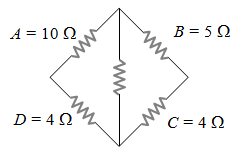
|
(a) 10 W should be connected in parallel with A |
|
(b) 10 W should be connected in series with A |
|
(c) 5 W should be connected in series with B |
|
(d) 5 W should be connected in parallel with B |
In the experiment of diffraction at a single slit, if the slit width is decreased, the width of the central maximum
|
(a) Increases in both Fresnel and Fraunhofer diffraction |
|
(b) Decreases both in Fresnal and Fraunhofer diffraction |
|
(c) Increases in Fresnel diffraction but decreases in Fraunhofer diffraction |
|
(d) Decreases in Fresnel diffraction but increases is Fraunofer diffraction. |
Zener diode is used as
|
(a) Half wave rectifier |
(b) Full wave rectifier |
|
(c) ac voltage stabilizer |
(d) dc voltage stabilizer |
Three point charges are placed at the corners of an equilateral triangle. Assuming only electrostatic forces are acting
|
(a) The system can never be in equilibrium |
|
(b) The system will be in equilibrium if the charges rotate about the centre of the triangle |
|
(c) The system will be in equilibrium if the charges have different magnitudes and different signs |
|
(d) The system will be in equilibrium if the charges have the same magnitudes but different signs |
The wavelength of maximum energy, released during an atomic explosion, was 2.93 × 10⁻¹⁰ m. Given that the Wien's constant is 2.93 × 10⁻³ m K, the maximum temperature attained must be of the order of
|
(a) 10–7 K |
(b) 107 K |
(c) 10–13 K |
(d) 5.86 × 10⁷ K |