MCQ
Oxidation state of $Fe$ in $F{e_3}{O_4}$ is
- A$\frac{3}{2}$
- B$\frac{4}{5}$
- C$\frac{5}{4}$
- ✓$\frac{8}{3}$
$3x + ( - 8) = 0$; $3x - 8 = 0$
$3x = 8$; $x = \frac{8}{3}$.
Generate a complete, print-ready paper with questions like this in minutes — across 16+ boards, with answer keys.
$(a)\, IP$ of $O_{(g)}$ is less than $IP$ of $O_{(g)}^ - $
$(b)\, IP$ of $Ne_{(g)}$ is greater than $IP$ of $Ne_{(g)}^ + $
$(c)\, EA$ of $O_{(g)}^ + $ is greater than $EA$ of $O_{(g)}$
$(d)\, IP$ of $N_{(g)}$ is greater than $IP$ of $N_{(g)}^ + $
Given :
Molar mass $N =14\,g\,mol ^{-1} ; O =16\,g\,mol ^{-1} ; C =12\,g\,mol ^{-1} ; H =1\,g\,mol ^{-1}$;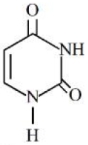
In an equilibrium mixture, the partial pressures are
$P_{S O_{3}}=43\,\mathrm{kPa} ; \quad P_{O_{2}}=530 \,\mathrm{~Pa}$ and
$\mathrm{P}_{\mathrm{SO}_{2}}=45\, \mathrm{kPa}$ The equilibrium constant $\mathrm{K}_{\mathrm{p}}=......\times 10^{-2} .$ (Nearest integer)
(Round of to the Nearest Integer).
(Given : $\left. R =8.314\, J\, mol ^{-1} K ^{-1}\right)$