MCQ
Perdisulphuric acid has the following bond
  • $O\, \leftarrow \,O\,\, = \,\,O$
  • B
    $ \leftarrow \,O\,\, = \,\,O \rightarrow $
  • C
    $ > \,O \to \,O\, < $
  • D
    $ - \,\,O\, - \,O\, - $

Answer

Correct option: A.
$O\, \leftarrow \,O\,\, = \,\,O$
a
Bond dissociation energy of $E - H$ bond in hydrides of group $16$ follows the order

$H _2 O > H _2 S > H _2 Se > H _2 Te$

Need a full question paper?

Generate a complete, print-ready paper with questions like this in minutes — across 16+ boards, with answer keys.
Start Generating Free

Similar questions

One sample of atmospheric air is found to have $0.03\%$ of carbon dioxide and another sample $0.04\%$. This is evidence that
What should be the equivalent weight of phosphorous acid, if $P=31; O=16; H=1$
Which of the following can show geometrical isomerism :-
Sodium sulphate dissolves in water with evolution of heat. Consider a saturated solution of sodium sulphate. If the temperature is raised, then according to Le-Chatelier principle
In carius method of estimation of halogen $0.15\,g$ of an organic compound gave $0. 12\,g$ of $AgBr$. Find out the percentage.....$\%$ of bromine in the compound
Among $Ni(CO)_4,\, Ni(CN)_4^{2-}$ and $[Ni(Cl)_4]^{2-}$
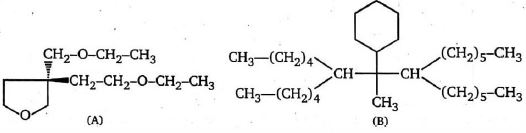
$R$ and $S$ configuration of compound $(A)$ & $(B)$ will be 
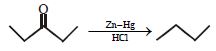
The above reaction is
The standard reduction potentials at $298 \mathrm{~K}$ for the following half cells are given below :

$\mathrm{Cr}_2 \mathrm{O}_7{ }^{2-}+14 \mathrm{H}^{+}+6 \mathrm{e}^{-} \rightarrow 2 \mathrm{Cr}^{3+}+7 \mathrm{H}_2 \mathrm{O}, \mathrm{E}^{\circ}=1.33 \mathrm{~V}$

$\mathrm{Fe}^{3+}(\mathrm{aq})+3 \mathrm{e}^{-} \rightarrow \mathrm{Fe}  \mathrm{E}^{\circ}=-0.04 \mathrm{~V}$

$\mathrm{Ni}^{2+}(\mathrm{aq})+2 \mathrm{e}^{-} \rightarrow \mathrm{Ni}  \mathrm{E}^{\circ}=-0.25 \mathrm{~V}$

$\mathrm{Ag}^{+}(\mathrm{aq})+\mathrm{e}^{-} \rightarrow \mathrm{Ag} \mathrm{E}^{\circ}=0.80 \mathrm{~V}$

$\mathrm{Au}^{3+}(\mathrm{aq})+3 \mathrm{e}^{-} \rightarrow \mathrm{Au} \mathrm{E}^{\circ}=1.40 \mathrm{~V}$

Consider the given electrochemical reactions, The number of metal$(s)$ which will be oxidized be $\mathrm{Cr}_2 \mathrm{O}_7{ }^{2-}$, in aqueous solution is. . . . . . 

For a sample of perfect gas when its pressure is changed isothermally from $p_i$ to $p_f$, the entropy change is given by