MCQ
Phenol with Hinsberg’s reagent gives
  • A
    Sulphone
  • B
    Sulphanilic acid
  • Sulphonic ester
  • D
    Sulphonal

Answer

Correct option: C.
Sulphonic ester
c
Phenol $( PhOH )$ reacts with Hinsberg's reagent $\left( PhSO _2 Cl \right)$ to form $PhO -$ $SO _2 Ph$ (Sulphones).

Need a full question paper?

Generate a complete, print-ready paper with questions like this in minutes — across 16+ boards, with answer keys.

Start Generating Free

Similar questions

The structure of $D-(+)-$glucose is

$Image$

The structure of $L -(-)$-glucose is
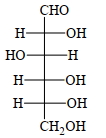

The main product of following raction will be
Point out in which of the following properties oxygen differs from the rest of the members of its family (Group - $VI-A$)
In the cell  $Pt(s)| H_2 (g,1\,bar)| HCl(aq)| AgCl(s)| Ag(s)| Pt(s)$ the cell potential is $0.92\,V$ when a $10^{-6}$ molal $HCl$ solution is used. The standard electrode potential of $(AgCl / Ag,Cl^- )$ electrode is ............. $\mathrm{V}$ $\left\{ {Given,\frac{{2.303RT}}{F} = 0.06\,V\,at\,298\,K} \right\}$ 
Molar conductivity $\left(\Lambda_m\right)$ of aqueous solution of sodium stearate, which behaves as a strong electrolyte, is recorded at varying concentration($c$) of sodium stearate. Which one of the following plots provides the correct representation of micelle formation in the solution?

(Critical micelle concentration ($CMC$) is marked with an arrow in the figures.)

Many ionic crystals dissolve in water because
What will be the electromotive force of following cell $Fe|Fe^{+2}\,(0.2\, M)\,||\, Au^{+3}\,(0.02\, M)\,|Au$, if ........... $\mathrm{V}$

$E_{F{e^{ + 2}}/Fe}^o =- 0.44\,V$ and $E_{Au/A{u^{ + 3}}}^o =  - 1.50\,V$

Which of the following reagent can be used to separate $AgCl$ and $Agl$ ?
Number of neutrons in heavy hydrogen atom is
Which of the following relation represents correct relation between standard electrode potential and equilibrium constant ?

$I$.  $\log \,\,K\, = \,\frac{{nF{E^o}}}{{2.303\,RT}}$

$II$.  $K\, = \,{e^{\frac{{nF{E^o}}}{{RT}}}}$

$III$.  $\log \,\,K\, = -\,\frac{{nF{E^o}}}{{2.303\,RT}}$

$IV$.  $\log \,\,K\, = 0.4342\,\,\frac{{-nF{E^o}}}{{RT}}$

Choose the correct statement $(s)$.