MCQ
$\pi$ mesons can be
  • A
    $\pi^{+}$or $\pi^{-}$
  • B
    $\pi^{+}$or $\pi^0$
  • C
    $\pi^{-}$or $\pi^0$
  • $\pi^{+}, \pi^{-}$or $\pi^0$

Answer

Correct option: D.
$\pi^{+}, \pi^{-}$or $\pi^0$

Need a full question paper?

Generate a complete, print-ready paper with questions like this in minutes — across 16+ boards, with answer keys.

Start Generating Free

Similar questions

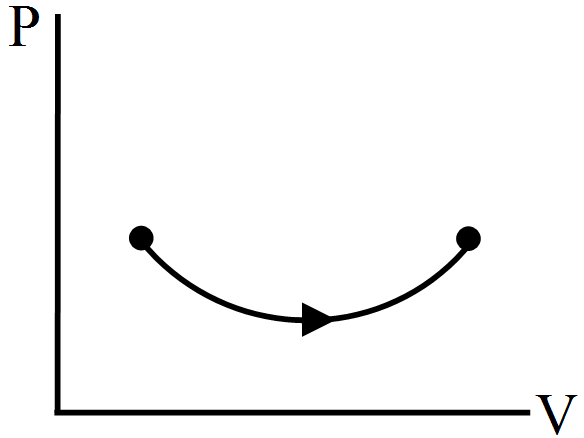
Consider the process on a system shown in figure. During the process, the work done by the system:
  1. Continuously increases.
  2. Continuously decreases.
  3. First increases then decreases.
  4. First decreases then increases.
In an $\text{L - C - R}$ circuit the value of $X_L​, X_C$​ and $R$ are $300\Omega,200\Omega$, and $100\Omega$ respectively. The total impedance of the circuit will be.
The sensitivity of a potentiometer can be increased by:
  • increasing the series resistance in the primary circuit.
  • decreasing the length of the potentiometer wire.
  • using a thin and high resistivity wire as a potentiometer wire.
  • increasing the length of the wire.
Light waves travel in vaccum along the y-axis. Then the wave front is:
When a charged particle moves through a magnetic field, the quantity which is not affected in the magnetic field is:
In a wheatstone bridge in the battery and galvanometer are interchanged then the deflection in galvanometer will:
The wavelength  of light in two liquids ‘x' and ‘y' is 3500 Å and 7000 Å, then the critical angle of x  relative to y will be(a) 60° (b) 45°(c) 30°(d) 15°
       
The Bohr radius of the fifth electron of phosphorus (atomic number = 15) acting as dopant in silicon (relative dielectric constant = 12) is(a) 10.6 Å(b) 0.53 Å(c) 21.2 Å                                           (d) None of these
       
Assertion :   Gauss theorem is not applicable in magnetism.
Reason    : Mono magnetic pole does not exist.(a) If both assertion and reason are true and the reason is the correct explanation of the assertion.(b) If both assertion and reason are true but reason is not the correct explanation of the assertion.(c) If assertion is true but reason is false.(d) If the assertion and reason both are false.


In which frequency range, space waves are normally propagated(a) HF(b) VHF(c) UHF(d) SHF