Question
Placenta acts as an endocrine gland. Explain.

Answer

The placenta also acts as an endocrine gland as it secretes the following hormones:
  1. Human chorionic gonadotropin (hCG) .
  2. Human placental lactogen (hPL) .
  3. Progestogens.
  4. Estrogens.
The increased production of these hormones during pregnancy is essential for supporting the fetal growth and metabolic changes in the mother.

Need a full question paper?

Generate a complete, print-ready paper with questions like this in minutes — across 16+ boards, with answer keys.
Start Generating Free

Similar questions

Describe the disease 'Typhoid' under the following headings :
(i) Name of the pathogen
(ii) Name of the test to confirm the disease
(iii) Mode of infection
(iv) Four main symptoms of the disease
(v) Diagram of the structure of an antibody molecule.
Give details of different types of immune globulins in humans.
Avinash went to his village during his summer vacations. One day, he decided to visit the nearby forest and asked his grandfather to accompany him. His grandfather told him about the recent cutting of forest and the new factory which had been established. Hearing this Avinash became curious and explained his grandfather about the ecosystem services.
  1. What are the benefits of healthy forest ecosystem?
  2. Explain the contribution of Robert Constanza in ecosystem services.
  3. What factors account for cost of various ecosystem services?
  4. What values are shown by Avinash?
During the explanation of the significance of several breeding techniques, teacher makes a statement about inbreeding depression and suggested a solution for it. Pallavi became very curious about knowing all this and asked certain questions to his teacher.
  1. Why is breeding required?
  2. What is the significance of improved variety?
  3. What is interspecific hybridisation?
  4. What values are shown by Pallavi as a science student?
A.
(i) Why is there a need to conserve biodiversity? (Any two reasons)
(ii) Name and explain any two causes that are responsible for the loss of biodiversity.
What is placenta? Draw well labelled diagram of human embryo showing placenta in uterus and also write its four functions.
Read the following and answer any four questions from (i) to (v) given below:
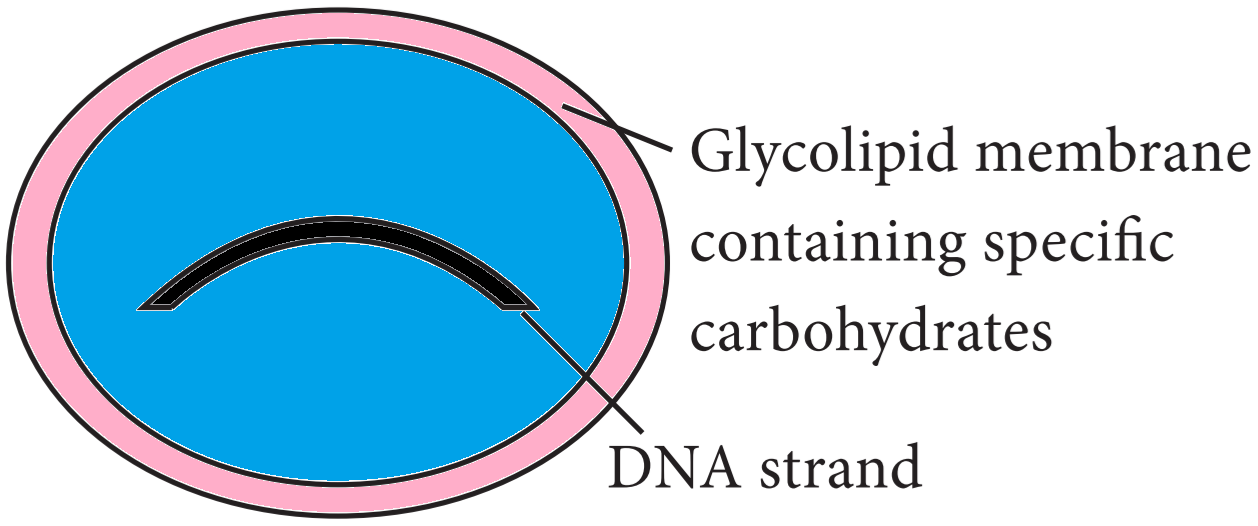
Gene therapy is the technique of genetic engineering to replace a faulty gene by a normal healthy functional gene. It is a way of treating genetic disease by introducing a piece of DNA into the cells of an affected individual. Liposomes can be used for gene therapy as they target the cells affected by a genetic disease.
  1. A patient suffers from adenosine deaminase (ADA) deficiency, an autosomal recessive immune deficiency in which bone marrow lymphoblasts cannot replicate to generate immuno-competent lymphocytes. The treatment option that would cure the patient is:
  1. Germ-line gene therapy to replace one ADA gene copy.
  2. Germ-line gene therapy to replace both ADA gene copies.
  3. Somatic cell gene therapy to replace both ADA gene copies in circulating lymphocytes.
  4. Somatic cell gene therapy to replace one ADA gene copy in bone marrow lymphoblasts.
  1. Which type of gene therapy is least effective in transferring DNA to the nucleus?
  1. Adenoviruses.
  2. DNA attached to a ligand.
  3. Liposomes.
  4. Retroviruses.
  1. Liposomes can be used for gene therapy as they target the cells affected by a genetic disease. The diagram shows the structure of a liposome.


What feature of a cell surface membrane allows the liposome to target cells affected by a genetic disease?
  1. Carrier molecules.
  2. Phosphate groups.
  3. Protein channels.
  4. Receptor molecules.
  1. Which of the following disorders would gene therapy be least effective?
  1. Cystic fibrosis.
  2. Huntington's disease.
  3. Sickle cell anaemia.
  4. Type II diabetes.
  1. Following are some reasons explaining why gene therapy is not yet fully an effective treatment for genetic diseases.
  1. Lack of knowledge of DNA sequences.
  2. Lack of efficient and safe gene delivery system.
  3. Cost of the technology.
  4. Some diseases involve multiple genes.
  5. Problems with appropriate gene regulation.
Select the correct option.
  1. I, III and V only
  2. II, IV and V only
  3. Ill, IV and V only
  4. I, III and IV only
Answer the following questions:
Draw a sectional view of human ovary and label the different follicular stages, ovum and corpus luteum.
$a.$ Why did Hershey and Chase use radioactive $^{32}P$ and $^{35}S$ in their experiments? Explain.
$b.$ Following the experiments conducted by them, write what conclusion did they arrive at and how.
List the harmful effects caused by alcohol/ drug abuse.