Question
Poaching of tiger is a burning issue in today's world. What implication would this activity have on the functioning of the ecosystem of which the tigers are an integral part?

Answer

Poaching (hunting) of tiger disturbs the ecological balance in ecosystem. Tigers are important predator of forest. Predator keeps prey population under control. Due to hunting of tiger its population decreases, hence the population of deer (prey) increases and interspecific competition occurs between them. Due to increase in prey population (that feeds on vegetation/ grass), vegetation destroyed rapidly which causes ecological disturbance.

Need a full question paper?

Generate a complete, print-ready paper with questions like this in minutes — across 16+ boards, with answer keys.

Start Generating Free

Similar questions

What is co-extinction? Explain with a suitable example?
Explain the role of baculoviruses as biological control agents. Mention their importance in organic farming.
Use of tobacco in any form is harmful to health. Explain .
  1. How does the Hardy - Weinbergís expression (p2 + 2pq+ q2 = 1) explain that genetic equilibrium is maintained in a population.
  2. List any two factors that can disturb the genetic equilibrium.
Briefly describe industrial Melanism?
When do you describe the relationship between two organisms as mutualistic, competitive and parasitic? Give one example of each type.
Name the blank spaces a, b, c and d given in the following table:
Type of microbe Name Commercial product
Bacterium a Lactic acid
Fungus b Cyclosporin A
c Monascus purpureus Statins
Fungus Penicillium notatum d
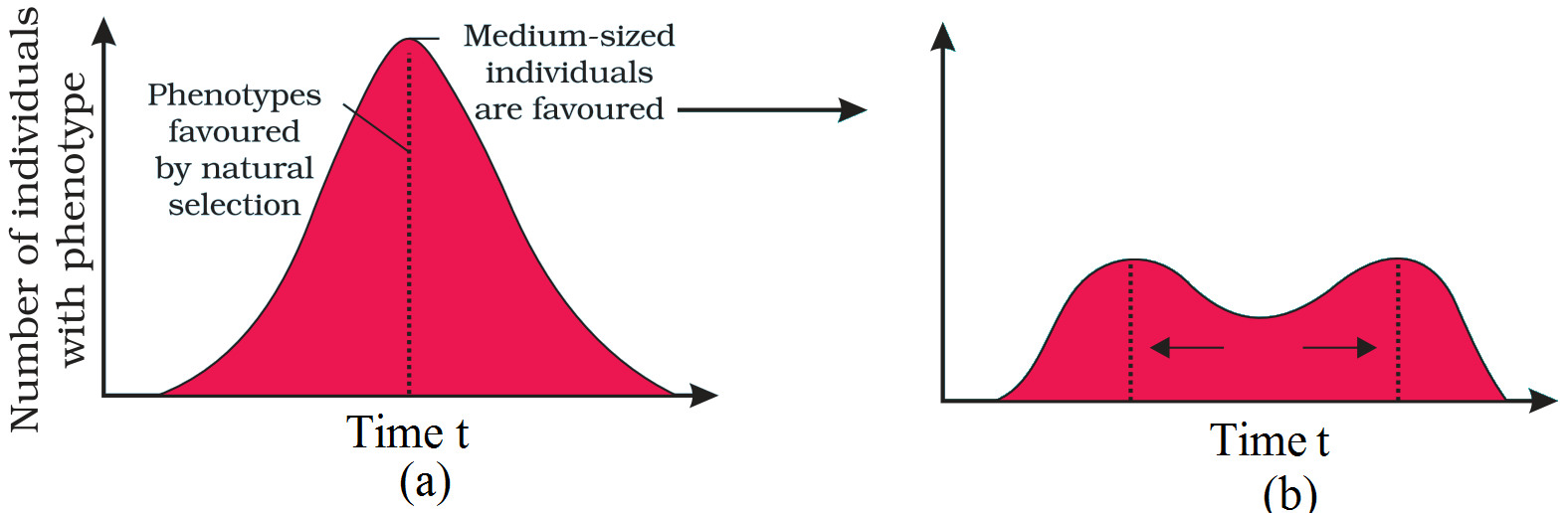
Study the figure (a) and (b) given below and answer the questions given after the graphs.

  1. Under the influence of which type of Natural Selection would graph (a) become like graph.
  2. What could be the likely reasons of new variations arising in the population?
  3. Who suggested Natural Selection as a mechanism of evolution?
Given below are the events that are observed in artificial hybridisation programme. Arrange them in the correct sequential order in which they are followed in the hybridisation programme.
(a) Re-bagging; (b) Selection of parents; (c) Bagging; (d) Dusting the pollen on stigma; (e) Emasculation; (f) Collection of pollen from male parent.
Why is the length of a food chain in an ecosystem generally limited to 3-4 trophic levels? Explain with an example.