MCQ
Polyphosphates are used as softening agents since
- ✓They forms soluble complex with cationic species
- BThey forms soluble complex with anionic species
- CThey forms ppt with cationic species.
- DThey forms ppt with anionic species.
It forms a soluble complex with cation and removes the hardness of the water.
The reactions involved are:
$2 CaSO _4+ Na _2\left[ Na _4\left( PO _3\right)_6\right] \rightarrow Na _2\left[ Ca _2\left( PO _3\right)_6\right]+2 Na _2 SO _4$
$2 MgSO _4+ Na _2\left[ Na _4\left( PO _3\right)_6\right] \rightarrow Na _2\left[ Mg _2\left( PO _3\right)_6\right]+2 Na _2 SO _4$
Polyphosphate makes a soluble complex with $Ca ^{+2}$ and $Mg ^{+2}$ and removes the hardness of water caused by calcium sulfate and magnesium sulphate.
Generate a complete, print-ready paper with questions like this in minutes — across 16+ boards, with answer keys.
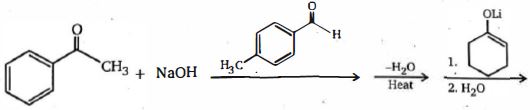
(Assume : Densities of the solutions $A$ and $B$ are the same as that of water and the soluble salts dissociate completely.)
Use: Molal elevation constant (Ebullioscopic Constant), $K _{ b }=0.5 K kg mol ^{-1}$; Boiling point of pure water as $100^{\circ} C$.)
($1$) The value of $x$ is
($2$) The value of $|y|$ is
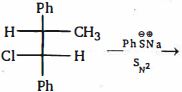
$[\Lambda_{\mathrm{H}^{+}}^{\circ}=350 \,\mathrm{~S}\, \mathrm{~cm}^{2}\, \mathrm{~mol}^{-1},\Lambda_{\mathrm{CH}_{3} \mathrm{COO}^{-}}^{\circ}=50\, \mathrm{~S}\, \mathrm{~cm}^{2}\, \mathrm{~mol}^{-1}]$