MCQ
Positive charge inside $2^{ He ^4}$ atom is __________ .
- A$1.6 \times 10^{-19} c$
- B$2 \times 1.6 \times 10^{-19} c$
- C$4 \times 1.6 \times 10^{-19} C$
- Dzero coulomb
Generate a complete, print-ready paper with questions like this in minutes — across 16+ boards, with answer keys.
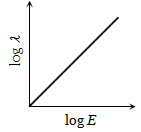
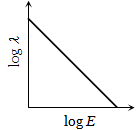
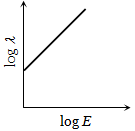
The log-log graph between the energy E of an electron and its de-Broglie wavelength λ will be
|
(a)
|
(a)
|
(c)
|
(d)
|
The half life of polonium is 140 days. After how many days, 16 gm polonium will be reduced to 1 gm (or 15g will decay)
|
(a) 700 days |
(b) 280 days |
(c) 560 days |
(d) 420 days |
20 ampere current is flowing in a long straight wire. The intensity of magnetic field at a distance 10 cm from the wire will be
|
(a) 4 × 10⁻⁵ Wb/m2 |
(b) 9 × 10⁻⁵ Wb/m2 |
(c) 8 × 10⁻⁵ Wb/m2 |
(d) 6 × 10⁻⁵ Wb/m2 |
Assertion : The comet do not obey Kepler's laws of planetary motion
Reason : The comet do not have elliptical orbit
|
(a) If both assertion and reason are true and the reason is the correct explanation of the assertion. |
|
(b) If both assertion and reason are true but reason is not the correct explanation of the assertion. |
|
(c) If assertion is true but reason is false. |
|
(d) If the assertion and reason both are false. |
The colour of the positive column in a gas discharge tube depends on
|
(a) The type of glass used to construct the tube |
(b) The gas in the tube |
|
(c) The applied voltage |
(d) The material of the cathode |