MCQ
Primary alcohols on dehydration give
  • Alkenes
  • B
    Alkanes
  • C
    Both $(a)$ and $(b)$
  • D
    None of these

Answer

Correct option: A.
Alkenes
a
(a)$\underset{{{1}^{o}}\text{alcohol}}{\mathop{R-C{{H}_{2}}-C{{H}_{2}}-OH}}\,\underset{{{170}\,^{o}}C}{\mathop{\xrightarrow{\text{Conc}\text{.}\,{{H}_{2}}S{{O}_{4}}}}}\,$     $\underset{\text{Alkene}}{\mathop{R-CH=C{{H}_{2}}+}}\,{{H}_{2}}O$

Need a full question paper?

Generate a complete, print-ready paper with questions like this in minutes — across 16+ boards, with answer keys.
Start Generating Free

Similar questions

Anhydrous $AlC{l_3}$ cannot be obtained from which of the following reactions
Which of the following alkyl halide gives only one product (excluding stereoisomer)  when undergo $E_2$ reaction ?
($E_2 =$ elimination bi-molecular)
Most reactive for decarboxylation is
In the equation ${H_2}S + 2HN{O_3} \to 2{H_2}O + 2N{O_2} + S$. The equivalent weight of hydrogen sulphide is
The isomers which can be converted into another forms by rotation of the molecules around single bond are
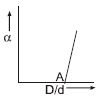
Before equilibrium is set-up for the chemical reaction ${N_2}{O_4}(g) \rightleftharpoons 2N{O_2}(g)$ , vapour density $d$ of the gaseous mixture was measured. If $D$ is the theoretical value of vapour density, variation of $\alpha $ with $D/d$ is given by the graph. What is value $D/d$ at point $A$ ?
Consider the following reaction and determine which of the conditions will shift the equilibrium position to the right ?

$4N{H_3}(g)\,+\,5{O_2}(g)\,\, \rightleftharpoons \,4NO(g)\, + \,6{H_2}O(g)\, + \,Heat$

Which of these dose not reflect the periodicity of the elements
Consider the following equations:

$2 Fe ^{2+}+ H _{2} O _{2} \rightarrow x A + y B$

(in basic medium)

$2 MnO _{4}^{-}+6 H ^{+}+5 H _{2} O _{2} \rightarrow x ^{\prime} C + y ^{\prime} D + z ^{\prime} E$

(in acidic medium)

The sum of the stoichiometric coefficients $x , y , x ^{\prime}, y ^{\prime}$ and $z ^{\prime}$ for products $A , B , C , D$ and $E ,$ respectively, is............

The magnetic moments of following,arranged in decreasing order will be :-

$(i)$ $Co^{3+}$ (Octahedral complex with a strong field ligand)

$(ii)$ $Co^{3+}$  (Octahedral complex with a weak field ligand like $F^-$ )

$(iii)$ $Co^{2+}$  (Tetrahedral complex)

$(iv)$ $Co^{2+}$ (Square planar complex)