MCQ
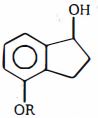
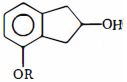
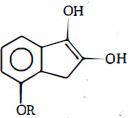
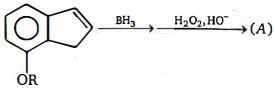
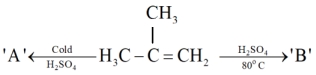
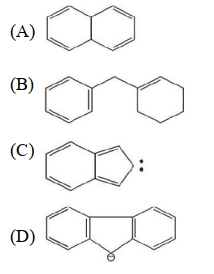
Product $(A)$ is
  • A


  • C

  • D

Answer

Correct option: B.

b
Hint : Think carefully about the relative stabilization of developing positive charge,  when the double bond reacts with an electrophile

Need a full question paper?

Generate a complete, print-ready paper with questions like this in minutes — across 16+ boards, with answer keys.
Start Generating Free

Similar questions

In which of the following transformations, the bond order has increased and the  magnetic behaviour has changed?
If a molecule ${X_2}$ has a triple bond, then $X$ will have the electronic configuration
The $\Delta H_f^o$ for $C{O_2}(g),\,CO(g)$ and ${H_2}O(g)$ are $-393.5, -110.5$ and $-241.8\,kJ\,mol^{-1}$ respectively. The standard enthalpy change (in $kJ$) for the reaction $C{O_2}(g) + {H_2}(g) \to $ $CO(g) + {H_2}O(g)$ is
The major products ' $A$ ' and ' $B$ ', respectively, are
Among the given organic compounds, the total number of aromatic compounds is___________
A carbon-carbon triple bond in ethyne $( - C \equiv C - )$ consists of
If $\lambda _L, \lambda _M$ and $\lambda _N$ are the wave lengths of electron in $L, M, N$ energy levels of $H-$ atom respectively. What is their decreasing order :
$4.5$ moles each of hydrogen and iodine is heated in a sealed ten litre vessel. At equilibrium, $3$ moles of HI were found. The equilibrium constant for $H _2( g )+ I _2( g ) \rightleftharpoons 2 HI ( g )$ is .......
The $I UPAC$ name of $\begin{matrix}
   C{{H}_{3}}-CO-CH-C{{H}_{2}}-C{{H}_{2}}Cl  \\
   |\,\,\,\,\,\,\,\,\,\,\,\,  \\
   C{{H}_{3}}\,\,\,\,\,\,\,  \\
\end{matrix}$ is
Based on the following thermochemical equations

${H_2}O\left( g \right) + C\left( s \right) \to CO\left( g \right) + {H_2}\left( g \right);\Delta H = 131\,kJ$

$CO\left( g \right) + \frac{1}{2}{O_2}\left( s \right) \to C{O_2}\left( g \right);\Delta H =  - 282\,kJ$

${H_2}\left( g \right) + \frac{1}{2}{O_2}\left( s \right) \to {H_2}O\left( g \right);\Delta H =  - 242\,kJ$

$C(s) + O_2(g) \to CO_2(g); \Delta H = X\,kJ$

The value of $X$ will be......$kJ$