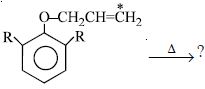
MCQ
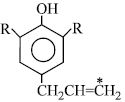
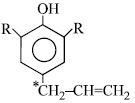
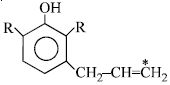
Product is :

  • B

  • C

  • D
    no reaction

Answer

Correct option: A.

a

Need a full question paper?

Generate a complete, print-ready paper with questions like this in minutes — across 16+ boards, with answer keys.

Start Generating Free

Similar questions

$\text{IUPAC}$ name of the given compound is:
$\text{H}_3\text{C}\text{−C​H}−\text{CH}_2\text{−C​H}\text{−C​H}​−\text{CH}_2−\text{CH}_3\\ \ \ \ \ \ \ \ \ \ \ \ \ \ | \ \ \ \ \ \ \ \ \ \ \ \ \ \ \ \ \ \ \ \ | \ \ \ \ \ \ \ \ | \\ \ \ \ \ \ \ \ \ \ \ \ \ \text{OH} \ \ \ \ \ \ \ \ \ \ \ \ \ \text{OH} \ \ \ \ \text{C}_2\text{O}_5$
Most transition metals

$I :$ form sets of compounds which display different oxidation states of the metal

$II :$ form coloured ions in solution

$III :$ burn vigorously in oxygen

$IV :$ act as catalyst

Compound X reacts with phenyl hydrazine but does not reduce Tollens' reagent then compound X will be :
Which of the following triatomic molecules does not exist ?
The correct order of the spin-only magnetic moments of the following complexes is

$(I)$ $\left[\mathrm{Cr}\left(\mathrm{H}_{2} \mathrm{O}\right)_{6}\right] \mathrm{Br}_{2}$

$(II)$ $ \mathrm{Na}_{4}\left[\mathrm{Fe}(\mathrm{CN})_{6}\right]$

$(III)$ $\mathrm{Na}_{3}\left[\mathrm{Fe}\left(\mathrm{C}_{2} \mathrm{O}_{4}\right)_{3}\right]\left(\Delta_{0}>\mathrm{P}\right)$

$(IV)$ $\left(\mathrm{Et}_{4} \mathrm{N}\right)_{2}\left[\mathrm{CoCl}_{4}\right]$

Vanillin compound obtained from vanilla beans, has total sum of oxygen atoms and $\pi$ electrons is . . . 
Which metal is used as a catalyst in the hydrogenation of oils?
The correct description of the product in the above reaction is

$\begin{array}{*{20}{c}}
  {\,\,\,\,\,\,\,\,\,\,\,\,\,\,\,\,\,\,\,C{H_2}OC{H_3}} \\ 
  | \\ 
  {\mathop {C{H_3}CHBr}\limits_{(R)} } 
\end{array}$ $\xrightarrow[{acetone}]{{NaCN}}$ $\begin{array}{*{20}{c}}
  {\,\,\,\,\,\,\,\,\,\,\,\,\,\,\,\,\,\,\,C{H_2}OC{H_3}} \\ 
  | \\ 
  {\mathop {C{H_3}CHCN}\limits } 
\end{array}$
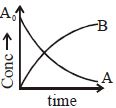
For the reaction, $A \to nB$. At the point of intersection of the two curves, the concentration of $B$ is given by .....
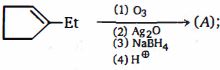
Product $(A)$ is