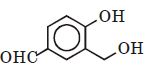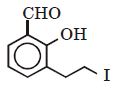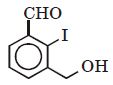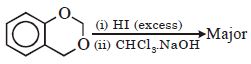
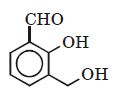
MCQ
product:-

  • B

  • C

  • D

Answer

Correct option: A.

a

Need a full question paper?

Generate a complete, print-ready paper with questions like this in minutes — across 16+ boards, with answer keys.

Start Generating Free

Similar questions

Relation between activation energies of above reactions is
Dissociation of ${H_3}P{O_4}$ takes place in following steps
The correct molecular orbital diagram for $\mathrm{F}_2$ molecule in the ground state is
For the reaction at $25\,^oC,$ ${N_2}{O_4}_{(g)\,}\, \rightleftharpoons \,2N{O_2}_{(g)}$  if $\Delta G_f^o$ for $N_2O_4$ and $NO_2$ are $23. 49$ and $12.39\,KCal$ respectively then $K_p$ for the reaction is
Molar solution means $1\,mole$ of solute present in
At $STP$ the moles of oxygen in $2.8\, L$ of $CO_2$ gas is
The number of terminal oxygen atoms present in the product $B$ obtained from the following reaction is $....$

$FeCr _{2} O _{4}+ Na _{2} CO _{3}+ O _{2} \rightarrow A + Fe _{2} O _{3}+ CO _{2}$

$A + H ^{+} \rightarrow B + H _{2} O + Na ^{+}$

Incorrect statement is
Hydrolysis of sucrose is glven by the following reactlon.

Sucrose $+$ $H _{2} O \rightleftharpoons$ Glucose $+$ Fructose

If the equilibrium constant $\left( K _{c}\right)$ is $2 \times 10^{13}$ at $300\, K$, the value of $\Delta_{ r } G^{\Theta}$ at the same temperature will be:

Match each of the reactions given in Column $I$ with the corresponding product$(s)$ given in Column $II$.
Column $I$ Column $II$
$(A)$ $\mathrm{Cu}+$ dil $\mathrm{HNO}_3$ $(p)$ NO
$(B)$ $\mathrm{Cu}+$ conc $\mathrm{HNO}_3$ $(q)$ $\mathrm{NO}_2$
$(C)$ $\mathrm{Zn}+$ dil $\mathrm{HNO}_3$ $(r)$ $\mathrm{N}_2 \mathrm{O}$
$(D)$ $\mathrm{Zn}+$ conc $\mathrm{HNO}_3$ $(s)$ $\mathrm{Cu}\left(\mathrm{NO}_3\right)_2$
  $(t)$ $ \mathrm{Zn}\left(\mathrm{NO}_3\right)_2$